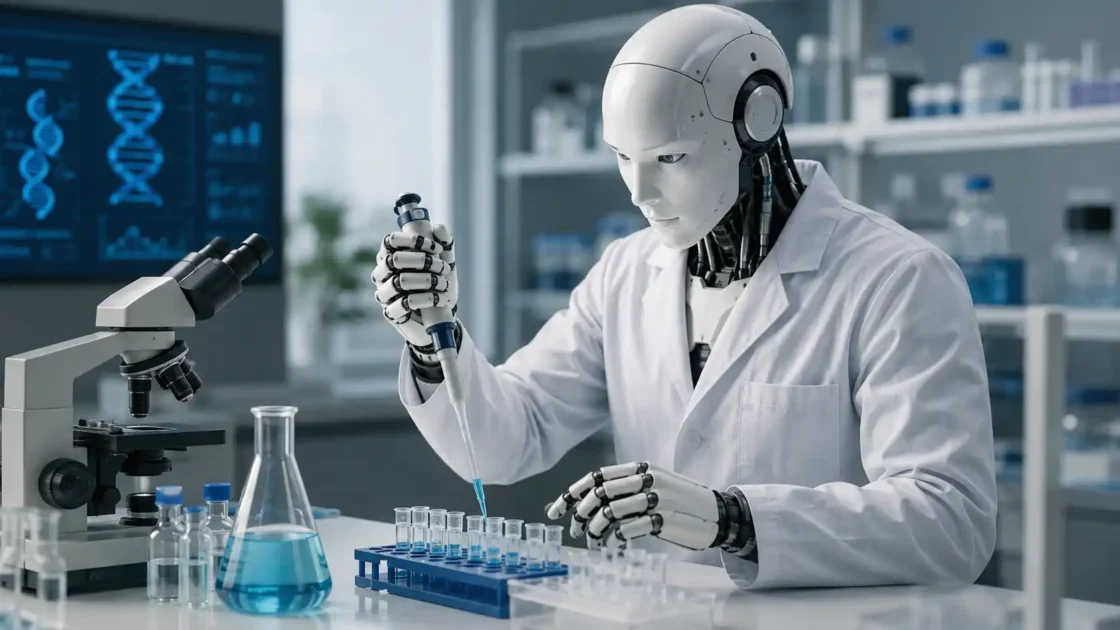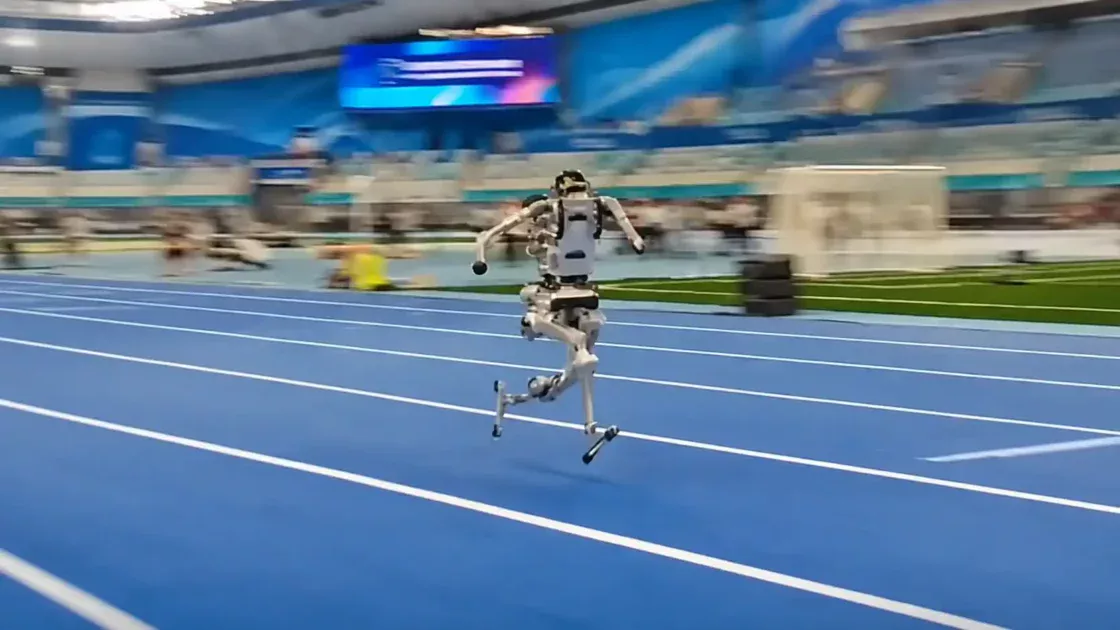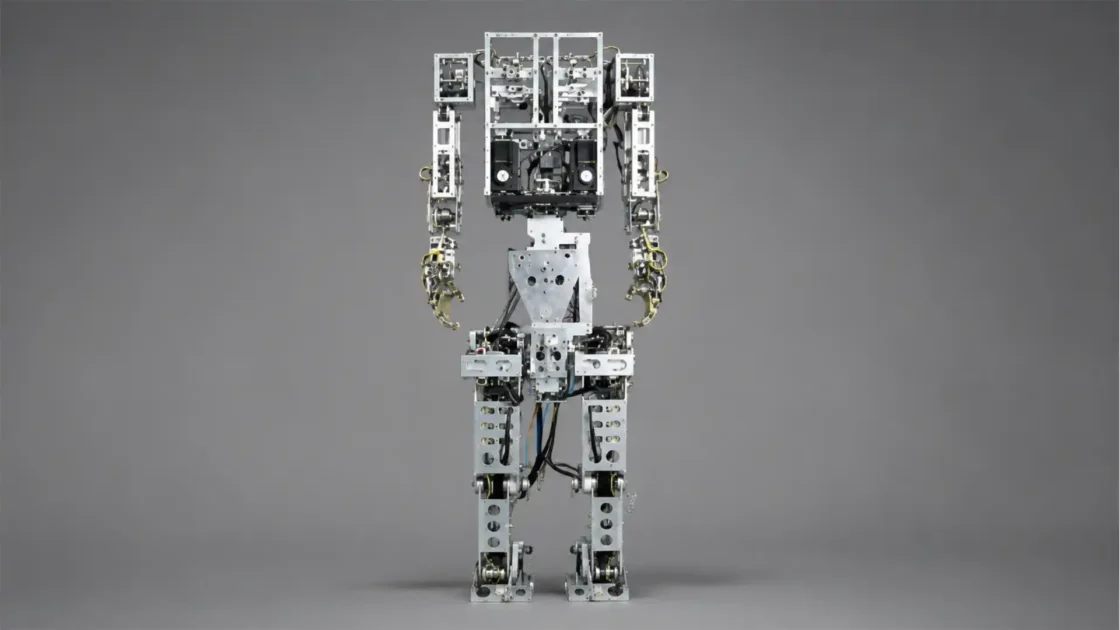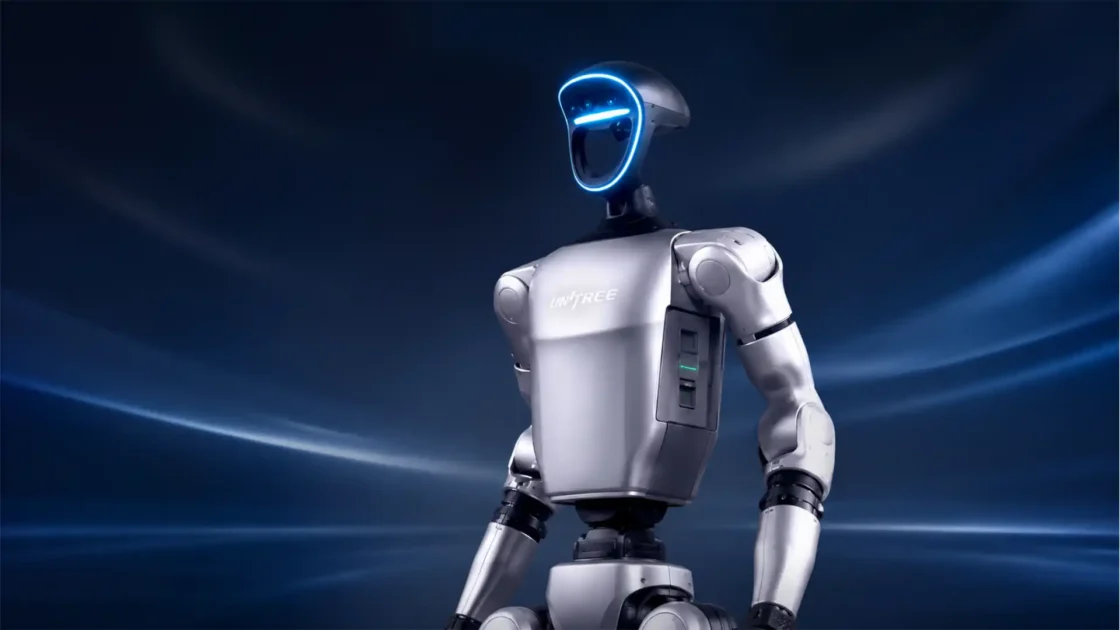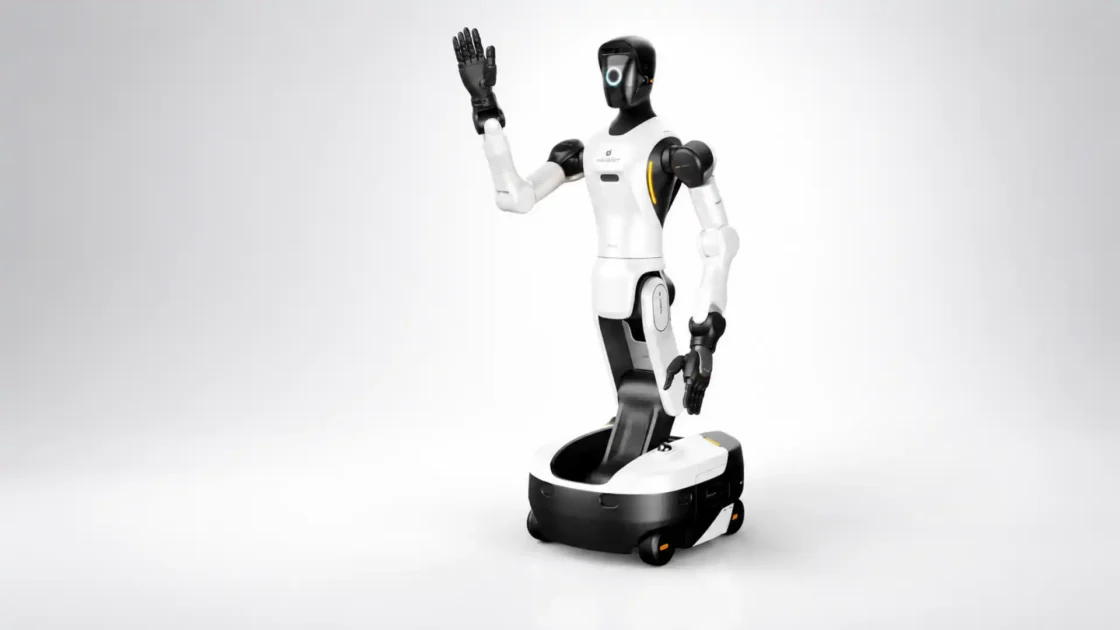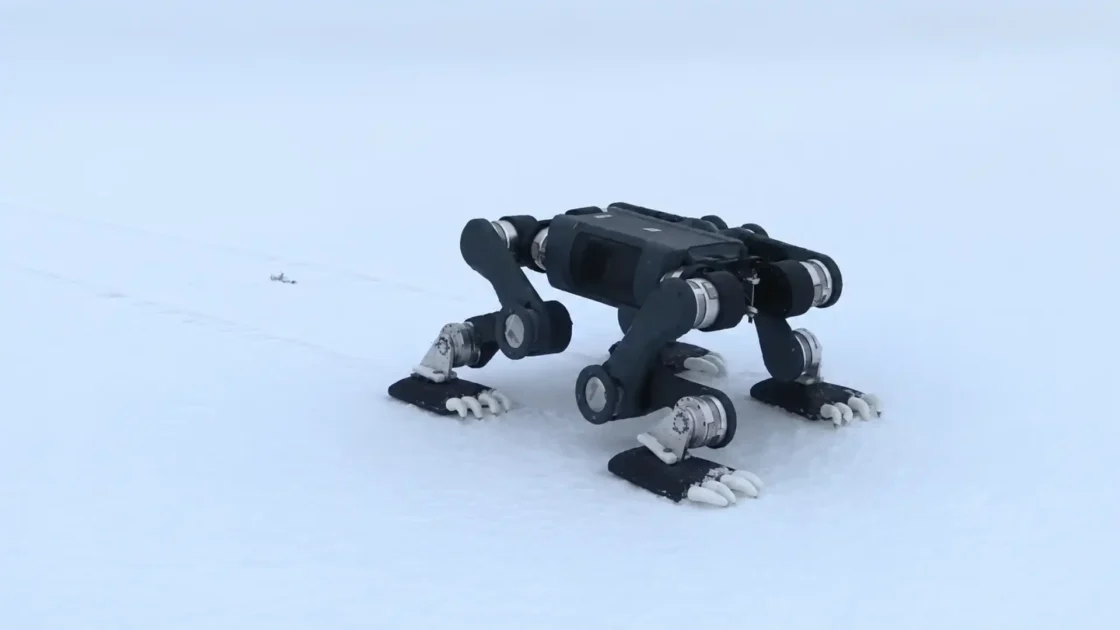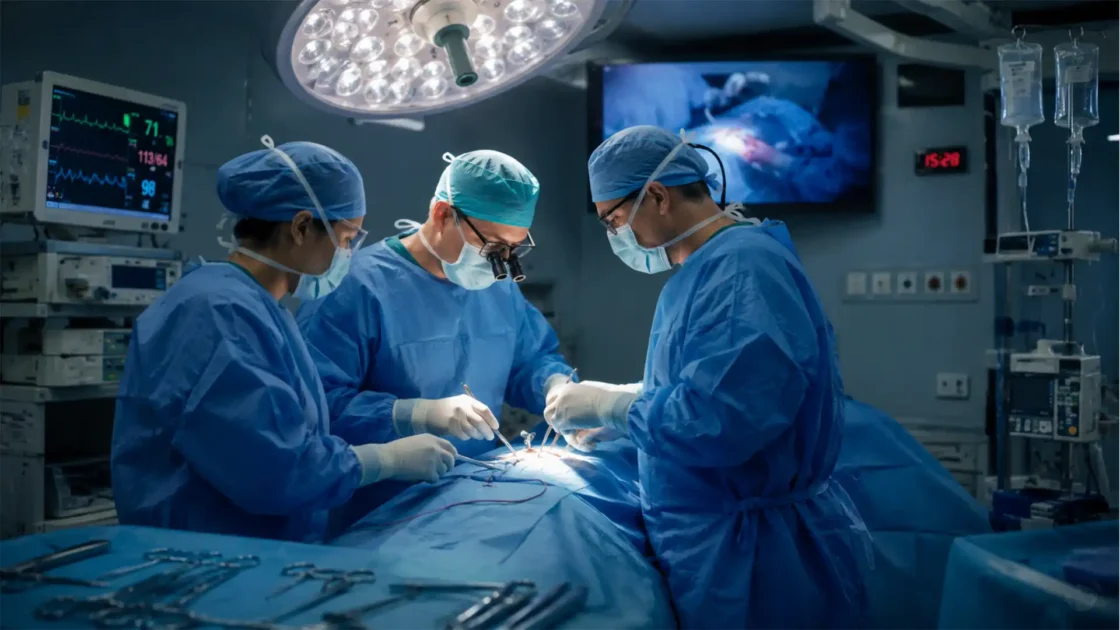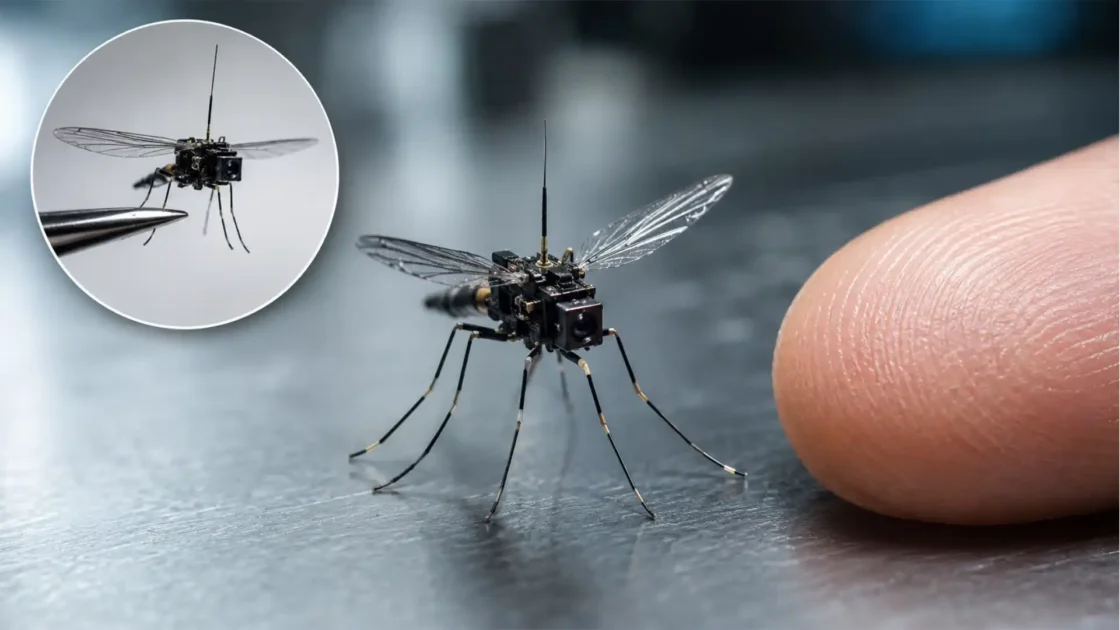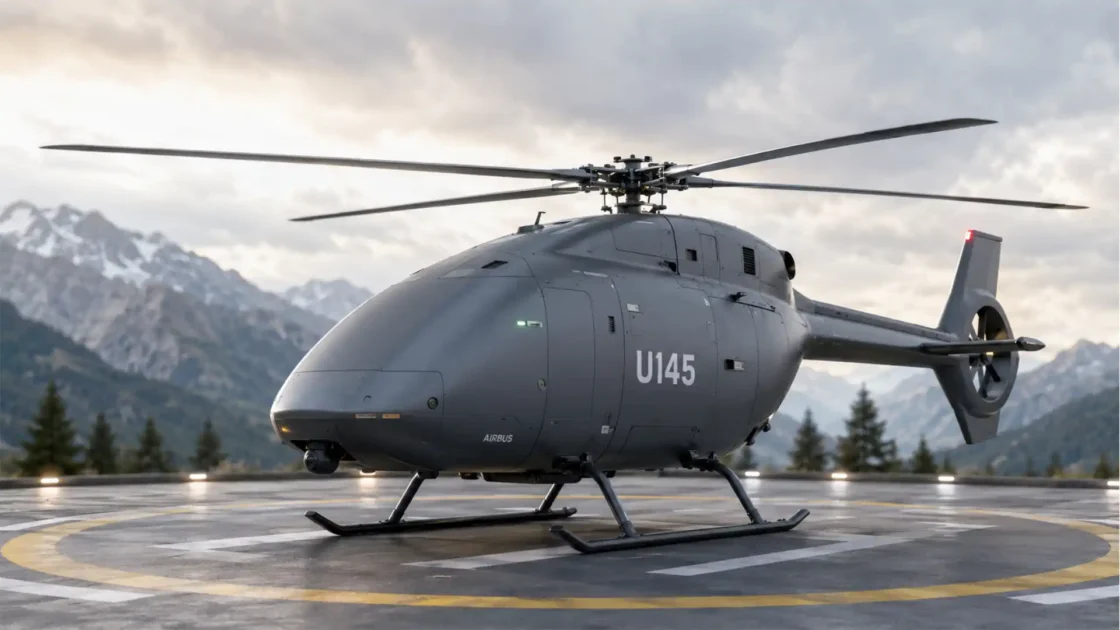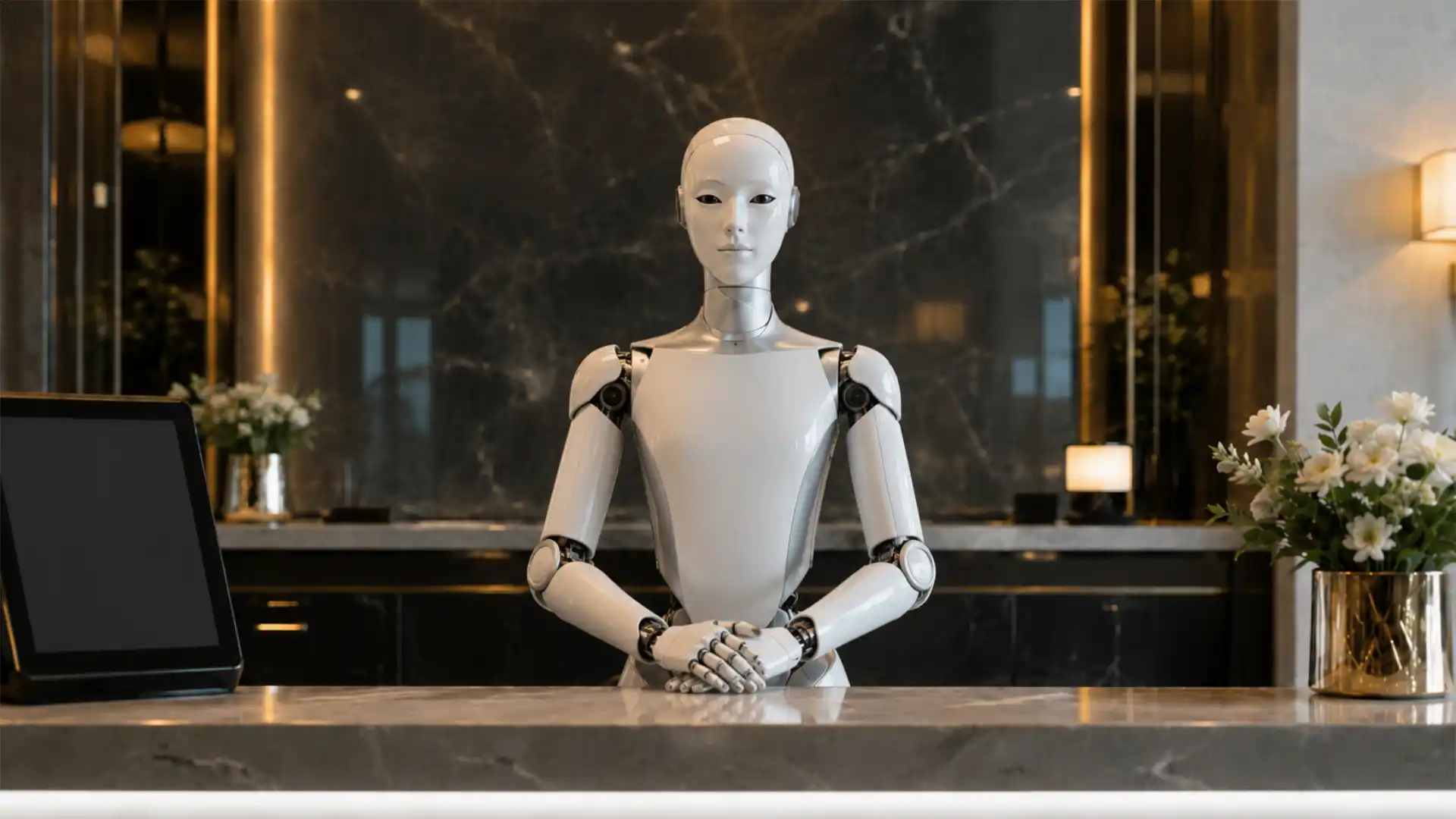
A 44-room hotel planned for the western artificial island of the Shenzhen–Zhongshan Link is being promoted as a property where robots handle the visible work of hospitality: greeting guests, checking them in, moving luggage, delivering food and amenities, cleaning, patrolling and assisting around the building. Pudu Robotics and Shenzhen Culture & Tourism Industry Development Co. announced the project on June 1, 2026. Their stated plan is for phased trial operations by the end of 2026, with the first guests expected in early 2027.
Table of Contents
The announcement is more consequential than another hotel placing a delivery robot near the lifts. It proposes a hotel built around a fleet of connected machines and a shared AI platform, not a conventional property with a few automated features. Pudu Robotics co-founder and CTO Guo Cong has described the target as full-process service “with no service gaps and no human interruptions.” That is a bold commercial ambition. It is not yet a proven operating fact.
The distinction matters. The hotel does not exist as a finished, public operation. It has not yet faced the ordinary frictions that determine whether hospitality technology works: a foreign passport that cannot be scanned, a guest locked out at midnight, a room that needs recleaning, a food allergy, a lift failure, an injured visitor, a network outage, a leaking bathroom, a lost suitcase, a disputed payment or a security incident.
The robots are not the hard part. The hard part is the hotel around them.
A hotel is an unusually demanding environment for physical AI. It combines public circulation, private rooms, accommodation registration, food service, security, personal data, cashless payments, maintenance, cleaning and emotional guest expectations. It has predictable workflows, but it also contains a steady stream of exceptions. A robot can follow a mapped corridor. A hotel still needs to decide what happens when the guest at the end of that corridor is frightened, angry, ill, confused or unable to use the intended interface.
The project is also embedded in a wider story about Shenzhen. The city has positioned itself as a testbed for applied artificial intelligence, robotics and embodied intelligence. The western artificial island already functions as a tourism and science-education site attached to the Shenzhen–Zhongshan Link, the 24-kilometre bridge–tunnel route opened in June 2024. The island has been developed as a visitor destination, with viewpoints, exhibitions and planned technology-focused tourism.
That location gives the robot hotel a strategic role beyond accommodation. It is intended to make infrastructure itself into a tourism product. A visitor will not simply book a room. They will enter a carefully designed environment where a cross-sea engineering project, an artificial island, service robots and destination branding reinforce one another.
The commercial opportunity is obvious. A robot hotel can attract curiosity, media coverage, social video and technology tourism. The operational challenge is equally obvious. Novelty is easy to launch and difficult to sustain. The hotel will eventually be judged by less glamorous questions: Was the room clean? Did check-in work? Was personal data handled properly? Could a guest get human help when needed? Did the robots improve the stay, or did they merely make it more memorable for the wrong reasons?
This article examines the project as a serious hospitality, technology, labor, governance and tourism experiment. The hotel may become a useful model for selected kinds of properties. It may also prove that some parts of hospitality remain resistant to full automation. Both outcomes would be valuable, provided the operators are candid about the evidence.
The project is a real announcement, not a finished hotel
Pudu Robotics and Shenzhen Culture & Tourism Industry Development Co. publicly announced their cooperation in June 2026. The companies said the property would be located on the western artificial island of the Shenzhen–Zhongshan Link and would integrate robots into guest reception, luggage assistance, room service, food delivery, cleaning, security and guest interaction. The hotel is planned with 44 high-end rooms, a restaurant, gym and other functional areas.
The announced timeline is phased. Selected rooms and robot-powered services are intended to enter a trial phase by the end of 2026. Local reporting has described early 2027 as the point at which the first guests may be welcomed. That means the hotel should be viewed as a forthcoming pilot rather than as evidence that a fully autonomous hotel has already been achieved.
Public information leaves important questions unanswered. No detailed room-rate structure has been published. There is no public operational manual setting out which functions will be fully autonomous, which will involve remote staff, which actions require human authorization or how emergency support will work. No public technical architecture explains the hotel’s access-control system, cloud connections, data-retention model, cybersecurity design or safety rules for moving machines near guests.
That lack of detail is not unusual before opening. Hotels rarely publish their operating manuals. Yet the “robot-only” label makes the unanswered questions central. A standard hotel can rely on a visible employee to absorb uncertainty. If a key card fails, the guest sees a receptionist. If a food order is delayed, a manager can apologize. If a guest becomes distressed, a human being can read the mood of the room and act.
A robot-led property must build that flexibility into the system. It may use remote operators, on-call technicians, security personnel, emergency responders and hotel managers outside the guest-facing flow. It may still function without people appearing in routine service interactions. But the hotel cannot eliminate responsibility.
A human-free lobby does not mean a human-free operation.
The most accurate interpretation of the announcement is that the hotel aims to remove ordinary human involvement from routine guest service. That is different from proving that no employee will maintain the robots, supervise the platform, respond to emergencies, manage food safety, review security incidents or handle legal duties.
This distinction should not be dismissed as a technicality. It goes to the heart of the project’s credibility. In many automated systems, work does not disappear. It moves. A receptionist’s work may move to remote customer support. A housekeeper’s role may move toward fleet maintenance and quality inspection. A night guard’s patrol may become dashboard review and incident escalation. A concierge’s local advice may become a combination of digital recommendations and human support on demand.
The hotel will be most persuasive if it does not pretend otherwise. It should define which tasks are completed independently by machines, which tasks are machine-assisted and which events trigger human intervention. That would provide a more useful model for the wider hospitality industry than a broad claim that humans have been removed.
The same principle applies to the phrase “world’s first.” Earlier robot-heavy hotels have existed, including Japan’s Henn na Hotel. The Shenzhen property may be distinctive because it is being developed as a coordinated full-scenario service environment, with machines involved across many hotel functions. Still, the title matters less than the evidence generated after opening.
A robot hotel is not a success because it looks futuristic. It is a success when guests experience fewer delays, less friction, better privacy, cleaner rooms and faster recovery from problems.
The artificial island is part of the operating model
The hotel’s location is not decorative. The western artificial island gives the project conditions that ordinary city hotels do not have. It is part of the Shenzhen–Zhongshan Link, a 24-kilometre sea-crossing project connecting cities on both sides of the Pearl River Estuary. The route incorporates bridges, an undersea tunnel and artificial islands. It opened to traffic on June 30, 2024.
The western artificial island opened to cultural and tourism operations in late 2025 after a trial period. Shenzhen’s government describes it as a site for sightseeing, science education and exhibitions related to cross-sea infrastructure. It covers about 137,000 square metres and has been positioned as a marine tourism landmark rather than a purely technical transport facility.
For a robot hotel, a controlled island environment is an advantage. The building can be designed around machines from the start. Corridors can offer turning space. Lifts can be integrated with fleet systems. Charging docks can be placed away from guest routes. Entrance areas can be organized for robot luggage support. Public zones can use clearer navigation cues than a legacy urban property with narrow hallways, unpredictable delivery traffic and decades of ad hoc modifications.
The island can also create a more predictable guest journey. Visitors may arrive through booked tours, scheduled shuttles or managed access points. The property may have fewer spontaneous walk-ins than a city-centre hotel. That reduces variables for check-in, luggage handling, security and crowd management.
A controlled environment is not the same as an easy environment. The island will still have weather exposure, tourists, families, large bags, visitors unfamiliar with the site, changing event traffic and the physical demands of operating near a major transport link. A guest who encounters a problem may have fewer nearby alternatives than in a dense urban hotel district. If room access fails or a support system goes down, the hotel cannot assume the guest can simply walk to another property.
The island setting makes resilience part of the guest promise.
The destination also changes the hotel’s economics. The property may not depend only on room revenue. It can support technology tourism, educational visits, corporate demonstrations, restaurants, event packages and destination branding. A guest booking the hotel may be paying for an experience that combines architecture, engineering, views and robotics.
That creates room for premium pricing, but it also raises expectations. A novelty destination can attract a first visit. Repeat business depends on service quality. A traveler will not return just because a robot once brought a bottle of water. They may return if the hotel is comfortable, easy to use, private and operationally reliable.
The island also provides a public stage for Shenzhen’s technology ambitions. The city has promoted broad real-world AI deployment, including urban management, public service and industry applications. A robot hotel puts embodied AI in a setting that ordinary visitors can understand immediately.
That makes the hotel a useful demonstration project, but it also exposes it to scrutiny. A factory robot can fail behind a safety fence. A hotel robot fails in front of guests with phones. The project will generate a public record of whether physical AI can operate calmly around tired travelers, children, luggage, hotel carpets, food trays and unpredictable human behavior.
Full-scenario service is a harder claim than robot delivery
Robots already perform useful functions in hotels. They deliver toiletries, carry food, vacuum corridors, guide visitors, transport linens and provide basic information. Those are established service-robot categories. The International Federation of Robotics reported that more than 42,000 hospitality robots were sold in 2024, although sales in that category declined from the previous year. Transportation and logistics remained the largest professional service-robot application group.
The Shenzhen hotel is different because it is not being marketed as a deployment of individual devices. It is being marketed as a complete service model. The announced system is expected to cover guest arrival, check-in, luggage assistance, room delivery, cleaning, dining, patrols and interactive support through a coordinated fleet and AI platform.
That is an important distinction. A hotel can add one delivery robot without changing its operating logic. The front desk remains available. Staff can carry items if the robot is busy. Housekeepers work normally. The robot becomes an optional tool.
A full-scenario system changes the logic of the property. The fleet must be scheduled. Doors and lifts must integrate with machines. Guest requests need to enter a common task queue. Robots need charging cycles, failure procedures, priority rules and safe routes. The hotel must decide which machine performs each job and what happens when no machine is available.
The project therefore has more in common with logistics orchestration than with a hotel novelty. It needs software that allocates tasks, understands building constraints, manages traffic, detects exceptions and communicates with guests. A delivery robot that moves independently is useful. A fleet that coordinates reception, cleaning, food service and security without disrupting each other is much harder to build.
Pudu’s own hospitality materials describe use cases across greeting, luggage handling, room delivery, floor cleaning and restaurant service, while its wider product strategy emphasizes centralized management and multi-robot scheduling. The artificial-island hotel will test whether those functions can operate as a unified guest-service system rather than as separate products.
The biggest risk is hidden fragmentation. A robot may know where to deliver an item but not know that the lift is out of service. A reception system may issue a room credential without knowing the room has not completed cleaning. A patrol machine may flag an open door while a delivery robot is attempting to access the same zone. A restaurant system may send meals faster than the robot fleet can move them.
A strong platform prevents those conflicts. It uses common data, shared priorities and clear authority rules. A weak platform merely places several robots in the same building.
The hotel’s real product is not an android at the reception desk. It is coordination.
The system should also avoid treating generative AI as a universal answer. A language model may help explain hotel services, translate common questions or guide a guest through a request. It should not make safety-critical physical decisions without tightly bounded controls. A robot approaching a guest room, a lift, a fire exit or a kitchen needs reliable rules, not conversational improvisation.
NIST’s AI Risk Management Framework separates AI risk work into governance, mapping, measurement and management. That structure is relevant to a robot hotel because the technology is both digital and physical. The operator must identify risks, test them, set boundaries and establish responsibility before a guest encounters a malfunction.
The 44-room scale is large enough to expose real problems
A 44-room hotel is small compared with a large city convention property or beach resort. It is still large enough to create genuine operating pressure. Guests arrive at similar times, request late check-out, order breakfast, need luggage support, ask for towels, use the restaurant and expect rooms to be ready promptly.
The modest scale gives the project an advantage. The operator can standardize room layouts, corridors, storage areas, restaurant routes and service zones. It can map every route carefully. It can keep the number of lifts, charging stations and robot types manageable. It can observe failures closely during trial operations.
A smaller hotel can also simplify inventory. Stock locations for towels, bottled water, snacks, toiletries, linens and restaurant supplies can be designed around robot access. A robot does not need to search a cluttered storeroom if items are placed in predictable modules. The building can use machine-friendly thresholds, stable signage, controlled lighting and standardized doors.
Yet 44 rooms are enough to create conflicting demand. Ten guests may request towels at the same time. A morning cleaning window may overlap with check-outs, breakfast deliveries and luggage collection. A late-night surge in snack orders may compete with security patrols for lift capacity. A single robot stuck in a corridor can affect more than one guest.
The central planning problem is capacity. The hotel needs to know how many robots are required for each task, how long each mission takes, how much battery a mission consumes, how often the machines require charging and what happens when a unit becomes unavailable.
A robot fleet is not flexible in the same way as a team of people. A staff member can carry towels after finishing a guest complaint, help with a suitcase, answer a question and then return to another task. A robot is more specialized. Its physical form, software permissions, battery level and location limit what it can do next.
That makes spare capacity important. The hotel needs extra delivery capability during peaks, alternative routes when lifts fail, charging plans that do not leave too many robots unavailable at once and human recovery options when the fleet cannot meet demand.
It also needs to define service standards. A guest may tolerate a robot delivery in 15 minutes. They may not tolerate it in 45 minutes because two machines are charging. The hotel should establish a visible promise for routine requests and give accurate updates when conditions change.
A small property can collect unusually detailed data. It can measure delivery time by room, cleaning duration by room type, robot waiting time at lifts, battery use per mission, guest interaction failures, door-access errors and the number of tasks that required human recovery. Those measures will be more useful than launch-day videos.
The 44-room format is not a miniature version of a large hotel. It is a live laboratory where every workflow can be examined.
The project may eventually scale to other properties, but it should not assume that success at 44 rooms automatically transfers to 400. Larger hotels add more lifts, more floors, more elevators, more guests, more staff interfaces, more kitchens, more room layouts and longer travel distances. A system that works elegantly on a controlled island may require major redesign in a city tower.
The first hotel should therefore be judged as a testbed. Its value will come from what it learns about task fit, failure recovery and guest acceptance.
Reception is an identity and exception-management problem
Reception is often reduced to check-in. In practice, it is a dense collection of decisions. Front-desk staff verify bookings, process payment, explain rules, deal with early arrivals, handle late departures, resolve room allocations, issue replacement keys, support guests who do not speak the local language and respond when the booking record does not match the person standing in front of them.
A robot or kiosk can handle the default path. The guest presents a booking reference, verifies identity, completes payment, receives a room credential and follows directions. That path may be faster than a queue at a conventional reception desk.
The difficulty is the exception path.
A guest may use a different passport from the one connected to the booking. Their name may be misspelled. The reservation may be under an employer’s name. The payment card may fail. A child may be travelling with a parent. An accessible room may be required. A traveler may have no local phone number, no working QR code or limited ability to use a touchscreen.
Foreign guest registration adds another legal and operational layer. China’s National Immigration Administration states that hotels must register accommodation information for foreign guests and submit it to public-security authorities under applicable rules. A robot-led hotel must therefore handle passports and registration accurately, not merely provide an attractive interface.
A system designed around machines should never treat a low-confidence result as a reason to abandon the guest. It should explain the issue plainly and offer a route to resolution. That may mean video support, live voice assistance, an on-call agent or a dedicated support point. The guest should not have to restart the process repeatedly or seek help through a complicated app.
The best reception automation will make the routine path short and the exception path humane. It should clearly distinguish between an error the guest can fix and a case requiring hotel support. It should preserve the progress already made. It should avoid exposing personal details on public screens. It should not use facial recognition by default when simpler identity checks are sufficient.
The physical setting matters as well. A reception machine needs room for luggage, wheelchairs, families and guests who may be unfamiliar with the system. The interface must support several languages, readable text, audio prompts and accessible height. A robot that looks impressive but forces guests into awkward positioning is a poor reception design.
A premium automated hotel should also resist excessive data collection. Check-in requires certain information. It does not automatically require long-term recording of every interaction, voice signal or facial expression. The hotel should collect what is necessary for the stay and disclose the purpose clearly.
China’s Personal Information Protection Law establishes protections for personal information and requires lawful processing. It treats sensitive information, including biometric and financial data, as requiring particular care. That makes reception design more than a user-experience issue. It is a governance issue.
A successful automated check-in does not make the guest feel processed. It makes the guest feel expected.
Luggage handling is a chain-of-custody system
Luggage robots are visually appealing because the task looks simple. A bag enters the hotel, the machine takes it to a room and the guest sees a futuristic version of porter service. The reality is more complicated.
A suitcase may contain medication, passports, cameras, work equipment, valuables, fragile items or personal documents. It may be heavy, wet, oversized, damaged or difficult to secure. It may arrive before the guest. It may be delivered by a third party. The guest may change rooms. A bag may be left in storage after check-out.
A hotel cannot treat luggage movement as an ordinary delivery mission. It needs a chain of custody.
The system should record when the bag was accepted, where it was stored, which machine carried it, which route it used, whether its compartment was opened, when it reached the destination and how the final handoff was confirmed. The robot’s compartment should be locked, tamper-aware and accessible only through an authenticated process.
The hotel also needs rules about what the robots will not carry. Hazardous items, unstable loads, unusually heavy luggage, loose objects and certain valuables may require a different process. A robot should be able to refuse a mission safely rather than attempt a load it cannot control.
Lift integration becomes crucial. A luggage robot may need to wait for a specific lift, enter safely, remain stable while the lift moves and exit without obstructing other guests. If the lift is crowded, the machine must yield. If a lift fails, the task must be reassigned or escalated.
The guest experience depends on confidence. A traveler who sees a machine roll away with a suitcase wants more than a cheerful animation. They want reassurance that the hotel remains accountable for the bag. The interface should make status tracking simple and explain the process before the robot moves.
This is one area where a hotel should not overstate autonomy. A normal suitcase delivery may be ideal for a robot. A disputed lost-baggage case, a damaged bag or an item requiring inspection will need human judgment. The system should identify those moments quickly.
Pudu’s existing hospitality offerings include luggage assistance, delivery and multi-floor movement. Those capabilities provide a technical foundation. The island hotel’s contribution will be whether it can combine them with secure operational controls.
The useful luggage robot is not a novelty porter. It is a secure, trackable service channel.
Housekeeping is the hardest promise in the building
Housekeeping is likely to be the most difficult part of any claim that a hotel can operate without visible people. Public-area cleaning is comparatively structured. A robot can sweep, scrub, vacuum or mop mapped corridors and open spaces. It can return to a docking station, refill supplies and repeat.
Guest-room cleaning is different. A room contains beds, sheets, towels, waste, bathrooms, spills, furniture, personal belongings, clothing, open luggage, wet floors and unpredictable conditions. The standard is high because guests notice cleanliness immediately.
A hotel room is also a private environment. A robot entering a room must respect occupancy status, “do not disturb” settings, privacy controls and guest consent. It must know when a room has been checked out, whether someone is still inside and whether an unusual object requires escalation.
Floor-cleaning machines are already common in commercial settings. Pudu, for example, markets commercial cleaning robots for hospitality and other environments, including products that sweep, scrub, vacuum and dust-mop. These functions are real and useful.
The challenge lies in turning a cleaning machine into a full room-turnover system. A robot may be able to inspect a floor, deliver linens, transport waste or provide visual confirmation that a room has been vacated. Changing bedding, cleaning bathrooms, inspecting stains, managing found property and deciding whether a room meets premium standards require more complex manipulation and judgment.
The likely operational path is staged automation. Robots may take on public-area cleaning, linen transport, supply delivery, routine inspection and repetitive floor work. They may help reduce the walking and carrying burden for human housekeepers or remote supervisors. Room cleaning may become increasingly automated as fixtures, furniture and supply systems are designed for machines.
The hotel should not treat partial automation as failure. A machine that removes the most repetitive parts of housekeeping can create real value even if a human remains involved in detailed inspection or difficult room turnover.
The standard should be objective. The property should measure re-clean requests, guest complaints, room readiness time, linen errors, water use, chemical use, maintenance faults detected and the frequency of human intervention. A robot that finishes faster but produces more guest complaints is not improving housekeeping.
The Henn na Hotel experience in Japan is relevant here. Earlier robot-hotel experiments found that bed-making, bathroom cleaning and complex guest-room work were among the most difficult tasks to automate. Research and reporting on Henn na show that the gap between an entertaining robotic front desk and a fully automated property can be wide.
Cleanliness is not a technology demonstration. It is a trust contract.
Room delivery is the most natural early use case
Among the hotel’s announced functions, room delivery is the easiest to understand and the most likely to work well early on. A guest orders water, snacks, towels, toiletries, chargers or a sealed meal. The system receives the request, loads the item, assigns a robot, plans the route and notifies the guest when it arrives.
The task is repetitive, measurable and privacy-friendly. Many guests may prefer receiving late-night towels or drinks from a robot rather than having a staff member knock on the door. The machine can operate quietly, provide status updates and return without a prolonged social exchange.
The handoff must be designed carefully. The robot needs to know that it has reached the right door and that the correct person has received the item. It may use an app notification, one-time code, room-panel prompt, secure compartment release or a combination of methods.
The hotel should not make smartphone ownership mandatory. A guest may have a dead battery, no local mobile connection, limited digital confidence or an accessibility need that makes app-based interaction difficult. The robot should offer a simple physical handoff flow at the door.
Inventory is equally important. A robot cannot compensate for poor stock management. The service platform needs current information about what is available, where it is stored and whether the kitchen or pantry can fulfill the request. A guest who receives the wrong item from a sleek machine will not care that the route was autonomous.
Delivery service also needs clear limits. A robot can move a bottle of water. It may not be suitable for handling medical emergencies, sensitive personal items, hot liquids without appropriate protections, alcohol where age verification applies, or a guest request that requires human assessment.
Pudu has built much of its service-robot business around delivery, guidance and multi-floor movement. Its products and hospitality materials demonstrate why room delivery is a logical starting point for broad hotel automation.
The best version of this service will be almost boring. The guest makes a request. The robot arrives when promised. The compartment opens securely. The item is correct. The machine leaves without blocking the corridor.
Reliability is more luxurious than theatrics.
Dining will test the difference between movement and hospitality
The planned restaurant creates another large testing ground. Restaurant robots can carry dishes, clear tables, guide guests, return used plates and move items from kitchen to dining area. These jobs involve structured routes and repeated movement, making them suitable for wheeled machines.
Hospitality robots already have a strong presence in food-service settings. IFR data classifies hospitality as one of the largest professional service-robot application groups, and service robots used for guidance, food and beverage support and front-desk functions are widely deployed.
A hotel restaurant, however, is not a warehouse with plates. Guests ask questions about ingredients, allergies, dietary restrictions, cultural preferences, wine, portion sizes and timing. They may need help with a child, request a modification or complain about an incorrect order. These are not merely delivery tasks.
The restaurant should separate logistics from judgment. Robots may transport meals, clear dishes and guide guests to tables. A human expert, whether physically present or reachable through a fast remote channel, may handle allergy questions, unusual requests and service recovery.
The food-safety implications are also serious. A robot carrying hot dishes needs safe speed, stable trays, spill detection and routes that avoid crowding. A machine returning used plates needs sanitation controls. Restaurant staff or technicians must clean and inspect the robot itself. A moving device cannot become a source of cross-contamination.
The hotel should avoid treating a robot server as a substitute for every social interaction. Some guests will enjoy the novelty. Others will want a quiet meal with minimal machine presence. The property should offer both. Automation should make the restaurant smoother, not turn each meal into a performance.
Research on hotel robots points to service quality, assurance, ease of use and perceived reliability as major influences on a guest’s willingness to continue using robot-enabled services. Enjoyment can matter, but it is unlikely to compensate for poor execution.
A robot may deliver a plate. It cannot automatically create the sense that a restaurant has noticed a guest’s needs. That requires good menu design, clear information, efficient escalation and thoughtful service recovery.
Security patrols bring accountability into focus
Security is among the most consequential functions announced for the robot hotel. A patrol robot can move through public areas, monitor door states, detect unusual conditions, send alerts and create an audit trail. It may be able to cover routes repeatedly without fatigue.
That does not make the robot a security professional in the full sense. Security involves interpretation. A machine can detect motion in a restricted zone. It cannot reliably determine whether the person is a confused guest, an authorized worker, a child searching for a parent, a guest in distress or someone presenting a real threat.
The hotel should define patrol robots as sensors and messengers, not autonomous decision-makers in sensitive incidents. A robot may flag an open door, detect a blocked corridor or notify a remote supervisor. It should not confront guests, make accusations or become the only response to a medical or safety event.
Clear escalation rules are essential. The system needs to distinguish between routine alerts, remote review, on-site response and emergency-service calls. It must define who has authority to intervene, what information is shared and how guest rights are protected.
Privacy is inseparable from patrol. Mobile robots may carry cameras, microphones, lidar sensors or other equipment. Guests should know when and where recording occurs. The hotel should avoid ambiguous surveillance. Public areas can have visible notices. Guests should have access to a clear policy explaining what data is collected, why it is retained and how long it is kept.
China’s data laws make this more than a brand issue. The Personal Information Protection Law addresses personal-information handling, while the Data Security Law requires lawful, proper collection and use within permitted purposes and scopes. A robot hotel that combines room-access records, video feeds, voice interactions and location data must govern the combined system carefully.
The strongest security model would use robots to improve awareness while preserving accountable human judgment. A patrol unit can identify a broken door or unusual movement faster than a periodic human round. A trained person should decide what the alert means and how to respond.
A robot may detect a problem. The hotel remains responsible for solving it.
The AI platform is the real operational product
The visible machines will attract attention. The less visible software may determine whether the hotel works.
A fleet-management platform would need to connect room status, guest requests, inventory, robot location, battery level, lift availability, door permissions, restaurant orders, cleaning schedules, security alerts and maintenance information. It would need to assign tasks, prevent collisions, prioritize urgent requests, route devices around obstacles and ensure that robots are charged before they become unavailable.
This is a difficult systems-integration problem. The hotel may use AI for language interaction, perception, demand forecasting and anomaly detection. Much of the core operation will likely depend on standard software engineering, digital mapping, task scheduling, sensor fusion and safety rules.
The distinction matters because “AI” can become a vague label. A reliable hotel should not give an unconstrained language model authority to unlock rooms, override security settings or route machines into sensitive spaces. Physical actions should be governed by verified policies and narrow permissions.
A strong platform will have a clear hierarchy. Emergency events must override ordinary service tasks. A guest locked out should take priority over a snack delivery. A low-battery robot should not accept an extended mission. A machine that detects a blocked route should reroute or request assistance rather than repeatedly attempting the same failed movement.
The software also needs a digital model of the hotel that matches reality. Floor plans, room numbers, furniture placement, lifts, doors, restricted zones, charging docks and service corridors must be accurate. A temporary display stand, wet floor sign or luggage trolley can become a navigation problem if the robot does not recognize it.
Hotel managers will need procedures for physical changes. A new lobby display, a moved plant, temporary construction barrier or seasonal decoration can affect robot routes. In a conventional property, such changes are mainly aesthetic. In a robot-led hotel, they are operational.
Pudu describes multi-robot scheduling, navigation and coordination as core capabilities. The island hotel will be a public test of how those capabilities perform in a hospitality environment, where the building is shared with guests rather than reserved for logistics.
The platform should also be auditable. When an error occurs, the hotel needs to know what happened. Which system assigned the mission? Which robot accepted it? What data was used? What route did it follow? Did a door fail? Did the guest receive the wrong notification? Was there a network interruption?
Without traceability, service recovery becomes guesswork. With traceability, the hotel can learn.
Multi-robot coordination creates new kinds of bottlenecks
A single robot can function reasonably well in a hotel. Several robots introduce traffic management.
Delivery units, cleaning machines, luggage robots, patrol devices and interactive reception systems may all share corridors, lifts, charging bays, storage areas and public spaces. They must avoid one another without causing guests to wait or detour.
A cleaning robot might be working near a lift when a luggage robot needs the same area. A delivery robot may be waiting for a guest to retrieve an item while another unit needs to pass. A security patrol may receive priority access during a busy dinner period. The hotel’s fleet software needs rules for who yields, who waits and who reroutes.
The building can help by separating zones. Some robots may operate mainly in guest corridors, others in restaurant spaces or back-of-house areas. Certain lifts may be optimized for service machines. Storage and charging areas can be kept away from guest traffic. The objective is not to force guests to adapt to robots. It is to make the robots behave predictably around guests.
That means machines should yield. They should travel slowly in public areas. They should not block a corridor while waiting for a lift. They should not make loud announcements every few seconds. They should avoid clustering near the lobby during arrival peaks.
A premium environment is quiet and calm. The software may be complex, but the guest should not feel its complexity.
IFR data shows why this kind of deployment is plausible. Transportation and logistics robots accounted for the largest application class among professional service robots in 2024, with more than 102,000 units sold. The basic technical task of moving goods through indoor environments is increasingly mature. The hotel challenge is that the movement happens around guests, private rooms and social expectations.
Warehouses reward throughput. Hotels reward discretion.
The difference will shape the fleet design. A hotel cannot simply import industrial robot behavior. It must account for children running through corridors, guests carrying luggage, people stopping for photos, wheelchair users, wet floors, room-service carts and late-night quiet.
The hotel will need spare machines and fallback routes. If a delivery unit breaks down in a corridor, the system should dispatch another unit or alert a technician. If a lift is unavailable, it should not allow a queue of robots to form. If the network fails, machines should move to safe states rather than continue uncertain missions.
Coordination is where the project can genuinely advance the field. It can show whether hospitality robots become more useful when they work as a fleet, or whether the complexity of coordination outweighs the benefits at this scale.
The building must become machine-readable
Robots do not operate in abstract “hotel space.” They operate through doors, thresholds, surfaces, lighting, Wi-Fi coverage, lift buttons, access permissions, charging points, route markers and safety zones.
A robot-first hotel has an opportunity to design these details early. Corridors can be wide enough for guests and machines to pass comfortably. Door thresholds can be smooth. Lifts can communicate digitally with the fleet. Charging stations can be placed where inactive robots do not become obstacles. Pantry shelves can be standardized for machine loading.
The building also needs recovery space. A machine may stop unexpectedly, lose connectivity or require maintenance. Staff need access points where robots can be moved safely. Storage areas must accommodate inactive devices. There should be manual procedures for releasing wheels, opening compartments and removing a unit from service.
Sound is another design issue. Robots often rely on voice prompts to announce themselves, ask people to move or explain a task. In a luxury hotel, repeated robotic announcements may become irritating. Quiet visual alerts, restrained lighting and discreet route management may work better.
Privacy must be considered in every interface. A check-in screen should not expose room numbers, passport details or payment information to people passing through the lobby. A robot communicating at a room door should avoid loudly stating the guest’s name or order.
A property designed around robots can make these choices deliberately. Retrofitted hotels often cannot. They have narrow doors, irregular flooring, inaccessible lifts and outdated network infrastructure. The artificial-island project may prove that the most important robot investment is not the robot itself but the environment around it.
A robot hotel is an architectural project as much as a software project.
Humanoids are optional, not operationally central
The visual image of a robot hotel usually begins with an android at reception. Human-shaped machines are easy to photograph and immediately legible to guests. They can greet, gesture, point, carry small items and create a strong sense of novelty.
They are not automatically the best device for every job.
A wheeled delivery robot is likely to be more stable and efficient than a bipedal humanoid when carrying towels. A specialized cleaning machine may be better than an android for floor care. A fixed self-service kiosk may be more reliable than a humanoid for document capture. A sensor network may provide better coverage than a mobile robot for certain security functions.
Pudu has expanded its work in semi-humanoid and embodied-AI systems, but its existing commercial robot range also includes specialized delivery, cleaning and service machines. That mixed approach is sensible. The hotel should use the form factor that fits the task.
Humanoid robots may be useful where human-built environments require hands, reach or gestural communication. They may help in reception, light manipulation or guided interaction. They also create more mechanical complexity, more maintenance demands and higher expectations. Guests may assume a human-looking robot can understand flexible requests as well as a person. When it cannot, disappointment can be sharper.
Research on hotel service robots suggests that anthropomorphism can influence guest attitudes, but appearance is only one factor. Reliability, assurance and task fit remain decisive.
The hotel should avoid building the experience around the idea that machines need to imitate people. Guests may be more comfortable with specialized devices that clearly signal what they do. A delivery robot can look like a delivery robot. It does not need eyes, a uniform or artificial enthusiasm.
The most advanced hospitality technology may be the least theatrical.
The guest room is the privacy boundary
A hotel room is not simply another service zone. It is a temporary private space containing sleep, work, luggage, medication, clothing and personal life. Automation must become more cautious at the room door.
The safest model for delivery is a threshold handoff. The robot reaches the door, notifies the guest and releases the item through a secure compartment. The machine does not need to enter the room. This protects privacy, reduces navigation risk and avoids the uncomfortable question of whether the robot is recording inside a private space.
Housekeeping is more difficult. A room-cleaning robot would need proof that the guest has checked out or consented to access. It would need to respect “do not disturb” settings. It would need strict rules for handling personal belongings, unusual objects, leaks, damage and potential emergencies.
The hotel should not use private-room access merely because it is technically possible. It should use it only when the service benefit is clear, the guest understands the process and the privacy protections are strong.
A guest should be able to choose low-contact service. They may prefer a robot at the door, minimal data retention, no personalization beyond the current stay and no machine entering the room. Others may choose more automated features, such as smart climate settings or scheduled deliveries.
The key is genuine choice. Guests should not have to surrender privacy in order to access basic hotel service.
China’s Personal Information Protection Law requires personal-information handling to be grounded in lawful bases and places emphasis on purpose limitation and transparency. The hotel’s robotic systems may process identity information, room-access records, service requests, location data, security footage and possibly biometric signals. The property should treat those combined data flows as a high-responsibility system.
A premium hotel has always promised controlled privacy. The automated version must prove that it protects privacy rather than turning the room into another data source.
Human support should be available even when no one is visible
The strongest version of a robot-run hotel is not one where guests can never reach a person. It is one where guests do not need to seek people for ordinary tasks, while human support remains immediate for exceptional situations.
A traveler locked out of a room, reporting a theft, dealing with a medical issue, struggling with registration or facing a booking problem should not be left with a chatbot loop. The hotel needs an emergency pathway that reaches a real person quickly.
That support can be remote. A trained agent may speak to the guest through a secure video terminal, in-room device, phone line or lobby interface. A technical team may monitor the fleet from another site. A manager may authorize compensation remotely. A local response team may be on call.
Remote support is not a flaw. It may be an effective way to provide specialized help across several properties. The problem arises only when the hotel hides the support model or makes it difficult to access.
Guests should know that help exists. They should understand how to reach it. The interface should state the expected response time. A person should have authority to solve problems rather than merely repeat the robot’s instructions.
This is also a labor issue. The hotel may reduce certain visible front-line roles while creating remote service, technical support, cybersecurity, maintenance and operations roles. The work may become less visible, but it does not vanish.
The human role becomes more concentrated around judgment. People may handle exceptions, relationship repair, health and safety issues, complex travel needs, accessibility support and technical escalation. Machines handle repetitive movement and routine transactions.
The right goal is not fewer opportunities for human care. It is fewer unnecessary errands.
Cybersecurity becomes part of guest service
A connected hotel fleet creates a large technical attack surface. Robots may interact with room access, guest information, cameras, lifts, service requests, payment systems, Wi-Fi networks, charging stations and cloud platforms. A cybersecurity failure could affect not only data but physical operations.
The hotel should separate its networks. Guest Wi-Fi should not have access to robot-control systems. Restaurant systems should not automatically communicate with door locks. Security data should be protected separately from marketing tools. Remote maintenance must be authenticated, logged and restricted.
The property also needs offline procedures. What happens when the internet connection fails? Do robots stop safely? Can guests still access rooms? Does the emergency contact channel remain available? Can staff manually operate essential doors and lifts? A robot-led hotel cannot assume continuous connectivity.
China’s amended Cybersecurity Law took effect on January 1, 2026, reinforcing the country’s cybersecurity framework. A property handling connected devices, personal data and networked service systems will need serious internal controls.
Cyber resilience should be designed into ordinary operations. Software updates need testing before deployment. Robot firmware must be patched carefully. The operator needs an inventory of hardware, software, vendors and interfaces. It needs a vulnerability-reporting process and incident-response plan.
A useful test is simple: Can the hotel function safely for an hour without cloud services? It may lose advanced personalization or remote analytics. It should not lose room access, emergency support or the ability to move robots out of guest routes.
A second test is more serious: What happens if the fleet-management platform becomes unavailable during a busy check-in period? The hotel needs a manual or human-supported fallback. Guests cannot be told to wait indefinitely because a robot queue has stopped moving.
NIST’s AI Risk Management Framework is voluntary, not a Chinese legal requirement. Still, its emphasis on governance, mapping, measurement and management offers a useful approach. The hotel needs to identify failure modes before they affect guests, measure their impact and assign responsibility for response.
The hotel’s most important security feature may be the ability to fail safely.
Emergency response will expose the limits of automation
Every hotel needs procedures for fires, medical incidents, power failures, water leaks, lift outages, severe weather and security events. In a conventional property, employees become a flexible response layer. They can knock on doors, guide guests, carry supplies, direct people away from hazards and improvise when systems conflict.
A robot hotel needs an equivalent system.
Robots may help during an emergency. They can display instructions, report blocked routes, relay sensor data, guide guests toward exits or carry lightweight supplies. They should not create congestion, block evacuation paths or continue routine deliveries when an alarm is active.
Each robot category needs a safe state. Delivery machines may return to designated bays or stop against the wall. Cleaning robots may need to stop water systems. Reception devices may switch from check-in to emergency information. Patrol machines may relay location data to supervisors.
Emergency instructions must be distinct from normal prompts. Guests should be able to recognize them quickly. Messages should work visually and audibly, in multiple languages, without requiring a mobile phone.
The property also needs human responders. A robot can provide information. It cannot safely replace trained emergency personnel in every situation. A hotel cannot rely only on digital occupancy data to determine whether people have left a building. A room-access log does not prove that someone is safe.
ISO 13482 provides safety requirements and guidance for personal care robots, including mobile servant robots. It emphasizes inherently safe design, protective measures and information for use. The hotel’s final legal and safety obligations will depend on local rules and specific equipment, but the principle is clear: machines moving near people need rigorous risk assessment.
The hotel should conduct serious drills before public opening. It should test a network failure during a fire alarm, an immobilized robot in a corridor, a guest trapped behind a malfunctioning lock, a food spill near a charging device and a lift failure during a luggage mission.
A trial phase is valuable because it makes these weaknesses visible before the hotel is operating at full occupancy.
The financial case depends on uptime, not slogans
Robot hotels are often discussed as labor-saving projects. Labor cost matters. Hotels operate around the clock, face staffing shortages, rely on repetitive physical work and experience uneven demand. Robots can take on some delivery, cleaning, guidance and transport tasks without conventional shift patterns.
The financial equation is not simply labor expense minus robot purchase price.
Robots require capital, leasing fees or robot-as-a-service subscriptions. They need charging infrastructure, spare parts, maintenance, software updates, fleet-management systems, insurance, mapping work, network capacity and technical support. A device that spends half its time in maintenance does not create value.
The central metric is utilization. How many reliable missions does a robot complete? How much time does it spend waiting for lifts? How often does it require human rescue? How many guest complaints does it prevent or create? How much does it cost per delivered item, cleaned square metre or room turnover?
IFR data shows growing interest in robot-as-a-service models. The global RaaS fleet grew by 31% in 2024, offering companies a way to scale robot deployment with more flexible commercial arrangements. That may be relevant for a hotel operator that wants to expand or adjust its fleet over time.
The 44-room property has a special financial profile. Fixed technology costs will be spread across relatively few rooms. The hotel may offset this through premium pricing, destination appeal, corporate tours, partnerships, brand exposure and the wider tourism value of the island.
Pudu may value the site as a demonstration environment. Shenzhen’s tourism developer may value it as an attraction. The hotel may therefore be judged by strategic returns as well as room profit.
That does not remove the need for financial discipline. The operator should measure cost per occupied room, maintenance cost per machine, average mission completion rate, energy use, cleaning productivity, average response time, guest satisfaction and the value of premium pricing.
Automation does not erase cost. It converts labor cost into hardware, software, maintenance and risk-management cost.
The project will become commercially meaningful when the operator can show that the guest experience and operating economics improve together.
The labor impact will be redistribution before replacement
The robot-only concept raises an obvious question: What happens to hotel workers?
The honest answer is that some routine tasks may require fewer people. Delivery, repetitive cleaning, corridor patrols, stock movement and standard check-in transactions can be automated to varying degrees. That may reduce demand for certain front-line and physically repetitive roles.
New work will also emerge. Robots need maintenance, sanitation, fleet monitoring, cybersecurity, data governance, remote guest support, software integration, incident review and operational analysis. Some of those roles may be more technical. Some may be off-site. Some may be concentrated in fewer jobs than the work they replace.
That creates a risk of job polarization. A property may reduce middle-skill service work while creating a smaller number of specialized technical roles. Workers who previously handled hospitality operations may not automatically have access to those new roles.
The better approach is retraining. Hotel employees can develop skills in robot supervision, guest recovery, quality inspection, accessibility support, remote service and incident management. Their experience with guests is valuable because many automated systems fail not on routine tasks but on exceptions.
Service-robot research has repeatedly identified employee concerns, task changes and service-quality trade-offs. Robots may improve efficiency in standardized tasks while changing the emotional and social content of hospitality work.
A good robot hotel should use automation to remove unnecessary physical strain and repetitive walking. It should not treat employees as an obstacle to the technology story.
The most valuable human work in hospitality often begins where standardization ends: a frightened guest, a family emergency, a complicated travel problem, a security concern or a service failure that needs discretion.
The hotel should not ask whether robots replace people. It should ask which work is worth preserving for people.
Accessibility is a central test of whether the hotel is advanced
A robot hotel must work for people who do not fit the assumed default user. That includes guests with limited mobility, low vision, hearing differences, neurodivergence, limited dexterity, limited digital confidence, young children, older travelers, language barriers or temporary injuries.
A guest using a wheelchair should not be blocked by a robot waiting in a corridor. A blind guest should not rely entirely on a visual interface. A deaf guest should not depend on a voice prompt. A guest without a smartphone should still be able to enter a room and request help. A person with anxiety around machines should have a low-interaction alternative.
Automation may create useful accessibility features. Voice interaction can help some guests. Smart rooms can reduce the need to reach switches. Delivery robots can reduce long walks through corridors. Digital translation can support communication.
It can also create barriers. A face-recognition check-in system may not work reliably for everyone. A touch interface may be inaccessible. A robot’s instructions may be difficult to understand in a crowded lobby. An app-only service model may exclude international visitors without local connectivity.
The hotel should test every journey with diverse users before launch: booking, arrival, document verification, room access, restaurant ordering, room service, emergency support and check-out. Accessibility cannot be added at the end through a single “accessible mode.”
A hotel with sophisticated robots but no usable fallback is less advanced than a hotel with simple technology and trained staff.
Maintenance may be the hidden center of the operation
Guests will see polished machines moving through the hotel. The reliability of those machines will depend on unglamorous work: battery health, wheel inspection, sensor cleaning, software updates, charging contacts, component replacement, sanitation and route testing.
A robot that delivers food needs to be cleaned between missions. A robot that operates near bathrooms or public floors needs hygiene controls. A machine carrying luggage needs secure compartments and wheel maintenance. A patrol robot needs sensor calibration. A reception device needs a functioning screen, camera, printer or identity interface.
The hotel will need maintenance windows. It will need spare units. It will need a way to remove a faulty device without causing a scene in front of guests. It will need trained technicians who understand both hardware and hotel operations.
The environmental story also depends on maintenance. Robots may reduce unnecessary walking, improve inventory use and support demand-based cleaning. They also consume electricity, batteries, materials and spare parts. A credible sustainability claim must measure energy per mission, water use, consumables, repair rates and end-of-life handling.
The property should avoid presenting automation as automatically green. It may become more resource-efficient. It may also create new energy and materials demands. The outcome depends on design and measurement.
Henn na Hotel offers a useful warning
Japan’s Henn na Hotel is often cited as the first robot hotel. It opened in 2015 with robot receptionists, automated luggage systems and a high degree of technology theatre. It became a global symbol of robot hospitality.
It also became a lesson in limits.
Reporting and academic work on Henn na have documented technical failures, guest frustration and the gap between novel interfaces and practical service. The hotel reportedly reduced some robot deployments after devices created more work or failed to meet guest needs. Research has identified the risks of using service robots in high-contact hospitality settings without careful task selection.
The lesson is not that robot hotels cannot work. The lesson is that a visible robot is not automatically useful. A machine should take on a task because it improves that task, not because it reinforces a futuristic brand image.
Henn na also shows the danger of excessive anthropomorphism. When a robot looks human, guests expect human-level comprehension. If it cannot answer a basic question, understand a complaint or respond appropriately to an unusual request, the mismatch becomes obvious.
The Shenzhen project has several advantages. Robotics hardware, navigation, fleet management and AI interfaces have improved. The hotel can be designed around machines instead of retrofitted. Pudu already has experience with delivery and cleaning products in hospitality settings.
The Shenzhen project also has a higher bar. Guests in 2026 are more familiar with self-service technology. They may be less impressed by a robot at reception, but more willing to accept machines that save time and respect privacy.
The hotel should learn from Henn na by avoiding unnecessary robots, maintaining strong human escalation, measuring actual utility and being honest about the functions that still require people.
China’s robotics strategy gives the project wider significance
The hotel is not emerging in isolation. China has made service robotics, humanoid robots and embodied intelligence major industrial priorities. Government policy and state media have emphasized building innovation systems for humanoid robotics and bringing machines into real-world applications.
Shenzhen is especially suited to this kind of deployment. It combines hardware manufacturing, software development, venture capital, technology companies and public-interest support for applied AI. The city has used public scenarios to test AI systems, from sanitation to urban services.
The hotel offers a visible consumer-facing test case. Industrial robots usually work behind factory walls. A hotel puts machines in direct contact with travelers. Guests can judge whether the robots are useful without technical training.
The project may also contribute to standards development. It combines data privacy, security, physical safety, accessibility, food service, room access, AI decision-making and emergency response. Those are the areas where deployment often reveals gaps between laboratory capability and real-world conditions.
The property will be more useful if it publishes lessons. A credible report on uptime, safety incidents, accessibility testing, privacy controls, energy use and guest satisfaction would help the industry more than a claim of perfect automation.
The greatest value of the project may be the evidence it produces, not the spectacle it creates.
A trial phase should measure the right things
The trial operation planned for late 2026 should not be treated as an opening party with limited guest access and favorable conditions. It should be a rigorous period for measuring performance.
The hotel should track operational reliability: mission-completion rate, average delivery time, robot downtime, battery failures, lift delays, route errors, charging interruptions and recovery time.
It should track guest experience: successful check-in rates, time to room access, room-cleanliness scores, food-delivery satisfaction, complaint rates, accessibility feedback, privacy concerns and repeat-booking intent.
It should track safety and governance: physical incidents, near misses, false security alerts, cybersecurity events, human escalation time, data-access requests and policy breaches.
It should track business performance: cost per occupied room, cost per delivery, maintenance expense, energy use, premium-rate performance and human intervention per stay.
Measures that would make the trial credible
| Area | Useful measure | What it would reveal |
|---|---|---|
| Check-in | Completion rate without support | Whether the normal arrival path is genuinely usable |
| Delivery | Average time and failed missions | Whether robots improve convenience |
| Housekeeping | Re-clean requests and room readiness | Whether automation meets guest standards |
| Safety | Near misses and emergency-drill results | Whether the system is conservative around people |
| Privacy | Data complaints and opt-out use | Whether guests feel informed and in control |
| Service recovery | Time to resolve failures | Whether exceptions are handled humanely |
The table is deliberately practical. A robot hotel should be judged through guest outcomes, not the number of machines deployed.
The hotel should include diverse testers. Technology enthusiasts are not representative of every traveler. The trial should include families, older guests, business travelers, international visitors, people with disabilities and guests who prefer low-tech interaction.
The most mature outcome may be discovering that certain tasks should remain human-led. A hotel that removes a badly matched robot function is learning. A hotel that keeps it only to preserve a marketing claim is not.
Other hotels should copy the method, not the surface
The Shenzhen property will attract attention from hotel groups around the world. Some may be tempted to copy the visible features: a humanoid receptionist, a robot delivery unit, a self-service check-in screen or a cleaning machine.
The transferable lesson is not the hardware. It is the operating discipline.
Hotels should begin with tasks that are repetitive, measurable, physically demanding and relatively low-risk. Long-distance delivery, public-area cleaning, linen transport, basic guidance and inventory movement may be suitable. Sensitive judgment, conflict resolution, emergency response and complex guest care require a different model.
A robot that works well in a purpose-built island hotel may not work well in a historic building with narrow corridors and stairs. A resort with large grounds may need outdoor navigation. An airport hotel may need stronger identity and security integration. A boutique property may rely on personal recognition as part of its value.
Automation should start with a problem, not a slogan. If staff spend hours walking towels through long corridors, a delivery robot may help. If a hotel’s guests value a warm personal welcome, replacing the front desk may damage the brand.
A robot hotel is an operating model, not a procurement list.
The future is likely to be hybrid before it is fully autonomous
The Shenzhen project pushes toward an extreme version of hotel automation. Most properties are likely to adopt hybrid models first.
Robots will handle more repetitive movement, cleaning, delivery, inventory and basic information work. Self-service systems will manage check-in, payments, room access and standard requests. Humans will remain central to service recovery, complex support, safety, personal judgment and relationship building.
That future may improve hospitality if it is designed well. Staff can spend less time walking corridors with towels and more time solving problems. Guests can receive quick, quiet support for ordinary requests. Hotels can operate more consistently through late-night periods.
It may also make hotels worse if automation becomes a way to hide underinvestment in service. A guest who cannot get help does not care whether the failure is caused by a person shortage or robot platform.
The Guangdong hotel will matter because it will reveal where the dividing line lies. Which tasks can machines perform reliably? Which tasks do guests prefer to automate? Which functions create new privacy or safety concerns? Which roles remain unmistakably human?
The answer will not be “robots replace hotels.” It will be a more precise map of where automation earns its place.
The real test begins after the first guest arrives
The planned robot-only hotel is a serious experiment. It is ambitious, highly visible and well matched to Shenzhen’s role as a technology city. Its island setting, 44-room scale and Pudu Robotics partnership give it conditions that few hotels possess.
The project will not be proved by an opening ceremony. It will be proved by ordinary nights.
It will be proved when a tired traveler arrives with a foreign passport, a large suitcase and a dead phone. It will be proved when a child needs help, a guest cannot enter a room, a lift fails, a robot blocks a corridor, a privacy concern is raised or a network service goes offline.
The hotel’s success will depend on whether it treats those moments as edge cases or as the core of hospitality.
Robots can make routine service faster and quieter. They do not remove the hotel’s duty to care.
Questions guests and hotel operators will ask next
No. As of June 30, 2026, the project is planned for phased trial operation by the end of 2026, with first guests expected in early 2027.
It is planned for the western artificial island of the Shenzhen–Zhongshan Link in Guangdong Province.
The announced plan calls for 44 high-end rooms, plus a restaurant, gym and other guest facilities.
Robots are expected to assist with greeting, check-in, luggage, room delivery, food delivery, cleaning, security patrols and guest interaction.
The public claim concerns the guest-facing service experience. The hotel is still likely to need people for maintenance, remote support, emergency response, legal compliance and management.
The project is promoted as the first full-scenario robot-serviced hotel, but earlier robot-heavy hotels, including Japan’s Henn na Hotel, already existed. The distinction depends on how “robot hotel” is defined.
It means robots are intended to operate across many connected hotel functions rather than performing one isolated task such as food delivery.
The final robot lineup has not been fully disclosed. Pudu has both specialized service robots and embodied-AI or humanoid-oriented systems.
Robots can already clean public floors and move supplies. Full room cleaning is harder because of bedding, bathrooms, personal items, privacy and quality checks.
The public policy has not been detailed. A privacy-focused approach would keep delivery robots at the room door and use secure compartment handoffs.
Yes. Hotels need booking, identity, payment, room-access and service-request information. A robot hotel may also generate robot location, camera, voice or interaction data.
Yes. China’s Personal Information Protection Law applies to personal-information handling, while the Data Security Law governs data-processing responsibilities.
They should be able to. Hotels in China must register accommodation information for foreign guests under applicable rules.
The hotel should reroute tasks, dispatch spare units, provide remote support and use human recovery procedures when necessary.
They can be safe when they use risk assessment, conservative movement, obstacle detection, emergency procedures and clear human escalation.
Yes. Connected robots may affect room access, guest data, cameras, lifts and service requests. Strong network separation, secure updates and offline fallback procedures are needed.
They are more likely to change work first. Repetitive transport and delivery tasks may decline, while maintenance, remote support, guest recovery, cybersecurity and operations work become more important.
They should automate specific, suitable tasks rather than copy the robot-only concept. The best starting point is usually repetitive work where machines reduce friction without making it harder for guests to get help.
Reliability, privacy, room cleanliness, accessibility, service recovery, safety and guest trust will matter more than novelty.
Author:
Jan Bielik
CEO & Founder of Webiano Digital & Marketing Agency
This article is an original analysis supported by the sources cited below
Pudu Robotics and Shenzhen CTID Co. Ltd launch the world’s first full-scenario robot-serviced hotel project
Pudu Robotics’ June 2026 announcement describing the project partnership, phased rollout and intended robot-service model.
World’s first robot-staffed hotel on the way
Shenzhen government report covering the hotel’s planned roles, island location and early-2027 guest timeline.
Shenzhen–Zhongshan Link’s west artificial island officially opens for cultural and tourism operations
Official background on the island’s tourism operations, visitor capacity, scale and infrastructure role.
Shenzhen–Zhongshan Link’s western artificial island to open for trial sightseeing
Shenzhen government report on the island’s tourism trial, science base and planned robotics-related visitor activities.
Shenzhong Link to open to traffic Sunday
Official outline of the 24-kilometre Shenzhen–Zhongshan Link, its tunnel, bridge sections and artificial islands.
Robots for room service, hotel cleaning and item delivery
Pudu’s hospitality overview covering greeting, delivery, luggage handling, cleaning and food-service applications.
Pudu Robotics industry solutions
Overview of Pudu’s centralized management and multi-robot use cases across commercial sectors.
FlashBot Max
Pudu product information on multi-floor hotel delivery and semi-outdoor navigation.
World Robotics 2025 service robots
International Federation of Robotics release on professional service-robot sales and major application categories.
Executive summary of World Robotics 2025 service robots
IFR market data on hospitality, logistics, security and cleaning robot demand.
ISO 13482 safety requirements for personal care robots
International standard overview covering safety requirements for mobile servant robots and related systems.
Application of ISO 13482
ISO guidance on applying safety requirements and risk reduction to personal care and service robots.
NIST AI Risk Management Framework
Framework for identifying and managing risks in AI systems.
AI RMF core
NIST explanation of the govern, map, measure and manage functions used in AI risk management.
Personal Information Protection Law of the People’s Republic of China
Reference English text of China’s personal-information law.
Data Security Law of the People’s Republic of China
Reference English text covering data-processing and data-security responsibilities.
China’s Cybersecurity Law as amended in 2025
English translation of China’s revised cybersecurity law, effective in 2026.
Exit and Entry Administration Law of the People’s Republic of China
National Immigration Administration text including hotel accommodation-registration duties for foreign guests.
Accommodation registration for foreigners
National Immigration Administration guidance on hotel accommodation registration.
China aims to build innovation system for humanoid robots
Official policy report on China’s humanoid-robot development direction.
Service robots in the hospitality industry
Academic analysis of service-robot use in hospitality and the Henn na Hotel case.
Customer experiences with service robots in hotels
Research examining real-world guest experiences in robot-enabled hotels.
The impact of hotel robots’ service quality on continuance intention
Study of service quality, reliability, assurance and guest willingness to continue using hotel robots.
An examination of Henn na Hotels
Academic review of robotic services, guest perceptions and operational challenges at Henn na Hotels.
Want a different kind of work trip? Try a robot hotel
Recent reporting on Henn na Hotel’s hybrid staffing model and operational lessons from earlier robot deployments.
| Citing this article? Brief excerpts are welcome. Please credit Webiano.digital, name the author where stated, and include a link to https://webiano.digital and to this original article. Full or substantial republication requires prior written permission. Read our Copyright and Content Use Policy. |
This article was prepared with the assistance of artificial intelligence tools. The content underwent expert human review, and Webiano Digital & Marketing Agency assumes editorial responsibility for its final version and publication.