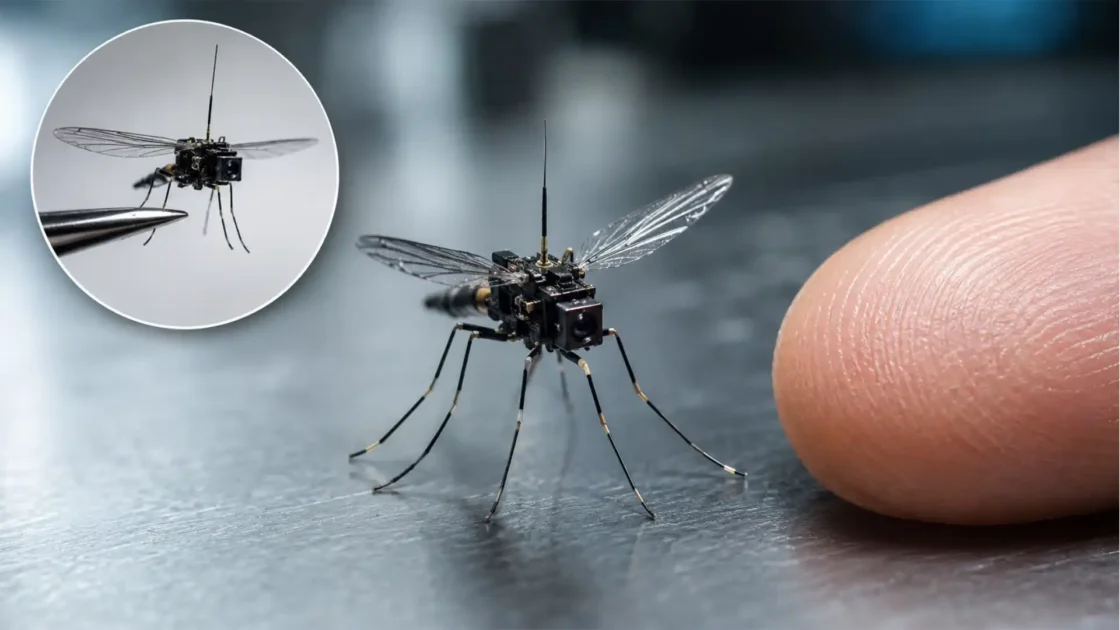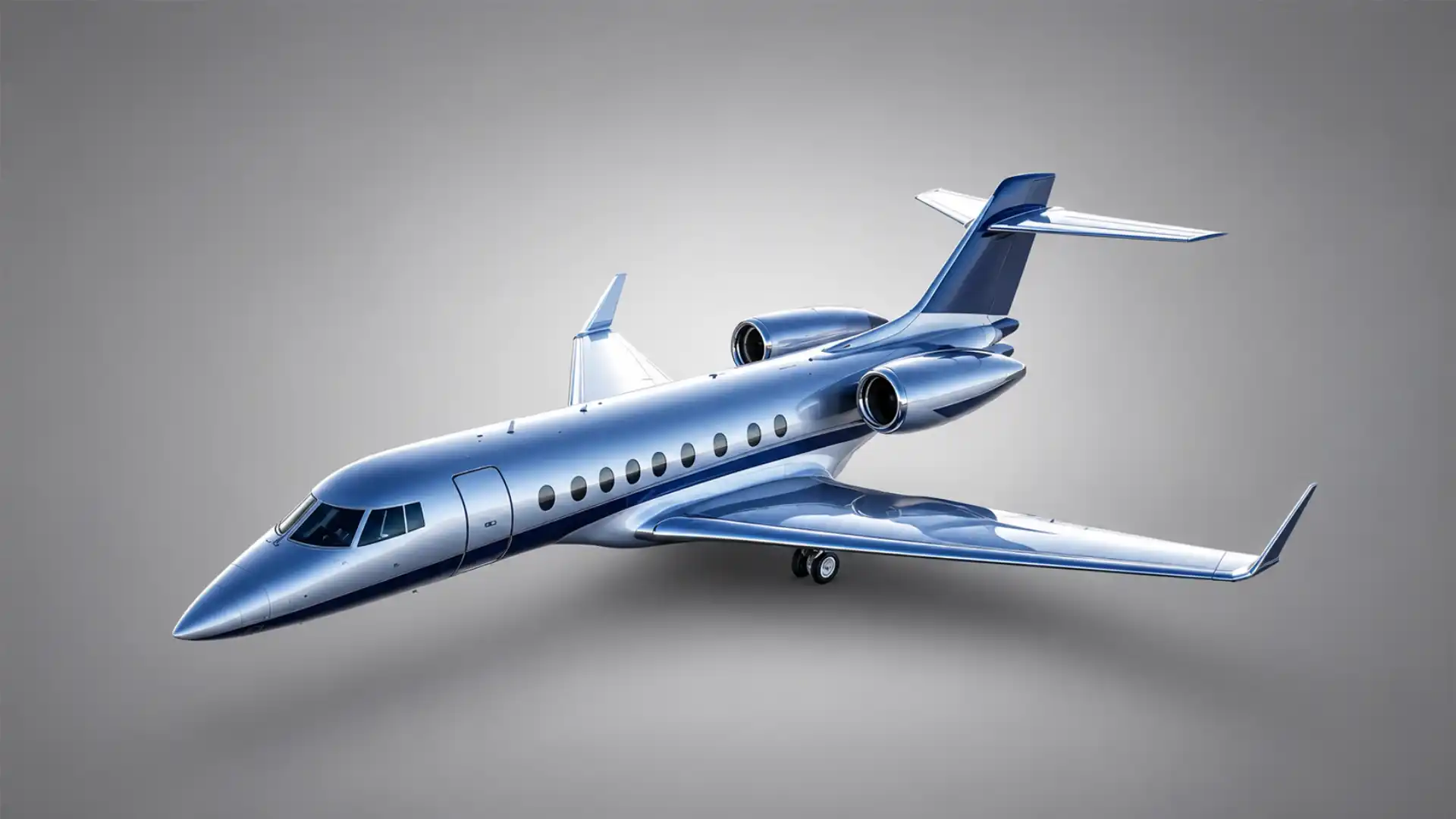
AI is already flying aircraft, but not in the way most passengers imagine. The breakthrough is not a sudden jump from today’s two-pilot airline cockpit to empty flight decks on long-haul jets. The real shift is more gradual and more serious: AI and advanced autonomy are taking over bounded aviation tasks where the operating conditions, safety case, and business logic are easier to prove. The first wave is forming around military test aircraft, cargo operations, supervised air taxis, unmanned systems, and pilot-assistance tools for commercial aviation. DARPA has reported AI-controlled F-16 dogfighting tests, Airbus has demonstrated autonomous taxi, takeoff, and landing research, and companies such as Reliable Robotics, Merlin, and Wisk are trying to turn autonomy into certifiable aviation products.
Table of Contents
The real story is task transfer, not empty cockpits
Autopilot has been part of aviation for decades. Commercial aircraft already use automated flight control, autothrottle, flight management systems, terrain warning, traffic collision alerts, autoland, and envelope protection. A modern long-haul flight is not hand-flown from departure to arrival. The crew manages the aircraft, configures systems, talks to air traffic control, monitors weather, handles abnormal conditions, cross-checks each other, and decides when the plan no longer fits the sky.
That is why the current wave of autonomy is often misunderstood. The headline “AI learns to fly aircraft” sounds like a robot replacing a captain. The more accurate reading is that aviation is beginning to shift specific pilot functions into systems that perceive, decide, communicate, and act within defined limits.
The difference matters. Autopilot follows selected modes. AI-based autonomy may classify runway markings, track traffic, interpret sensor inputs, choose avoidance maneuvers, manage flight path changes, or support air traffic communications. These are not just mechanical control tasks. They enter the territory of judgment, even if that judgment remains constrained by software architecture, safety monitors, and approved procedures.
That is why regulators do not treat AI pilots as a consumer-software release. Aircraft systems are certified against strict safety requirements. A company cannot simply show that an autonomous aircraft flew once and call it ready. It must show how the system behaves across normal operations, degraded modes, rare edge cases, maintenance events, sensor faults, communications failures, and foreseeable emergencies.
The near-term transformation is therefore not “planes will be autonomous tomorrow.” It is aviation is converting more flight tasks into certifiable software functions, one layer at a time.
The F-16 test that made AI pilots harder to dismiss
The most striking public milestone came from DARPA’s Air Combat Evolution program. In April 2024, DARPA said AI algorithms had autonomously flown a modified F-16 test aircraft, the X-62A VISTA, against a human-piloted F-16 in within-visual-range combat scenarios. The flights took place at Edwards Air Force Base and were described as the first in-air tests of AI algorithms flying an F-16 against a human-piloted F-16.
That was not an airline test. It was not a passenger aircraft. It was not a certification event. It was still a serious aviation milestone because air combat is a demanding control and decision problem. Within-visual-range maneuvering requires rapid geometry decisions, energy management, adversary tracking, g-limit control, safety boundaries, and fast adaptation to a moving opponent.
DARPA’s earlier AlphaDogfight Trials in 2020 had already shown AI agents beating human pilots in simulation. Heron Systems’ agent won the final simulated contest against an experienced Air Force F-16 pilot. The live X-62A work moved the story beyond simulation into a real aircraft under test controls.
The U.S. Air Force later described a May 2024 flight in which then-Air Force Secretary Frank Kendall rode in the front seat of the X-62A VISTA while AI agents controlled the aircraft during tactical maneuvers. The Air Force said neither Kendall nor the safety pilot in the back seat touched the controls during the autonomous portion.
This matters for civil aviation only in a limited way. A combat autonomy test does not prove that a passenger aircraft should fly itself. Military autonomy accepts mission assumptions, risk tolerances, and operational conditions that civil aviation cannot copy. Still, the test raises the credibility of AI-controlled flight. It shows that autonomy is no longer only a lab demo or a simulation trophy. AI has crossed into real aircraft control in high-demand flight regimes.
Civil aviation is moving through certification, not spectacle
Civil aviation advances through evidence, not viral video. A demonstration flight can prove that a system worked once. Certification asks whether it is safe to repeat under approved conditions for thousands of flights, with trained operators, known maintenance procedures, controlled software updates, and an accountable safety chain.
That is why the most meaningful civil autonomy developments are often dry. Reliable Robotics announced in April 2026 that it had completed FAA-contracted detect-and-avoid testing for autonomous aircraft systems at Hollister Municipal Airport in California. The company said the test campaign captured operational data for large uncrewed aircraft operating near airport traffic patterns and shared results with RTCA standards committees.
Merlin announced in May 2026 that it was expanding its Merlin Pilot autonomy platform toward commercial cargo aircraft. The company said the system is intended for existing and future cargo aircraft, beginning with commercial transport, while its autonomy core also advances through military airworthiness work on the C-130J.
Wisk is pursuing a different route. Its Generation 6 aircraft is a four-passenger autonomous electric vertical-takeoff-and-landing aircraft designed around supervised autonomous operation. Wisk has described it as a candidate for certification of an autonomous passenger-carrying aircraft in the United States.
These examples point to the same practical truth: autonomous aviation is being built first where missions are narrower than scheduled airline transport. Cargo flights, eVTOL routes, defense missions, airport-surface functions, and unmanned aircraft operations are easier to define than a global passenger airline network.
Autonomy means several different things in aircraft
The word “autonomous” is too broad to use casually. In aviation, the difference between automatic, remotely piloted, supervised autonomous, optionally piloted, and fully autonomous is not semantic. It determines the safety case.
An automatic system follows pre-defined commands. An autopilot holds heading, altitude, speed, vertical profile, or navigation path according to selected modes. It may be highly reliable, but it does not carry responsibility for the mission.
A remotely piloted aircraft still depends on a human pilot, only from another location. The pilot may not be in the cockpit, but human command remains central.
A supervised autonomous aircraft may fly routine segments itself while a remote human monitors the operation and intervenes under defined conditions. This model is central to many cargo and air-taxi concepts.
A fully autonomous aircraft would be expected to complete its mission safely without relying on human intervention in real time. It must manage traffic conflicts, sensor disagreements, weather deviations, degraded communications, emergency landing logic, and system failures.
The FAA’s Roadmap for Artificial Intelligence Safety Assurance draws a related distinction between learned AI and learning AI. Learned AI is trained before operation and then fixed. Learning AI changes during operation. For aviation, that distinction is severe because certification depends on approving a known system configuration. A system that keeps changing itself after approval challenges the whole structure of airworthiness evidence.
The aircraft most likely to enter early service will not be free-learning machines. They will be bounded, monitored, configuration-controlled systems with approved behavior.
Cargo is the likely civil proving ground
Cargo has a stronger early case for autonomy than passenger airliners. It still requires strict safety because cargo aircraft fly over people, use airports, share airspace, and carry dangerous operational risk. Yet it avoids one major barrier: passengers do not have to accept being inside the aircraft.
Regional cargo also has a clear economic logic. Smaller cargo routes often face pilot availability problems, thin margins, irregular schedules, and lower aircraft utilization. If autonomous or remotely supervised aircraft can operate safely on selected routes, cargo carriers may gain service flexibility without waiting for the public to accept pilotless airline travel.
Boeing’s 2025 Pilot and Technician Outlook projects demand for 660,000 new pilots, 710,000 maintenance technicians, and 1,000,000 cabin crew members over 2025–2044. Boeing’s forecast does not assume a near-term collapse of pilot demand because of autonomous airliners.
That forecast is a useful check on hype. Airlines and cargo operators may adopt more automation, but the industry still expects human aviation labor to remain central for decades.
Cargo autonomy will also begin under restrictions. Early operations may have conservative weather limits, selected airports, defined traffic environments, remote supervision, and carefully managed failure procedures. Pilotless cargo aircraft are more plausible than pilotless passenger jets because the operational box can be made smaller.
Air taxis are the public-facing test case
Autonomous eVTOL air taxis are likely to become the most visible test of public trust. Wisk’s strategy is not to take a Boeing 737 and remove the pilots. It is to design a new aircraft and service model around autonomy from the start.
That has advantages. A clean-sheet aircraft can integrate flight computers, sensors, redundancy, ground supervision, electric propulsion, maintenance monitoring, and passenger systems into one architecture. It can be designed for defined routes between vertiports rather than for the full operating range of a conventional airliner.
It also creates a difficult certification package. eVTOL aircraft must prove aircraft-level safety, propulsion redundancy, battery protection, flight control integrity, emergency procedures, noise management, vertiport integration, passenger evacuation, and safe operations in mixed airspace. Autonomy adds another layer: the system must make the right decisions without an onboard pilot.
The FAA’s Advanced Air Mobility Implementation Plan, released in 2023, describes Innovate28 as a path toward AAM operations at one or more U.S. locations by 2028. The FAA defines advanced air mobility aircraft as often highly automated, frequently electric, and often capable of vertical takeoff and landing.
Air taxis therefore sit between drone operations and commercial airline transport. They are passenger aircraft, but their routes may be short, supervised, geographically limited, and supported by dedicated ground infrastructure. They may teach the public to ride autonomous aircraft before the public accepts autonomous airliners.
Airbus is treating autonomy as assistance before replacement
Airbus has already shown that a commercial-aircraft test platform can perform autonomous taxi, takeoff, and landing under research conditions. Its ATTOL project concluded in 2020 after autonomous flight tests using onboard image-recognition technology. Airbus said the work involved more than 500 test flights, with many used to collect video data and train algorithms.
Airbus did not present ATTOL as a plan to remove pilots from airliners. The company framed the research as a way to let pilots focus more on strategic decision-making and mission management. That framing is important. In passenger aviation, autonomy is more likely to enter first as a cockpit assistant than as a replacement.
Airbus UpNext’s Optimate project follows that path. Airbus describes Optimate as a demonstrator for automatic taxiing and pilot-assistance technologies using computer vision, data fusion, automation, and machine learning. The company is testing the system first on an electric truck configured with cockpit functions before moving toward flight-test aircraft work.
Taxiing is a smart target. Airports are full of human error traps: similar taxiways, changing clearances, construction areas, vehicle crossings, runway-hold points, low visibility, radio congestion, and confusing signage. A pilot-assistance system that detects obstacles, supports route awareness, and reduces wrong-surface risk could improve safety without removing the crew.
Passenger aircraft autonomy will probably reach pilots as support first: better perception, smarter alerts, virtual assistance, taxi guidance, and workload reduction.
Regulators are writing the rulebook while companies build the aircraft
The FAA and EASA both know that AI does not fit neatly into older software assurance methods. Conventional aviation software is usually built from explicit requirements. Engineers define what the system must do, code it, trace it, verify it, and control changes. Machine-learning systems are partly shaped by training data, statistical generalization, and model behavior that may not be explainable line by line.
The FAA’s Roadmap for Artificial Intelligence Safety Assurance says the agency is addressing both the safety of AI and the use of AI for safety. It identifies collaboration, workforce readiness, AI safety assurance, AI use in the safety lifecycle, and aviation safety research as action areas.
EASA’s Artificial Intelligence Roadmap 2.0 lays out a human-centric approach to AI in aviation, with focus on safety, security, AI assurance, human factors, and ethics.
This regulatory work is not paperwork for its own sake. It is the main gate between impressive autonomy demonstrations and revenue flights. An autonomous aircraft must show not only that it flies, but that its behavior is bounded, testable, maintainable, secure, and accountable.
The certification problem is harder than the flying problem. Many aircraft can fly autonomously once. Far fewer systems can prove that they are safe enough for routine operation.
The hardest question is proof
Autonomous flight raises a blunt question: how do you prove that an AI-based system will behave safely when it sees something it has never seen before?
That question does not vanish with more test hours. Rare events define aviation safety. A certification case must cover sensor faults, bad weather, navigation errors, failed radios, confusing air traffic instructions, runway incursions, non-cooperative aircraft, maintenance mistakes, software-update defects, and unexpected combinations of failures.
Machine learning complicates this because performance depends on the data used to train and validate the model. If a model learns from a training set that underrepresents certain weather, lighting, runway markings, aircraft types, or traffic behavior, it may perform well in tests and fail in a rare operational corner.
Regulators may require evidence from simulation, ground tests, hardware-in-the-loop testing, flight tests, formal methods, independent safety monitors, scenario coverage analysis, human factors evaluation, cybersecurity assessment, and post-flight data review.
The question is not whether AI can outperform pilots in selected tasks. It may. The question is whether the operator can show where the system works, where it does not work, how it knows the difference, and what happens when it is wrong.
Runtime assurance will be the hidden safety layer
A safe autonomous aircraft will not rely on one AI model making unchecked decisions. The safer architecture is layered. One system may generate flight actions. Another system checks those actions against hard limits. A third system monitors sensor health. A fourth system handles emergency fallback. Remote supervisors may observe the operation, but the aircraft must still remain safe if human intervention is unavailable.
Runtime assurance is central to this idea. It allows a high-performance autonomy system to propose actions while a separate monitor enforces safety boundaries such as altitude limits, flight-envelope limits, separation minima, geofences, energy limits, and approved maneuver regions.
NASA’s ICAROUS project reflects this safety architecture for unmanned aircraft. ICAROUS integrates detect-and-avoid and geofencing functions, including DAIDALUS and PolyCARP, to support safety-centric autonomous UAS operations.
This is not as dramatic as an AI dogfight, but it may be more relevant to civil aviation. The public should not imagine one digital pilot sitting alone inside a computer. A certifiable autonomous aircraft will be a network of constrained systems, monitors, fallbacks, and evidence trails.
The safest AI pilot is not the boldest AI pilot. It is the one surrounded by independent safeguards that prevent unsafe commands from becoming aircraft motion.
Detect-and-avoid is the civil autonomy gatekeeper
A pilotless civil aircraft must avoid other aircraft. That sounds basic. It is one of the hardest pieces of the whole autonomy case.
In controlled airspace, many aircraft broadcast position through transponders and ADS-B. But not every hazard is cooperative. Small aircraft, helicopters, drones, gliders, and traffic near airports may create detection problems. Weather, terrain, sensor range, and radio congestion make the problem harder.
Detect-and-avoid systems must not only see traffic. They must decide whether to remain well clear, maneuver, alert a remote pilot, or trigger collision-avoidance logic. They must be predictable to air traffic controllers and other pilots.
Reliable Robotics’ 2026 FAA-contracted testing focused on this problem. The company said its DAA system supports a remote pilot’s responsibility to perform remain-well-clear and collision-avoidance functions against airborne traffic, including in terminal airport environments.
Airport-area testing matters because takeoff and landing environments are dense and messy. An en route aircraft may have time and space to resolve conflicts. Near airports, traffic patterns, radio calls, visual flight rules, training aircraft, and last-minute changes compress decision time.
Detect-and-avoid is not a feature. It is a substitute for one of the most basic functions of a pilot.
Remote supervision does not remove humans
The phrase “pilotless aircraft” can mislead because humans remain embedded in the system. They move from the cockpit into design, certification, maintenance, operations control, remote supervision, data review, emergency response, and regulatory oversight.
A remotely supervised autonomous aircraft still depends on humans. The safety case must define what the supervisor sees, how many aircraft they monitor, how alerts are prioritized, how quickly they can intervene, what happens during lost link, and whether their workload remains safe during abnormal events.
This is a serious human-factors problem. A remote supervisor who watches several aircraft may be effective during routine operations but overloaded during simultaneous abnormalities. An alert that arrives too late is useless. An alert that arrives too often is ignored. A control interface that hides uncertainty can create false trust.
Aviation has seen automation problems before. Crews may misunderstand modes, over-trust a system, or lose situational awareness when automation behaves unexpectedly. Removing the pilot from the cockpit does not remove those risks. It changes their shape.
Autonomy shifts human responsibility rather than deleting it. Regulators will ask where the human is, what they control, what they know, and whether the system remains safe when the human cannot act.
Reduced-crew airliners face a hard safety wall
The debate over single-pilot or reduced-crew commercial airliners is separate from full autonomy, but it sits on the same path. If the industry cannot prove that one pilot plus automation can match two-pilot safety, it is even harder to prove that no onboard pilot can do so.
EASA’s eMCO-SiPO research project examined extended minimum-crew operations and single-pilot operations. Its project page says that, with current cockpit design as a reference and within the limits of the research, an equivalent level of safety between extended minimum-crew operations and current two-crew operations cannot be sufficiently demonstrated. EASA lists pilot incapacitation monitoring, fatigue and drowsiness, sleep inertia, cross-checks, and physiological needs among the main areas of concern.
Pilot unions have made the same argument more forcefully. ALPA’s 2024 white paper argues that current aircraft automation is a tool to assist flight crews, not a replacement for them, and that reduced-crew operations would compromise safety.
This does not mean reduced-crew research will stop forever. It means the evidence is not strong enough today. The two-pilot cockpit still provides redundancy, shared workload, cross-checking, incapacitation protection, independent judgment, and split attention during abnormal events.
Aviation automation has a safety record and a warning record
Automation has made aviation safer. Terrain awareness and warning systems reduced controlled-flight-into-terrain accidents. TCAS gave crews collision-avoidance guidance. Autoland supports low-visibility operations. Fly-by-wire protections reduce the chance of exceeding aircraft limits. Flight management systems reduce navigation workload.
The warning side is just as real. Automation can hide complexity. Pilots may misread modes, fail to notice degraded states, or trust a system beyond its design limits. A poorly designed interface can turn a small confusion into a serious event.
AI-based autonomy sharpens both sides. It may see patterns humans miss, monitor continuously, react quickly, and handle routine tasks with high precision. It may also fail under rare conditions in ways that do not feel intuitive to human operators.
The design challenge is not “human versus machine.” The challenge is assigning each task to the actor best suited for it, then making the handoff clear. If the aircraft is controlling, the pilot or supervisor must know what it is doing. If the pilot or supervisor must intervene, the system must give enough time and context.
The most dangerous autonomy is not the autonomy that fails loudly. It is the autonomy that fails quietly while humans still think everything is normal.
Trust must be earned through evidence
Passengers may ask a simple question: would you fly in a plane with no pilot? The industry cannot answer that with confidence-building language. It must answer with evidence.
EASA’s work on AI ethics shows that aviation professionals are not blindly comfortable with AI deployment. EASA’s 2025 ethics survey reported concerns about AI performance, accountability, data protection, and threats to aviation safety, with a mean comfort, trust, and acceptance rating of 4.4 on a 7-point scale.
That cautious attitude is rational. Aviation professionals already work with advanced automation. Their skepticism is not anti-technology. It is grounded in the knowledge that aircraft safety depends on proof, training, procedures, maintenance, and clear accountability.
Public trust will grow unevenly. People may accept autonomous cargo without noticing it. They may accept autonomous eVTOL flights if the routes are short, the service is useful, and early operations build a clean safety record. They will be slower to accept a large passenger jet with no onboard pilot.
The trust curve will depend on boring facts: certified aircraft, published safety rules, transparent incident reporting, clear supervision models, and years of operation.
Military autonomy will move faster than passenger autonomy
Military aviation has different missions and risk calculations. An uncrewed combat aircraft can be used for dangerous missions where losing the aircraft is acceptable if the mission value is high. A civil passenger aircraft has no such risk bargain.
The U.S. Air Force’s Collaborative Combat Aircraft program is built around uncrewed aircraft working with crewed platforms. The Air Force’s public CCA updates show continuing activity around prototypes, testing, open architecture, and future force design.
The military path will likely move faster because it can operate in controlled programs, restricted airspace, and mission-specific envelopes. It also has a clearer reason to accept uncrewed systems: reduce risk to pilots, increase mass, operate in contested environments, and pair autonomous platforms with crewed fighters.
Civil aviation will borrow methods but not missions. Simulation, sensor fusion, runtime assurance, autonomy testing, cybersecurity practices, and human-machine teaming will migrate across boundaries. The civil standard for passenger transport will remain tougher.
A dogfighting AI proves capability. A passenger aircraft needs a safety case.
Cybersecurity becomes part of airworthiness
An autonomous aircraft is a cyber-physical machine. More autonomy means more software, more sensors, more data links, more updates, more ground systems, and more ways for corrupted information to affect flight.
Cybersecurity in this setting is not only about protecting data. It is about preventing unsafe aircraft behavior. Threats include spoofed navigation signals, corrupted maps, malicious commands, compromised update pipelines, poisoned training data, false traffic information, degraded communications links, and tampered maintenance systems.
Remote supervision makes the problem sharper. If an aircraft depends on a command-and-control link, the system must define what happens when the link drops, is delayed, or is attacked. The aircraft needs a safe lost-link response: continue, hold, return, divert, or land according to approved logic.
AI also adds model-specific risks. A perception system may be fooled by unusual lighting, markings, or sensor noise. A language-based support system may generate incorrect text. A trained model may behave outside expectations when the input distribution shifts.
The FAA’s roadmap identifies AI safety assurance and the use of AI in the safety lifecycle as areas requiring careful work, including attention to the limits of AI-generated material in engineering processes.
For autonomous aviation, cybersecurity is flight safety.
Airports are part of the autonomy system
Autonomous aircraft will not operate in isolation. Airports, vertiports, operations centers, maintenance bases, data links, air traffic systems, and local emergency services become part of the operational safety case.
Airport surfaces are especially difficult. Taxiways involve signs, paint, lights, vehicles, aircraft, construction zones, radio instructions, runway crossings, and low-visibility procedures. A self-flying aircraft may be able to hold a flight path in cruise yet struggle with a confusing taxi clearance at a busy airport.
This is why Airbus’s Optimate project begins with a ground vehicle that mimics aircraft cockpit functions. Testing on airport surfaces allows engineers to collect perception data and examine automatic taxiing without putting an airliner at risk.
Vertiports create their own burden. Autonomous air taxis will need charging systems, passenger handling, emergency procedures, flight scheduling, weather monitoring, obstacle data, approach paths, noise procedures, and coordination with local airspace.
The autonomous aircraft is only one node. The airport and operations network must be ready too.
Weather remains a hard boundary
AI does not make weather disappear. Rain, fog, snow, ice, windshear, turbulence, convective storms, crosswinds, and low cloud all change the autonomy problem.
Weather affects sensors. Cameras may lose contrast. Lidar may degrade in rain or snow. Radar may see clutter. Runway markings may be obscured. GPS and communications may be affected by atmospheric or electromagnetic conditions. Aircraft performance itself changes with icing, density altitude, wind, and contamination.
Human pilots also face these problems, but they bring judgment, dispatch support, weather radar, forecasts, reports from other crews, and conservative decision-making. An autonomous system must either encode safe decision rules or remain inside operating limits that avoid the hardest conditions.
Early autonomous services are therefore likely to have weather restrictions. Cargo aircraft may fly selected routes under approved conditions. eVTOL services may cancel under wind, visibility, or precipitation limits. Airport-surface automation may begin in simpler conditions before expanding.
That may frustrate early customers, but it is how aviation should behave. A restricted autonomous aircraft is safer than an overconfident autonomous aircraft.
Maintenance will decide whether autonomy is reliable
Autonomous aircraft depend on sensors and computing systems as safety-critical equipment. Cameras, radar, lidar, inertial sensors, antennas, processors, power supplies, actuators, cooling systems, and software configurations must be maintained under strict procedures.
A dirty sensor cover could reduce perception. A misaligned camera could distort runway detection. A software mismatch could change behavior. A degraded actuator could compromise emergency recovery. A corrupted data file could affect navigation or identification.
That means maintenance technicians become central to autonomy. They will need training in sensor calibration, software version control, data integrity, cybersecurity, and diagnostic tools. The aircraft may produce more health data, but someone must interpret it, act on it, and sign the aircraft back into service.
Software updates are especially sensitive. A consumer app can be patched quickly. A certified aircraft system cannot change casually. If a machine-learning model is updated, the operator and regulator must know what changed, how it was tested, and whether the approved safety case remains valid.
Autonomous aircraft will be only as safe as their maintenance and configuration control.
Liability will follow the decision trail
When an aircraft incident happens, investigators ask who did what, what failed, what information was available, and which barriers did not work. Autonomous aircraft make that chain more complex.
If the system commanded a maneuver, investigators will ask why. If a remote supervisor failed to intervene, they will ask whether the interface, alert timing, workload, and procedure made intervention realistic. If a sensor missed traffic, they will ask whether that failure was foreseeable. If a model misclassified a runway, they will ask about training data, validation, and operational limits.
Autonomous aircraft will need richer recording systems. Traditional flight data and cockpit voice recorders may be joined by perception logs, model-state records, sensor snapshots, decision traces, remote-supervision data, and software-version histories.
This is uncomfortable for companies because it exposes design decisions. It is necessary for public trust. If an aircraft without an onboard pilot makes a wrong decision, the industry must be able to explain the chain of events.
No one should accept an autonomous aircraft whose decisions cannot be reconstructed after the fact.
Where aircraft autonomy is arriving first
| Area | Current direction | Main reason it comes early | Main barrier |
|---|---|---|---|
| Military aircraft | AI-controlled test aircraft and uncrewed teammates | Mission value and higher tolerance for aircraft risk | Rules of engagement, trust, contested conditions |
| Cargo aircraft | Remote-supervised and certifiable autonomy projects | Strong economic case and no passengers onboard | Detect-and-avoid, airport integration, certification |
| eVTOL air taxis | Purpose-built supervised autonomous aircraft | Clean-sheet design and defined routes | Type certification, vertiports, weather, public trust |
| Airline cockpits | Pilot assistance, automatic taxi research, virtual assistants | Safety and workload benefits without removing crew | Human factors, mode awareness, approval standards |
| UAS operations | BVLOS, geofencing, traffic avoidance, autonomy monitors | Smaller aircraft and narrower missions | Airspace integration and non-cooperative traffic |
This table shows why “autonomous aircraft” is not one product category. Each use case has its own safety case, operating environment, and path to approval. The first routine services will likely look limited and carefully managed rather than dramatic.
The business case is narrower than the hype
Autonomy companies often talk about large markets, pilot shortages, and aircraft efficiency. Those arguments are not imaginary, but they can sound cleaner than the actual airline business.
Airlines buy technology when it improves safety, reliability, aircraft utilization, fuel burn, maintenance, crew planning, or route economics. They do not buy it because it sounds futuristic. Cargo operators may move faster because pilot availability and regional route economics create clear pressure. Passenger airlines face stronger public, labor, regulatory, and insurance barriers.
The cost of certification will also shape the market. Building an impressive prototype is far cheaper than proving airworthiness. The companies that survive will need flight-test discipline, documentation, quality systems, safety analysis, regulatory relationships, and operational support.
That favors firms that speak the language of aviation rather than only the language of AI. Reliable Robotics emphasizes FAA-contracted DAA testing. Merlin frames its work around aircraft-agnostic autonomy and airworthiness paths. Wisk frames its aircraft around certification, production, and operations approval.
The winners in autonomous aviation may look less like software disruptors and more like certification companies with strong software.
The workforce will change before pilot demand collapses
Autonomy will not erase aviation jobs quickly. It will change the job mix.
Pilots may work with more capable cockpit assistants. Some operations may create remote-supervision roles. Maintenance technicians will need more software and sensor skills. Operators will need autonomy dispatchers, flight-test engineers, safety-case specialists, cybersecurity experts, AI assurance engineers, and data-governance teams.
The FAA’s AI roadmap identifies workforce readiness as one of its action areas. That is a signal that regulators themselves need new skills. Certifying AI systems requires knowledge of machine learning, software safety, human factors, data governance, cybersecurity, and aviation operations.
The pilot shortage debate will therefore become more complicated. Autonomy may reduce pressure in some operations, especially cargo. It may also create new staffing needs around supervision, maintenance, and certification. For passenger airlines, Boeing’s long-term pilot-demand forecast suggests the conventional pilot career is far from obsolete.
The cockpit may change sooner than the labor market shrinks.
Public acceptance will arrive in layers
People do not accept transport automation all at once. They accept it by exposure, usefulness, safety record, and familiarity.
Autonomous airport trains are normal in many cities. Drones are accepted for inspection and photography in many settings. Autopilot is accepted in commercial aircraft because the aviation system and flight crew remain trusted. Autonomous aircraft will follow a layered path.
Cargo autonomy may become normal without much public attention. Air taxis will be more visible. Passengers may accept them if flights are short, prices make sense, routes save time, and the aircraft build a good safety record. Large pilotless passenger jets will face a much steeper trust problem.
Airlines know this. Even if technology becomes capable, a company must ask whether passengers will buy tickets, insurers will underwrite operations, unions will accept rules, regulators will approve international flights, and accident investigators will have enough data.
The first passengers in autonomous aircraft may not be airline passengers. They may be air-taxi users on short routes, under human supervision from the ground.
International rules will slow full autonomy
Aviation is global. A passenger aircraft may depart Europe, cross oceanic airspace, and land in the United States or Asia. Full autonomy would need acceptance across jurisdictions, standards bodies, air navigation providers, insurers, manufacturers, operators, and pilot organizations.
The FAA and EASA are both working on AI assurance, but harmonization takes time. Standards for detect-and-avoid, software assurance, remote supervision, cybersecurity, data recording, and human-machine interfaces must align enough for international operations.
National strategic priorities will differ. The United States has strong defense autonomy programs and several civil autonomy startups. Europe has Airbus research and a cautious regulatory approach to AI and reduced-crew operations. China has aggressive drone and eVTOL activity, though international certification acceptance is a separate hurdle.
The first autonomous aircraft services will likely be domestic or regional, not global airline replacements.
The safest near-term use of AI may not touch the controls
The public imagination focuses on AI flying the aircraft. Aviation may gain safety sooner from AI that never moves a control surface.
AI can search maintenance records for failure patterns, flag unstable-approach risk, improve runway-incursion detection, support dispatch decisions, analyze flight data, test software requirements, and find weak signals in safety reports. The FAA roadmap includes the use of AI in the safety lifecycle as a focus area, while also warning that AI-generated material needs control when used in engineering processes.
That kind of AI is less glamorous but easier to deploy. A maintenance-risk model or safety-analysis tool can be kept advisory while humans remain accountable. If it works well, it may prevent incidents before autonomy enters flight control.
This may be where airlines see early returns. Better predictive maintenance, better operational risk detection, and better cockpit decision support may save money and improve safety without triggering the full public debate over pilotless jets.
The two-pilot cockpit remains the passenger baseline
For large commercial passenger aircraft, two pilots remain the operational and regulatory baseline. This is not only tradition. It is built into aircraft design, procedures, training, air traffic operations, labor contracts, insurance, and passenger trust.
Two pilots provide cross-checking, shared workload, monitoring, incapacitation protection, and independent judgment. During abnormal events, one pilot may fly while the other handles checklists, communications, and systems. A single-pilot or no-pilot concept must replace those functions with equal or better safety.
The EASA eMCO-SiPO findings show that this replacement has not been demonstrated using current cockpit designs.
That does not stop research. It does set the timeline. Passenger airliners may gain more automation, virtual assistants, emergency autoland capability, and cockpit monitoring long before they lose onboard pilots.
For airline passengers, the practical near-term change is not an empty cockpit. It is a smarter cockpit.
The first routine autonomous flights may look boring
When autonomous aviation enters routine service, it may not feel like a technological spectacle. A cargo aircraft may fly at night on a defined route with a remote supervisor. An eVTOL may operate between two vertiports under strict weather limits. A commercial aircraft may use an automatic taxi assistant while two pilots remain in the cockpit. A military uncrewed aircraft may fly as a teammate to a crewed fighter outside public view.
That is the correct path. Aviation safety is built through repeatability. New systems earn trust by operating within limits, collecting data, fixing problems, and expanding only when evidence supports expansion.
Aviation history rewards boring reliability. The technology that matters most often becomes invisible once it works. TCAS, autoland, terrain warning, and fly-by-wire protections changed safety without turning every flight into a spectacle.
Autonomous aircraft will mature the same way. First they will be restricted. Then they will become routine. Only after years of safe operation will the public debate move to broader passenger use.
The aircraft will not be intelligent in the human sense
“AI pilot” is a useful phrase, but it can mislead. These systems do not carry human understanding, accountability, fear, experience, or moral judgment. They process data, follow models, apply rules, and produce outputs inside a designed architecture.
A good autonomous system may react faster than a human, monitor more inputs, and avoid fatigue. It may also fail in strange ways. It may misread an edge case that a human would recognize. It may assign high confidence to a wrong classification. It may behave too literally under an ambiguous instruction.
That is why aviation should avoid treating AI as a crew member. It should treat it as a system. Systems need requirements, limits, tests, monitors, procedures, maintenance, and accountability.
The public should not be asked to trust a digital personality. It should be shown an aircraft system with evidence.
The strategic race is already under way
Autonomous aircraft are not only a technology story. They are part of a wider strategic race involving defense, logistics, urban mobility, software certification, advanced sensors, electric propulsion, and aviation labor.
Defense agencies want uncrewed teammates, lower pilot risk, and aircraft that can operate in contested environments. Cargo operators want flexible service and relief from crew constraints. eVTOL firms want new short-distance passenger markets. Aircraft makers want to shape the next cockpit architecture. Regulators want to prevent a safety gap before commercial pressure grows.
This creates tension. Investors want speed. Aviation certification demands patience. Military programs want capability. Civil regulators want proof. Operators want cost savings. Pilot groups want safety and jobs protected. Passengers want convenience without feeling like test subjects.
The companies that understand these tensions will be more credible than those that only promise disruption.
The certification questions that decide everything
Safety evidence regulators will ask for
| Certification question | Practical meaning | Evidence needed |
|---|---|---|
| Operating envelope | Where the system is allowed to fly | Approved limits for weather, airspace, aircraft state, and route type |
| Perception reliability | Whether sensors understand the environment | Tests across lighting, traffic, weather, markings, failures, and degraded states |
| Decision boundaries | What the autonomy may decide | Hard limits, safety monitors, fallback logic, and command filtering |
| Detect-and-avoid | How the aircraft prevents traffic conflicts | Simulation, flight tests, DAA standards, non-cooperative traffic evaluation |
| Remote supervision | What humans monitor and control | Workload studies, alert timing, lost-link rules, interface validation |
| Software updates | How approved behavior remains controlled | Configuration control, regression testing, model-change approval |
| Cybersecurity | Whether data and commands can be trusted | Threat analysis, secure links, update protection, resilience testing |
| Emergency recovery | How failures end safely | Diversion logic, emergency landing, containment, post-failure procedures |
The table captures why flight demonstrations alone are not enough. Certification requires evidence for the whole operating system, not only the aircraft’s ability to fly a route once.
A careful revolution is still a revolution
AI is learning to pilot aircraft. That statement is now defensible. DARPA’s X-62A work shows AI controlling a real fighter-class aircraft in demanding tests. Airbus has shown autonomous taxi, takeoff, and landing research on commercial-aircraft platforms. Reliable Robotics is working through detect-and-avoid evidence. Merlin is targeting cargo aircraft. Wisk is pursuing supervised autonomous passenger eVTOL certification. The FAA and EASA are writing AI assurance frameworks because the issue has moved beyond theory.
The harder statement is more useful: autonomous aircraft will arrive first where aviation can define the mission tightly enough to prove safety. That means combat testbeds, cargo routes, air taxis, unmanned aircraft, airport-surface functions, and cockpit assistants.
Large passenger jets with no onboard pilots remain a much longer project. The technical pieces are advancing, but the safety case, public trust, international rulemaking, human factors, liability, and maintenance burden remain high.
The future aircraft is becoming more autonomous. The future airliner is not losing its pilots tomorrow.
Questions readers ask about AI pilots and autonomous aircraft
Yes. AI has flown real aircraft in controlled test programs. DARPA reported AI-controlled X-62A VISTA flights against a human-piloted F-16, and Airbus completed autonomous taxi, takeoff, and landing research flights. These were test and research programs, not routine airline services.
No. Large passenger airliners are still built, certified, and operated around two pilots. The near-term path is pilot assistance, cargo autonomy, military autonomy, unmanned aircraft, and supervised air taxis.
Autopilot follows selected flight modes and flight-management commands. An AI-based flight system may add perception, traffic interpretation, decision support, tactical maneuvering, or autonomous task execution inside approved limits.
Cargo aircraft and eVTOL air taxis are closer than large passenger jets. Cargo has a clearer early business case, while eVTOL aircraft can be designed around supervised autonomy from the start.
Cargo avoids the challenge of putting passengers inside a pilotless aircraft. It can also start with limited routes, selected airports, defined weather limits, and remote supervision.
The flights showed AI algorithms controlling a real modified F-16-class aircraft in air-combat test scenarios. That moved AI flight autonomy beyond simulation into live aircraft testing.
No. Military autonomy has different missions, operating conditions, and risk tolerance. Civil passenger aviation requires a stricter public-safety case and broader regulatory acceptance.
Detect-and-avoid is the ability of an autonomous or uncrewed aircraft to identify other aircraft, remain well clear, and prevent collisions. It is one of the central barriers to civil autonomy.
Most early systems will. The human may be a remote pilot, fleet supervisor, onboard pilot, dispatcher, or operations controller depending on the aircraft and mission.
AI systems can behave unpredictably under rare conditions, especially if they rely on machine-learning models. Regulators need proof that the system remains safe across approved operating limits and failure cases.
Learned AI is trained before operation and then fixed. It does not keep changing during flight. This is easier to certify than learning AI, which adapts while in service.
Airbus has tested autonomous taxi, takeoff, and landing through ATTOL and is developing pilot-assistance technologies through Optimate. Its current approach focuses on assistance and workload support rather than immediate pilot replacement.
Wisk is developing an autonomous four-passenger eVTOL air taxi designed for supervised passenger operations. Its Generation 6 aircraft is tied to a U.S. certification path.
Reliable Robotics is working on certifiable autonomy for aircraft, including detect-and-avoid systems and remote-supervised operations. Its FAA-contracted testing is focused on airport-area traffic integration.
Merlin is developing Merlin Pilot, an autonomy platform intended for several aircraft types, including commercial cargo aircraft and military transport applications.
Not quickly. Boeing still projects strong pilot demand through 2044. Autonomy may change pilot work and support some cargo operations before it reduces airline pilot demand.
Yes, in bounded and well-certified roles. AI may improve taxi awareness, maintenance prediction, traffic monitoring, dispatch decisions, emergency backup, and pilot workload management.
The major risks include sensor failure, rare edge cases, cybersecurity, unclear accountability, software-update errors, poor human-machine interfaces, remote-supervision overload, and public over-trust.
There is no credible near-term date. Autonomous passenger airliners without onboard pilots are much further away than cargo autonomy, military autonomy, eVTOL air taxis, and cockpit-assistance systems.
Watch certification milestones rather than flight videos. The strongest signals will be FAA or EASA approvals, detect-and-avoid standards, supervised commercial routes, and years of safe operational data.
Author:
Jan Bielik
CEO & Founder of Webiano Digital & Marketing Agency
This article is an original analysis supported by the sources cited below
DARPA ACE program achieves world first for AI in aerospace
DARPA’s official announcement on AI algorithms autonomously flying the X-62A VISTA against a human-piloted F-16 in within-visual-range combat scenarios.
DARPA ACE innovation timeline
DARPA background page on the Air Combat Evolution program and the X-62A VISTA autonomy work.
FAA Roadmap for Artificial Intelligence Safety Assurance
FAA roadmap describing aviation AI safety assurance, certification challenges, AI safety lifecycle work, and regulatory action areas.
EASA Artificial Intelligence Roadmap 2.0
EASA publication page for its human-centric AI aviation roadmap focused on safety, security, assurance, human factors, and ethics.
EASA Artificial Intelligence Roadmap
EASA domain page summarizing its aviation AI roadmap, related guidance, and safety work.
EASA eMCO-SiPO safety risk assessment framework
EASA research project page on extended minimum-crew and single-pilot operations, including current limits in proving equivalent safety.
Airbus concludes ATTOL with fully autonomous flight tests
Airbus announcement on autonomous taxi, takeoff, and landing research using onboard image-recognition technology.
Airbus Optimate pilot-assistance technologies
Airbus announcement on automatic taxiing, computer vision, data fusion, and pilot-assistance testing through the Optimate demonstrator.
Reliable Robotics completes detect-and-avoid testing for the FAA
Reliable Robotics announcement on FAA-contracted detect-and-avoid testing for autonomous aircraft systems near airport environments.
Merlin unveils AI-powered autonomy for commercial cargo aircraft
Merlin announcement on its Merlin Pilot autonomy platform for commercial cargo aircraft and military airworthiness applications.
Wisk completes first flight of Generation 6 autonomous eVTOL
Wisk announcement on the first flight of its Generation 6 autonomous eVTOL aircraft and certification ambitions.
Wisk autonomous air taxi overview
Wisk company overview describing its autonomous four-passenger air taxi and human supervision model.
FAA Advanced Air Mobility Implementation Plan
FAA page summarizing the Innovate28 plan for enabling near-term advanced air mobility operations at selected U.S. locations.
FAA Advanced Air Mobility and air taxis
FAA public information page on air taxis, advanced air mobility aircraft, automation, and U.S. integration planning.
NASA ICAROUS autonomous UAS architecture
NASA documentation for ICAROUS, a safety-centric autonomous UAS architecture with detect-and-avoid and geofencing functions.
NASA ICAROUS GitHub repository
NASA open-source repository describing ICAROUS integration with DAIDALUS and PolyCARP for autonomous unmanned aircraft safety functions.
NASA contributions to the national airspace
NASA reference page on aviation automation work, including DAIDALUS detect-and-avoid logic and unmanned traffic management contributions.
Boeing Pilot and Technician Outlook
Boeing’s 2025–2044 workforce forecast for pilots, maintenance technicians, and cabin crew.
Boeing Pilot and Technician Outlook 2025–2044 PDF
Boeing’s downloadable workforce outlook report with long-term personnel demand projections.
NIST AI Risk Management Framework
NIST overview of its voluntary AI risk framework for trustworthy AI design, development, use, and evaluation.
ALPA dangers of reduced-crew operations white paper
Air Line Pilots Association article summarizing its safety objections to reduced-crew operations and pilot replacement.
ALPA reduced-crew operations white paper PDF
ALPA white paper arguing that current automation should support pilots rather than replace flight crews.
| Citing this article? Brief excerpts are welcome. Please credit Webiano.digital, name the author where stated, and include a link to https://webiano.digital and to this original article. Full or substantial republication requires prior written permission. Read our Copyright and Content Use Policy. |
This article was prepared with the assistance of artificial intelligence tools. The content underwent expert human review, and Webiano Digital & Marketing Agency assumes editorial responsibility for its final version and publication.