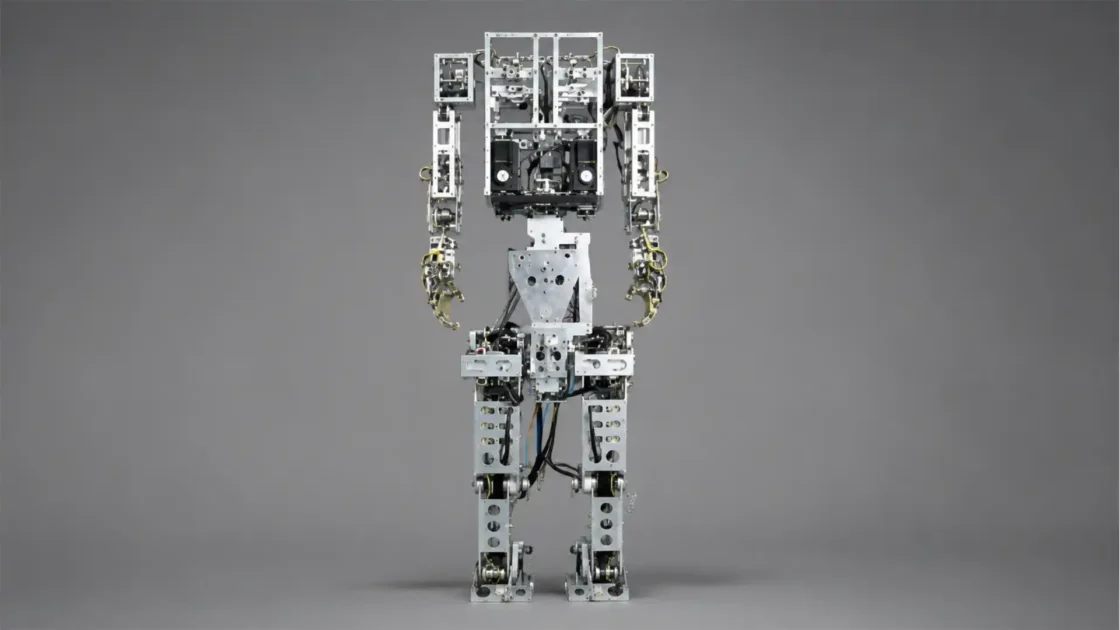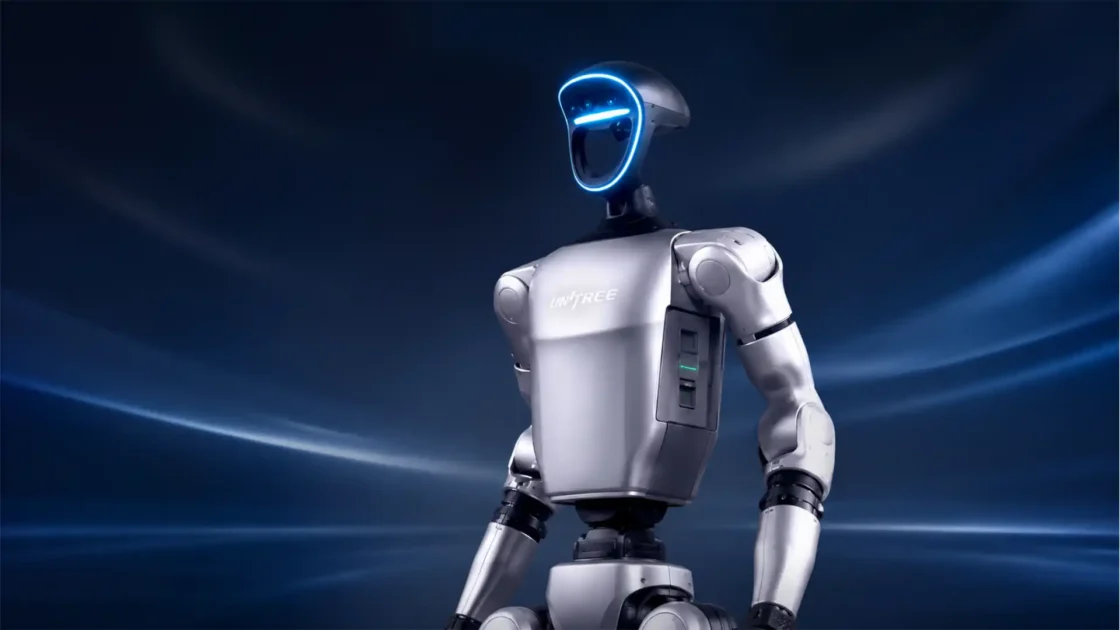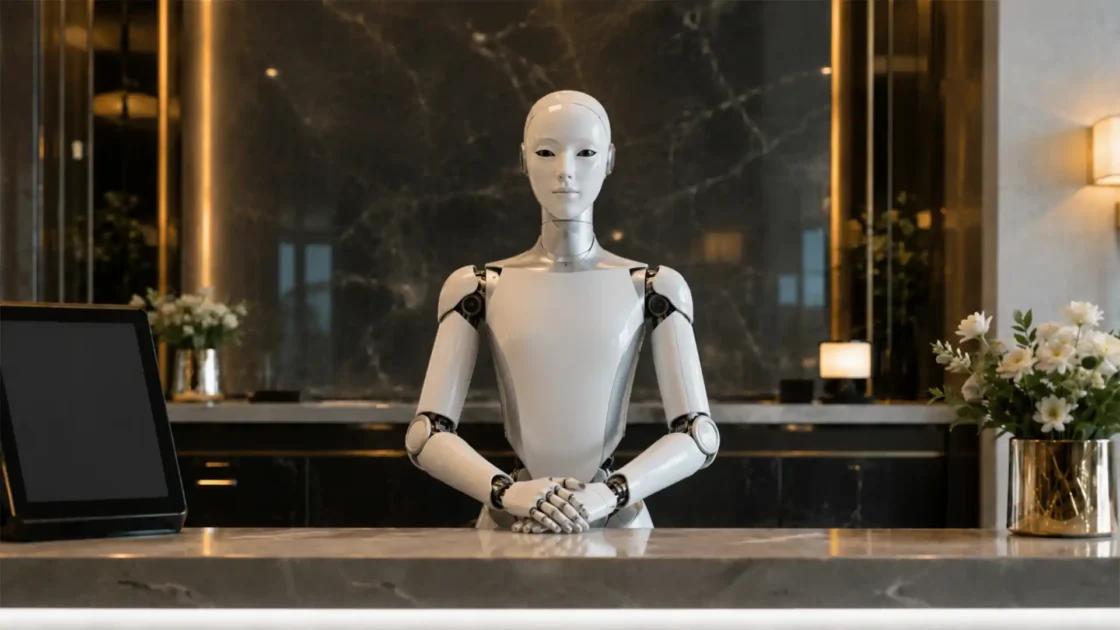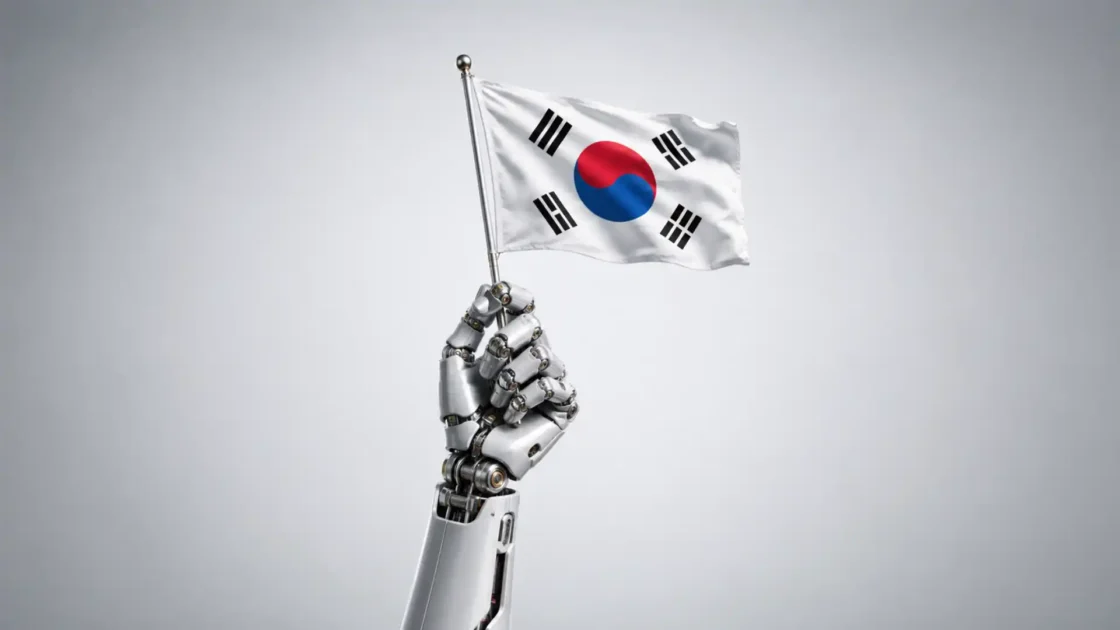
The next consumer robotics wave will not arrive as a single dramatic moment. It will arrive as cardboard on the doorstep, a charging base on the floor, an app asking for a home map, and a family deciding which rooms a machine is allowed to enter. Robot unboxing is becoming a plausible domestic ritual because the market is no longer waiting for a perfect humanoid servant. The first mass wave is already built around cleaning, monitoring, lawn care, companionship, and supervised help, while the more ambitious humanoid category is moving from lab spectacle into early-access homes.
Table of Contents
The household robot is shifting from promise to shipment
The idea of a robot in the home has spent decades trapped between cartoon fantasy and engineering reality. A home is a harsh place for robotics. It has cables, pets, toys, stairs, rugs, mirrors, spilled cereal, different lighting in every room, people who change their minds mid-task, and furniture that nobody labels for a machine. Factories are hard, but they are structured. Homes are intimate, irregular, and often messy in ways that defeat neat planning.
That is why the near-term story is not “a robot butler for everyone.” The real story is more specific. Robots are entering homes through narrow jobs first, then stretching outward as sensors, AI models, batteries, actuators, cloud services, and manufacturing costs improve. Robot vacuums, mop-vac hybrids, pool cleaners, lawn mowers, home patrol robots, social companions, and pet-care devices are the practical bridge between old consumer electronics and general-purpose domestic robotics.
The numbers already show a base layer. The International Federation of Robotics reported that service robots for consumer use recorded close to 20 million units sold in 2024, with domestic-task robots such as floor-cleaning and lawn-mowing machines forming by far the largest group. IFR also recorded 11% growth for consumer service robots in its 2025 service robotics report, while warning that its figures come from a supplier sample and should not be treated as a full-industry projection.
That caveat matters. Robotics statistics often look more precise than the market feels on the floor. Some categories are mature enough to count, especially robotic cleaning. Other categories are still half product, half research program. A household humanoid may be available for pre-order, but its useful everyday autonomy is still bounded by the skills it has learned, the layout of the house, the safety limits set by the manufacturer, and, in some cases, a remote human operator.
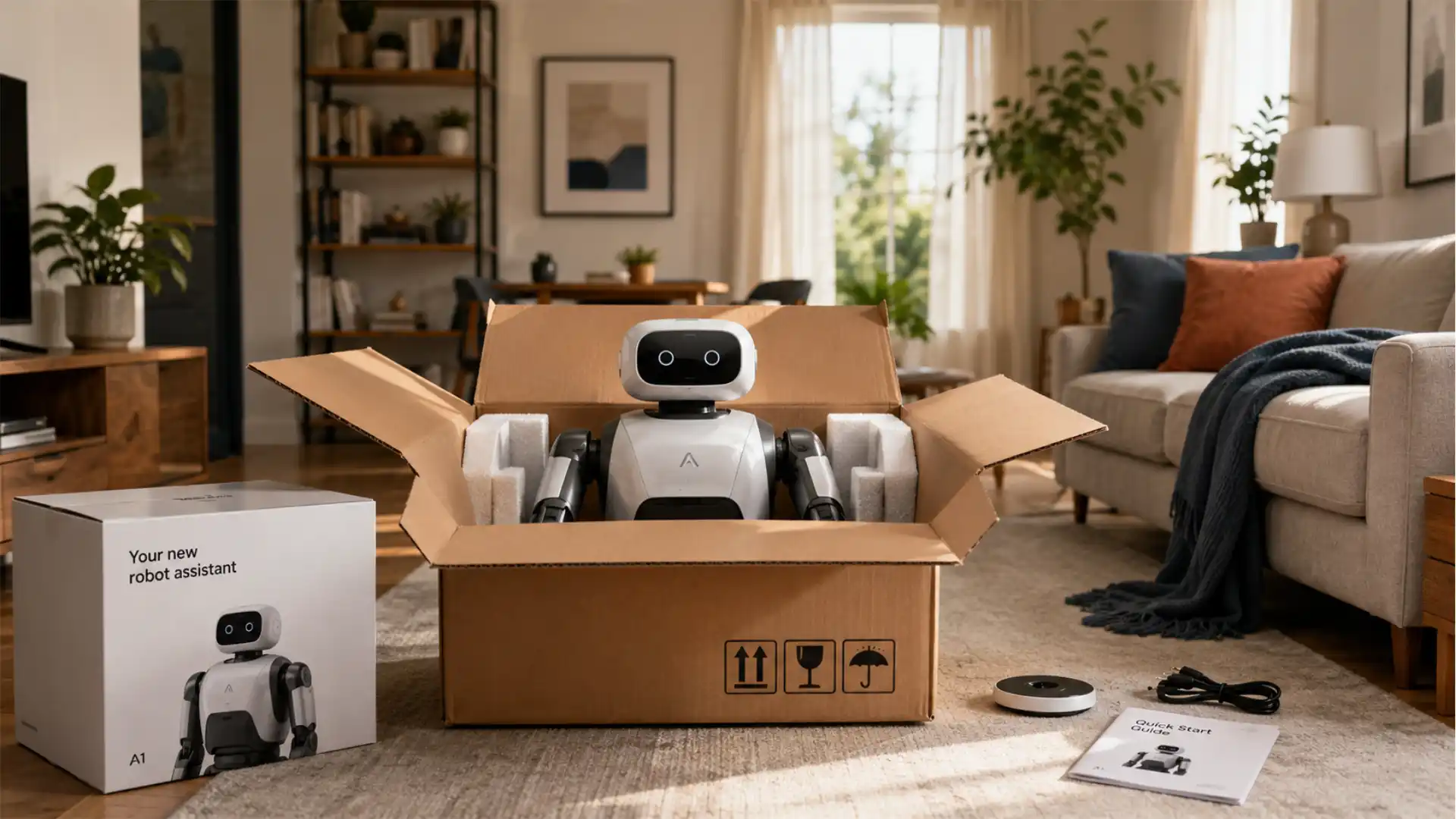
The unboxing image is powerful because it compresses the whole shift into one scene. A box appears. A person cuts tape. A robot unfolds, wakes, maps the room, connects to Wi-Fi, and asks for permission. The scene feels like a consumer moment, but the machine is not a phone or speaker. It sees, moves, listens, stores maps, and may touch objects. A home robot is a physical AI device inside private space, not just another connected gadget.
That difference will shape adoption. Families will judge a robot by familiar consumer questions—price, warranty, setup, usefulness—but also by harder questions. Does it avoid pets? Does it respect bedrooms? Can it be stopped instantly? Who sees the camera feed? Does it work offline? What happens if the company shuts down? Does the robot remain useful without a subscription? Can guests tell when it is recording? These are not edge cases. They are the terms on which machines earn a place in domestic life.
A familiar sight begins with cleaning machines
The first home robot most people meet is still a cleaner. The reason is not glamorous, but it is decisive. Floors are everywhere, cleaning is repetitive, and the task has measurable success. A robot vacuum does not need to understand the whole social meaning of a home. It needs to navigate, avoid hazards, cover space, return to base, and remove dirt well enough that the owner feels the machine saved time.
This is the template for early household robotics: the job must be frequent, bounded, and visibly useful. The more open-ended the chore, the harder the product. Washing dishes by hand, folding laundry, sorting clutter, carrying drinks, helping a child, and preparing food all require manipulation, judgment, safety awareness, and context. Vacuuming is difficult, but it is more contained.
iRobot’s Roomba made that category legible to consumers. The company said in 2025 that it had sold more than 50 million robots worldwide since introducing the first Roomba robot vacuum in 2002. That figure is more than a brand milestone. It shows that consumers already accept a moving machine inside the home when the use case is clear enough and the risk is low enough.
The robot vacuum category has also become more competitive. Roborock reported full-year 2025 revenue of RMB 18.695 billion, up 56.51% year over year, and said overseas revenue reached RMB 10.442 billion, or 56% of total revenue. It also pointed to R&D spending of RMB 1.42 billion and product experimentation, including robotic vacuum designs with mechanical arms and more advanced mobility.
That last point is easy to miss. The vacuum cleaner is becoming a robotics platform. A premium robovac is no longer just a disc that bumps around a room. It may contain cameras, LiDAR, object recognition, app-based room maps, automatic mop washing, obstacle avoidance, voice assistant links, remote updates, and cloud-connected services. The category has trained households to accept mapping, docking, scheduled automation, and moving sensors indoors.
Newer entrants are also changing the shape of the category. Matic, for example, markets a visual robot vacuum and mop that “sees” rather than only senses, uses continual 3D mapping, identifies messes such as fur or crumbs, and lets users schedule or target specific areas. Its product language makes the direction clear: cleaning robots are moving from timed coverage toward scene understanding.
This matters because cleaning robots create the first consumer grammar for home robots. Users learn that robots need charging docks, no-go zones, firmware updates, consumables, replacement parts, maps, maintenance routines, and human rescue when they get confused. They also learn that the product is not a magic servant. It works best when the home adapts slightly around it.
The next wave will build on that behavior. A household that already clears cables for a vacuum may be more open to a mobile security robot. A home with no-go zones in a cleaning app may accept privacy zones for a larger assistant. A user who has watched a robot return to dock may understand why humanoids need charging plans and task windows. Domestic robotics adoption is cumulative. Each narrow robot teaches the household how to live with the next one.
Humanoid robots are the headline, but not the whole market
Humanoid robots attract attention because they promise a shortcut. Human homes are designed around human bodies. Doors, drawers, stairs, shelves, counters, appliances, and light switches assume a mobile agent with arms, hands, eyes, balance, and roughly human reach. A humanoid form looks like the obvious way to use the built environment without redesigning it.
The appeal is real. A machine with two arms and hands could, in theory, do many jobs that single-purpose robots cannot. It could move laundry, pick up toys, carry groceries, wipe a counter, retrieve a dropped object, or operate an appliance. The humanoid thesis says the best general robot for human spaces may look partly human because the world has already been built for that shape.
Yet humanoid robots also carry the hardest engineering burden. Walking consumes power and creates fall risk. Hands require dexterity, force control, tactile feedback, and safety systems. Whole-body motion requires planning. Domestic manipulation requires a robot to understand fragile objects, liquids, sharp tools, children, pets, furniture edges, and ambiguous requests. The humanoid form solves access, but it multiplies the safety and reliability problem.
This is why many companies are testing humanoids first in warehouses and factories. Those sites are still complex, but they are easier to constrain than homes. BMW announced in February 2026 that it was launching a pilot project with humanoid robots at its Leipzig plant, using physical AI in European production and exploring applications in series car production, batteries, and components.
Factory pilots matter for household adoption because they create data, hardware stress tests, supply chains, repair processes, and safety cases. A robot that can repeatedly carry parts in a plant does not become a home helper overnight, but the components improve: actuators, hands, balance control, visual perception, teleoperation, fleet monitoring, and task learning. The home version will inherit lessons from industrial deployment.
NVIDIA’s robotics announcements show the same direction. The company announced Isaac GR00T N1 in March 2025 as an open foundation model for generalized humanoid reasoning and skills, paired with simulation tools and synthetic data generation. In May 2026, NVIDIA announced an open humanoid reference design built around the Isaac GR00T platform, a Unitree H2 Plus humanoid body, Sharpa hands, Jetson Thor onboard compute, and an open software stack for research teams.
This stack is not a consumer product you unbox for chores. It is infrastructure for the people building the products that might later reach homes. The same pattern appeared in personal computing and smartphones: the consumer moment came after developer tools, chips, operating systems, manufacturing lines, and application ecosystems converged.
The household robot race therefore has two speeds. Task-specific robots are already shipping to consumers. Humanoid platforms are advancing through research, industrial pilots, and early-access programs. The public will see both at once, which will create confusion. A viral humanoid folding a shirt may make consumers believe the home robot market is nearly solved. A real owner struggling with setup may reveal the gap.
The honest view sits between cynicism and hype. Humanoids are not ready to become mass household appliances in 2026, but they no longer belong only to science fiction. They are entering the awkward phase where early adopters, researchers, investors, regulators, insurers, and manufacturers discover what breaks outside the demo room.
Early-access homes will function like training grounds
The most striking current development is not simply that humanoid home robots are being advertised. It is that some are being framed as learning systems that will improve inside early users’ homes. That makes the home a deployment site and a data site at the same time.
1X’s NEO is the clearest public example. The company describes NEO as a home robot using Redwood AI, its generalist AI model, for learning and repeating tasks. The product page says NEO arrives with basic autonomy for early owners and expands its capability over time. It also describes “Scheduled Expert Mode,” where a 1X expert can remotely supervise complex tasks the robot does not yet know, allowing the robot to learn while the job gets done.
That is a revealing model. The robot is not sold as fully independent from day one. It is sold as a machine that learns through use, remote guidance, and updates. This resembles the path of self-driving systems, but the setting is more intimate. A car trains on roads. A home robot may train around beds, kitchens, family routines, pets, and personal belongings.
The commercial logic is understandable. General household skills require exposure to many home layouts and object arrangements. A lab cannot reproduce every laundry pile, pantry shelf, cabinet handle, toy bin, or kitchen drawer. Developers need data from real domestic environments because the home is the product’s real operating domain.
The privacy and trust problem is just as clear. If a robot needs human remote assistance, families need to know who can access the robot, when, with what consent, under what logging rules, and with which physical safeguards. If a robot learns from household behavior, users need to know whether that data trains only their robot, improves a shared model, or enters broader datasets.
This is where the phrase “robot unboxing” becomes too small. The buyer is not merely opening hardware. They may be entering a relationship with a service provider whose machine senses, maps, records, updates, and acts. The early home robot market is likely to be sold as hardware but governed like a service.
The product will also test social tolerance. A robot guided by a remote operator may perform a task well, yet still feel invasive. A machine that asks for scheduled sessions may be acceptable in a kitchen but not in a bedroom. A family may love help with laundry but reject camera movement near children. The same feature may look useful in a demo and uncomfortable at home.
This is why the first buyers will shape the category. Early adopters will not only pay higher prices; they will absorb ambiguity. They will discover which tasks are worth supervising, which rooms they exclude, how often the robot needs rescue, whether guests object, and whether the household changes routines to accommodate the machine. Their feedback will decide whether “home robot” becomes a trusted appliance category or a niche for enthusiasts.
The unboxing moment creates expectations before the robot moves
Unboxing is not trivial for robots. It frames the first relationship between a human and a machine that moves. Packaging, setup language, first boot, calibration, voice, lights, app prompts, safety instructions, and the first task all teach the owner what the robot is.
Research on social robot unboxing has already treated that moment as part of adoption. A 2022 CHI paper on social robot unboxing with children found that the introduction of a robot can shape initial perceptions and that a creative, socially guided unboxing experience may support a more positive child-robot relationship.
For household robots, the stakes are higher than delight. A phone unboxing may create brand emotion. A robot unboxing must also establish boundaries. The owner needs to learn where the emergency stop is, what sensors are active, what physical force the machine can apply, how to set no-go zones, how to store it, what it must never attempt, and how to keep children or pets safe.
The best robot unboxing will likely feel more like onboarding than theatre. It should explain risk without scaring the buyer. It should show the robot’s limits before showing its charm. It should invite trust by making controls obvious. A home robot that starts by impressing the household but hides its constraints will create disappointment fast.
There is also a social dimension. The first time a robot comes out of the box, the whole household may gather. Children may name it. Adults may joke about it. Pets may circle it. Guests may ask whether it records them. The robot’s perceived role begins before the first chore. Is it a tool, companion, servant, toy, camera, appliance, or intruder?
Designers sometimes want robots to feel approachable. Soft materials, rounded bodies, expressive lights, friendly voices, and slow movement all reduce tension. Yet friendliness can mask seriousness. A robot that looks cute may still collect sensor data. A small device may still create bystander privacy issues. A domestic machine should be legible, not merely charming.
The first five minutes after unboxing may decide whether the robot is treated as furniture, appliance, helper, pet, or surveillance device. That classification will shape how people speak to it, where they allow it to go, whether they forgive mistakes, and how long they keep it.
The unboxing ritual will also become a marketing arena. Brands know that video clips of a robot stepping from a box or mapping a living room are more shareable than a spec sheet. That attention will pull the category forward, but it may also reward theatrical design over useful function. Reviewers and buyers will need to separate a memorable first movement from months of reliable work.
The first household wave is more likely to be mixed than humanoid
A realistic household robot market will not be one device in every home. It will be a mix of forms. Some homes will have a cleaning robot, a lawn robot, a pool robot, a home monitoring robot, a pet feeder, a companion device for an older adult, and no humanoid. Other homes may adopt a humanoid later because the household already has multiple narrow systems and wants one machine that can do more.
This pattern fits consumer history. Kitchens did not converge immediately into one magic appliance. They accumulated refrigerators, dishwashers, mixers, microwaves, coffee machines, air fryers, and smart ovens. Home robotics may follow a similar route. One machine will not win every domestic task because tasks differ in risk, location, cost, and required embodiment.
Cleaning favors low-profile mobility. Lawn care favors outdoor durability and boundary navigation. Pool cleaning favors waterproofing. Elder companionship favors conversation, reminders, social presence, and low physical risk. Security favors cameras, patrol routes, alerts, and privacy controls. Laundry handling favors arms and manipulation. Cooking raises heat, knives, allergies, and food safety.
The market is already diverse. Amazon’s Astro is framed around home monitoring, Alexa, live view, alerts, routines, and mobility rather than general chores. Its product page says it can only ship to addresses in the 50 U.S. states, operates in a single-floor indoor environment, cannot go up or down stairs, and has compatibility limits with certain flooring transitions and surfaces.
LG’s smart home AI agent, introduced for CES 2024, was presented as a mobile smart home hub that can navigate the home, interact verbally, use camera and sensor data, monitor pets, check environmental conditions, patrol when nobody is home, and connect with appliances and IoT devices. LG’s own release also noted that availability, pricing, and specifications were not yet determined for Australia, a reminder that concepts and shipping products are not the same thing.
ElliQ points to a different route. It is a social companion robot for older adults rather than a mobile chore machine. Research published in 2024 described ElliQ as a proactive AI-driven social robot with social and health coaching functions designed to address loneliness and support older people.
Each form answers a different household question. A cleaner asks, “Can I reduce routine labor?” A patrol robot asks, “Can I check the home when you are away?” A companion asks, “Can I support social and health routines?” A humanoid asks, “Can I manipulate the human-built world?” The last question is the broadest, but the broadest product is not always the first mass product.
The home robot market will probably look less like a single robot servant and more like a layered set of moving, sensing, task-specific machines. Humanoids may become the flagship category, but domestic adoption will be built by devices that do one thing well enough to keep.
The smart home prepared the landing zone
Robots are arriving into homes that are already partially digitized. Smart speakers, doorbells, thermostats, cameras, locks, lights, plugs, appliances, and voice assistants have made app-controlled domestic space familiar. That infrastructure matters because a robot needs a home network, permissions, routines, maps, and device integrations.
A mobile robot becomes more useful when it can interact with the smart home. It might check whether a door is locked, turn off a light, follow a schedule, respond to a voice command, notify the owner, or coordinate with cameras and sensors. The robot is not just a gadget; it becomes a moving node in the home system.
This is also why standards and interoperability matter. If every robot requires its own closed app and isolated device logic, the home becomes fragmented. If robots connect through common smart-home protocols, the product becomes easier to place into routines. The ideal is not merely that a robot moves, but that it understands enough of the household state to act at the right time and stop when it should.
The smart home has also exposed the limits of consumer patience. People tolerate automation when it works quietly. They abandon it when setup is fragile, routines break, or devices stop receiving updates. A robot adds more moving parts, literally and operationally. A light failing to turn on is annoying. A robot failing to stop near a stair, pet bowl, or glass object is more serious.
NIST’s Cybersecurity for IoT program frames the wider trust issue. NIST says its work supports standards, guidelines, and tools to improve cybersecurity of IoT systems, connected products, and environments where they are deployed. Home robots fit squarely inside that connected-product problem, but with added physical action.
The U.S. Cyber Trust Mark also reflects the direction of policy. The FCC describes it as a voluntary cybersecurity labeling program for wireless consumer IoT products. For home robots, a recognizable security label will not solve every risk, but labels may become part of the buying decision, especially for products with cameras, microphones, maps, and cloud links.
The robot industry inherits both the strengths and the distrust of the smart home. Consumers already know that connected devices bring convenience and risk. They have seen companies shut down services, change subscriptions, suffer breaches, or revise privacy terms. A home robot asking for access to every room will face tougher scrutiny than a smart bulb.
The smart home made robotics easier to imagine, but it also taught consumers to ask harder questions about data, updates, ownership, and control.
A home robot is a privacy event on wheels
The privacy debate around home robots should start with a simple fact: a robot cannot function well if it is blind to its surroundings. It needs sensors. Those sensors may include cameras, microphones, depth sensors, LiDAR, inertial sensors, force sensors, tactile sensors, bump sensors, location data, maps, and logs. Some of this data may stay on device. Some may be processed in the cloud. Some may be reviewed by humans for support, debugging, training, or teleoperation.
The domestic setting makes that data unusually sensitive. A floor map shows room layout. A camera may capture children, visitors, medical equipment, religious items, documents, screens, medication, clothing, and routines. A microphone may capture conversations not meant for the robot. Even metadata can reveal when people are home, when rooms are cleaned, and how domestic life is organized.
Research on robot vacuum privacy has already shown why “just a cleaner” is not a harmless category. A 2024 paper investigating robot vacuum cleaners in smart environments argued that even when encryption protects exchanged content, network metadata may still expose private information, because traffic patterns can reveal selected cleaning events.
That finding should travel into the humanoid debate. A larger robot with richer sensors and remote assistance creates broader exposure. The issue is not only whether a company promises not to sell data. The questions include data minimization, local processing, retention periods, user deletion rights, remote access controls, third-party processors, employee access, audit logs, breach response, and whether bystanders receive any notice.
Bystanders are a special problem. The device owner may consent to a home robot, but a babysitter, cleaner, relative, neighbor, delivery worker, or child’s friend may not. A mobile robot can encounter people who never saw the privacy policy. Doorbell cameras already created this problem at the threshold. Home robots bring it deeper into private space.
The privacy answer cannot be buried in legal text. It must be visible in product design. Physical camera shutters, sensor lights, local processing modes, clear teleoperation indicators, room-level bans, voice-controlled stop commands, guest modes, and simple data dashboards will be trust features, not compliance afterthoughts.
Amazon’s Astro page shows how consumer robot brands already present privacy as a product feature. It describes a one-press control to turn off microphones, cameras, and motion, along with out-of-bounds zones in the app. Those details matter because a mobile robot needs obvious limits that non-technical owners can understand.
A household robot that cannot explain what it senses, where data goes, and who can access it will struggle to earn a place in ordinary homes. The category will not scale on charm alone. It will scale when users feel they can say no in ways the robot actually respects.
Safety standards are moving from specialist documents to consumer relevance
Robots have always required safety engineering, but home robots make safety visible to ordinary buyers. A consumer may not know the name of a standard, but they care whether the robot can pinch, fall, overheat, collide, block a path, injure a pet, startle a child, damage furniture, or continue moving after a fault.
ISO 13482 is one of the core documents in this area. The standard covers safety requirements for personal care robots, including mobile servant robots, physical assistant robots, and person carrier robots. ISO says the standard addresses inherently safe design, protective measures, information for use, human-robot physical contact applications, and hazards involving people, domestic animals, and property under intended and reasonably foreseeable use.
That language fits the household robot problem. A mobile servant robot in a home must be safe not only during perfect use, but under foreseeable misuse. A toddler may touch it. A dog may block it. A blanket may cover a vent. A guest may move furniture. A user may ignore a warning. The machine must be designed for ordinary human behavior, not a lab technician’s behavior.
UL 3300 covers service, communication, information, education, and entertainment robots, and UL Solutions says it can certify consumer and commercial robots to UL 3300. UL also notes that the standard has been included in OSHA’s Nationally Recognized Testing Laboratory program list for appropriate test standards.
The standards conversation will grow as robots become stronger. A small vacuum has limited force. A humanoid that can lift objects, open doors, reach counters, or carry loads raises a different level of hazard. Force limits, compliant actuators, emergency stops, safe grasping, balance recovery, fall behavior, battery safety, thermal management, and software validation become market questions.
Safety is also behavioral. A robot must decide what not to do. It should not carry boiling water across a kitchen unless designed and certified for it. It should not handle knives without strict constraints. It should not pick up unknown medication. It should not lift a child because a voice command asks it to. It should refuse tasks outside its safety case.
This is where AI makes safety harder. Traditional safety engineering assumes defined behavior. AI-driven robots may interpret open-ended instructions. A user might say, “Clean this up,” pointing at broken glass. The robot must recognize that “cleaning” may involve sharp fragments, pets nearby, human feet, and disposal choices. A reliable refusal may be safer than a brave attempt.
Home robots will need safety systems that combine mechanical limits, perception, policy rules, user permissions, and clear refusal behavior. Consumers may not read the standard, but they will notice whether the robot feels careful.
Regulation will treat robots as AI, products, and connected devices
Household robots sit at the intersection of several legal categories. They are physical products. They may be AI systems. They are often connected devices. They may include cameras and microphones. They may process personal data. They may be sold with subscriptions. They may receive over-the-air updates that change behavior after purchase.
The European Union’s AI Act is one anchor for this coming debate. The European Commission describes the AI Act as the first comprehensive legal framework for AI worldwide and says it sets risk-based rules for developers and deployers of AI systems. The Act is part of a broader EU package aimed at trustworthy AI, safety, fundamental rights, uptake, investment, and governance.
Not every home robot will be high risk under the AI Act. Classification depends on use, product role, safety components, and the legal framework covering the product. Yet a robot that physically interacts with people or performs safety-relevant functions will face deeper scrutiny than a chatbot. The line between product safety and AI governance will matter.
The EU Cyber Resilience Act adds another layer. The European Commission says the CRA aims to protect consumers and businesses buying hardware or software products with digital elements, addressing poor cybersecurity and lack of timely security updates. It requires devices and software to be designed, updated, and maintained with cyber threats in mind.
For home robots, the CRA-style logic is obvious. A robot that moves inside a home must be patched. Vulnerabilities are not merely data risks; they may become physical risks. A compromised robot could map a home, expose camera feeds, harass occupants, damage property, or serve as a foothold into the home network.
Regulators will also face the remote-operation question. If a human operator assists a household robot from outside the home, what rules govern that access? Is it customer support, teleoperation, surveillance risk, training data collection, or a safety function? What consent is required from other people in the home? What audit logs must be kept? What happens if the operator makes a damaging mistake?
Insurance will follow regulation. Home insurers, product liability carriers, and warranty providers will care about robot incidents. They may ask whether a robot is certified, whether updates were applied, whether users disabled safety features, and whether the robot was operating within intended use. As robots become more capable, liability will become a purchase factor.
The home robot is not just a consumer electronics product with AI added. It is a regulated physical system whose software changes over time. That fact will shape launches, documentation, certification, and market access.
AI models are teaching robots to reason, not just repeat
The new robotics cycle is driven by AI because domestic tasks are too varied for traditional programming alone. A robot cannot store a hand-coded rule for every possible kitchen, drawer, cup, sock, toy, spill, cable, and human request. It needs perception, language understanding, planning, adaptation, and learning from demonstrations.
Foundation models are now moving into robotics through vision-language-action systems, world models, simulation, and synthetic data. NVIDIA’s GR00T N1 paper describes a vision-language-action model with a dual-system architecture: a vision-language module for interpreting the environment and instructions, and a diffusion-transformer action module for generating motor actions in real time.
NVIDIA’s Cosmos platform points to another piece: world foundation models for physical AI. NVIDIA describes Cosmos as a platform of world foundation models, tokenizers, guardrails, and data-processing, training, and evaluation tools for building physical AI systems. The company says Cosmos 3 is openly available under an OpenMDW license and supports post-training for downstream applications.
This matters because robots need more than object labels. They need to predict consequences. If a robot pulls a towel, will a glass fall? If it pushes a chair, will it block a doorway? If it reaches into a laundry basket, is there a phone inside? If it opens a dishwasher, is the rack safe to pull? A world model tries to represent how physical scenes change under action.
Researchers are also exploring more structured ways for robots to use everyday information. A 2025 paper on ApBot studied robot operation of home appliances by reading user manuals, building a structured model from manual text, grounding actions visually to controls, and updating based on visual feedback. The approach improved task success compared with using large vision-language models directly as control policies.
That is a useful clue. General AI is not enough by itself. Household robots need hybrid systems: language understanding, maps, symbolic rules, perception, force sensing, task libraries, safety policies, and recovery procedures. A robot that “understands” a request but cannot safely execute the steps is not useful. A robot that can execute a fixed routine but cannot adapt to a changed room is brittle.
The breakthrough will not be a robot that talks fluently. It will be a robot that converts a household request into safe, grounded, reversible action. That is a much harder task than answering a question on a screen.
Teleoperation may be the bridge that consumers rarely see
Remote human assistance is likely to be one of the hidden bridges between today’s limited autonomy and tomorrow’s more capable home robots. Teleoperation lets a human guide a robot through tasks it cannot yet complete alone. It also creates demonstration data that models can learn from.
The approach is practical. If a robot encounters a new dishwasher handle, a strange cabinet, an unusual laundry setup, or cluttered floor space, a remote expert can intervene. The task gets done, the robot may collect a demonstration, and the system improves. This is exactly the kind of mechanism suggested by 1X’s Scheduled Expert Mode, where a company expert can remotely supervise actions for tasks NEO does not know.
Teleoperation also lets companies ship earlier. Waiting for full autonomy delays real-world learning. Letting humans assist creates a serviceable product before the autonomy stack is complete. That is attractive for startups and investors because it turns research into a market sooner.
But teleoperation changes the trust contract. A remotely assisted home robot is not merely autonomous hardware. It is a portal through which an employee or contractor may see a household environment and guide a machine inside it. Even if access is scheduled and approved, many users will treat that as a high-trust event.
The design requirements are strict. Users need a clear indicator when teleoperation is active. They need approval controls, session logs, restricted rooms, camera masks, pause commands, and the ability to end the session instantly. They need to know whether video is stored, whether faces are blurred, whether audio is transmitted, and whether the operator can move the robot after a session ends.
There is also a labor question. The industry may present home robots as automation, while using remote human workers behind the scenes. If that work is hidden, the product risks backlash. Consumers may feel deceived if a “robot helper” is partly a human operator. A transparent model may be more durable: early robots are supervised machines that become more autonomous over time.
Teleoperation should also be judged as a safety tool, not only a training method. A remote expert may intervene when the robot is uncertain, but remote control introduces latency, connection failures, and operator error. The robot must still enforce local safety limits. A human operator should not be able to override physical safeguards casually.
Teleoperation will probably be necessary for early home humanoids, but it must be visible, consent-based, bounded, and audited. The companies that treat it as a quiet workaround will inherit a privacy problem they created themselves.
Cost will decide whether robots remain novelty goods
Consumer robotics often fails at the price-value test. A robot may be technically impressive and still too expensive for the chore it performs. Households do not buy capability in the abstract. They buy time saved, stress reduced, safety gained, companionship provided, or a specific pain removed.
Robot vacuums crossed the line for many homes because prices fell, reliability improved, and the task was routine. Premium models remain expensive, but lower-cost options made the category normal. A household does not need a perfect cleaner to feel the purchase makes sense. It needs enough cleaning to justify the cost, maintenance, and floor preparation.
Humanoid robots face a steeper equation. If a home humanoid costs as much as a car, the buyer expects far more than novelty. It must save time across multiple tasks, work reliably, receive useful updates, avoid damage, last for years, and provide service support. Early adopters may pay for experimentation. Mainstream buyers will not.
Goldman Sachs Research projected in 2024 that the global humanoid robot market could reach $38 billion by 2035, up from an earlier $6 billion forecast, with shipment estimates raised to 1.4 million units. Goldman linked the revision partly to a faster path toward profitability as material costs decline.
Forecasts like that are useful, but they should be read carefully. A large addressable market does not mean rapid household adoption. Humanoids may first scale in manufacturing, warehousing, logistics, retail, elder care facilities, and labs. Those buyers can justify capital costs through labor economics, uptime, and repeatable workflows. Homes are more price-sensitive and less predictable.
The pricing model may also shift toward subscription. IFR noted that robot-as-a-service fleets for professional service robots grew 31% in 2024, as companies used rental or subscription agreements to avoid heavy upfront investment. Although that IFR figure concerns professional service robots, the economic logic may influence consumer robotics as well.
A subscription home robot could lower the entry cost but raises ownership concerns. Who owns the hardware? What happens if payments stop? Does the robot lose core functions? Can the company reclaim it? Are repairs included? Does the subscription cover remote experts, AI updates, parts, insurance, and cloud processing?
The path to mass adoption runs through price, reliability, and service—not through impressive demos alone. A robot that costs too much, needs too much rescue, or depends too heavily on paid remote support will remain a curiosity.
The household labor market creates demand, but not automatically
The promise of home robotics is often tied to labor scarcity, aging populations, and unpaid domestic work. Those forces are real. Many societies face shortages in care work. Families are stretched. Older adults want to age at home. Household chores consume time. Paid domestic help is costly or unavailable for many households.
Robots seem like a natural answer, but demand is not automatic. Domestic labor is not one job. It is a tangled set of routines: cleaning, cooking, sorting, caregiving, monitoring, emotional support, coordination, repairs, shopping, pet care, child supervision, and countless small tasks. A robot that handles one slice may be useful, but it does not eliminate the system.
Aging is a strong use case because the need is persistent and the value of support is high. A robot that reminds an older adult to take medication, supports video calls, notices changes in routine, or provides companionship may not need arms to matter. ElliQ’s design direction shows that “robot” can mean social presence and proactive interaction, not only physical chores.
Physical assistance for older adults is harder. Helping someone stand, preventing falls, carrying heavy objects, or assisting with bathing carries medical, liability, and safety complexity. Many such products may be regulated as medical devices or care systems, not simple consumer robots. The home is also emotionally sensitive. A robot companion may reduce loneliness for some users, while others may see it as a poor substitute for human care.
The unpaid labor question is equally complex. A robot vacuum reduces some floor-cleaning work, but it may shift labor into maintenance: emptying bins, cleaning brushes, buying bags, fixing maps, rescuing the device, and preparing rooms. A humanoid helper may reduce chores but require scheduling, supervision, training, and boundary setting.
This is not an argument against home robots. It is an argument for honest value. The best products will attack chores that are frequent, disliked, time-consuming, and technically bounded. They will not pretend to replace the human social intelligence behind household management.
Robots will not remove domestic labor in one step. They will redistribute it, automate parts of it, and expose which tasks were harder than they looked.
The home is the hardest robotics environment consumers know least about
A consumer sees a home as familiar. A robot sees a home as a constantly changing obstacle course with poor labels. This mismatch causes disappointment. People assume a machine should understand a mug on a table, a sock on a chair, a toy under a couch, or a half-open door. To a robot, each scene may be a new perception and planning problem.
The home contains deformable objects, which are notoriously hard for robots. Clothing changes shape. Towels fold unpredictably. Cables twist. Plastic bags collapse. Blankets cover objects. Food spills spread. Paper tears. A robot may recognize the category but fail at handling the object.
Homes also contain transparent, reflective, dark, and thin objects that confuse sensors. Glass doors, mirrors, glossy floors, black rugs, metal chair legs, and wires challenge navigation. Amazon’s Astro product page, for example, lists limits involving single-floor use, stairs, curved edges, sunken areas, flooring transitions, and black glossy floors.
Lighting changes throughout the day. Rooms may be bright, dim, shadowed, cluttered, or backlit. Objects move. Pets behave unpredictably. People step in front of the robot. Children test boundaries. A chair may be in a new location every evening. A machine that performed well yesterday may fail today because a backpack appeared in the hallway.
Domestic language is also messy. “Clean the living room” may mean vacuum the floor, pick up toys, avoid a sleeping dog, do not touch the papers on the coffee table, and stop before a video call starts. Humans infer these constraints from context. Robots need explicit rules, learned preferences, or safe uncertainty behavior.
Research systems are starting to address this. The Dobb-E work from 2023 tested learning robotic manipulation in real homes, collecting demonstrations in 22 New York City homes and reporting an 81% success rate across 109 tasks in novel homes after brief user demonstrations and adaptation. The paper also emphasized challenges absent or underplayed in lab robotics, including shadows and varied demonstration quality.
That result is encouraging, but also clarifying. Even a strong research result required demonstrations, adaptation, specific hardware, and bounded tasks. A product for ordinary households needs the same type of learning to become invisible enough for daily use.
The home looks easy because humans are experts at it. For robots, ordinary domestic life is a high-variance technical test.
Autonomy has to preserve human control
The word “autonomous” sells well, but full autonomy is not always what users want. People want work done without constant supervision, yet they also want control over private spaces, risky tasks, personal routines, and social boundaries.
A 2025 study on user preferences for robot autonomy across household tasks found that participants’ sense of agency was shaped by whether the robot acted autonomously and whether a third party was involved in programming or operation. The study also found that in high-risk contexts, such as preparing food for a child with allergies, participants preferred more user control.
That finding is central to home robot design. Autonomy should be adjustable by task. A user may allow fully autonomous vacuuming in the hallway, supervised laundry folding, manual approval for kitchen actions, and no robot access to bedrooms. A single global autonomy switch is too blunt.
The system should also expose confidence. A robot that says, “I am not sure whether this item is trash,” and asks for confirmation may feel slower, but it is safer and more respectful. A robot that silently guesses will eventually violate expectations. In domestic space, a wrong action can be emotionally costly even when the object is cheap.
Users will also want role-based control. Parents may set limits for children. Caregivers may configure reminders for older adults while preserving dignity. Guests may request privacy. Household members may disagree. A robot that assumes one owner speaks for everyone will create conflict.
This creates a design challenge: controls must be powerful enough for safety but simple enough for normal people. A privacy and autonomy dashboard cannot require an engineering degree. It should map permissions to rooms, tasks, times, people, and sensors.
The best autonomy will feel like a careful assistant, not a runaway automation. It will ask rarely but well. It will remember preferences, but not trap users in old habits. It will offer undo when possible. It will make refusal feel normal. It will fail into safety rather than improvising.
A home robot earns trust when people feel more in control of their home, not less. Autonomy that reduces agency will be rejected even if the technology is impressive.
The first mass robots will be judged by maintenance
Home robotics marketing often shows the moment of use. The owner gives a command, the robot acts, the home becomes easier. Real ownership is less cinematic. There are filters, brushes, mop pads, batteries, wheels, sensors, software updates, subscriptions, replacement parts, cleaning fluids, docking issues, and customer support calls.
Maintenance decides whether a robot stays in use after the novelty fades. A vacuum that saves 20 minutes but requires 15 minutes of cleaning, rescue, and troubleshooting loses value. A humanoid that performs a chore once but needs repeated supervision may become a burden.
Manufacturers know this. Premium cleaning robots increasingly compete on self-emptying docks, mop washing, water management, obstacle avoidance, and better mapping. The goal is not only better cleaning; it is less babysitting. The robot that needs less human attention wins.
Humanoids will face harsher maintenance demands. A bipedal robot has more joints, more sensors, more wear points, higher battery demands, and greater repair complexity. Service networks will matter. A broken robot arm is not like a broken app. It may require shipping, technician visits, calibration, or part replacement.
Software maintenance may become even more central. Home robots will improve through updates, but updates can also change behavior. A user may wake up to a robot that navigates differently, asks new permissions, loses a feature, or moves a task behind a subscription. Consumer trust depends on release notes, rollback options, security patches, and long support windows.
The iRobot story is instructive because it shows the vulnerability of connected robotics companies. The company that popularized robot vacuums has faced financial strain and restructuring, even while its installed base remains large. Users of connected robots will increasingly ask whether their devices remain functional if the manufacturer changes ownership, cuts cloud services, or exits a market.
This will shape buying behavior. A cheap robot from an unknown brand may look attractive until consumers think about parts, app support, maps, data retention, and repair. A more expensive robot with a credible service plan may feel safer.
The true cost of a home robot includes maintenance, consumables, software support, privacy management, and the time needed to keep it useful. The box price is only the beginning.
Trust will be built through failure behavior
Every robot fails. The market will be divided by how machines fail. A good failure is safe, visible, reversible, and understandable. A bad failure is silent, surprising, damaging, or invasive.
A robot vacuum that gets stuck and sends an alert is annoying but acceptable. A robot that drags pet waste across a floor becomes a viral disaster. A humanoid that refuses to lift a fragile vase may disappoint the owner, but a humanoid that drops it destroys trust. A security robot that avoids a room marked private respects boundaries; one that crosses the boundary because a map updated incorrectly creates fear.
Failure behavior starts with uncertainty. Robots should know when they do not know. Overconfidence is dangerous in the home. If a robot cannot identify an object, cannot predict whether a motion is safe, loses localization, detects a person nearby, or faces conflicting instructions, it should stop or ask.
The newer research on value conflicts shows why this is hard. A 2026 paper introducing RobotValues argues that household robots should be evaluated not only on task completion but on decisions where values conflict, such as safety, privacy, autonomy, social appropriateness, and efficiency. The authors found that models may underselect privacy-prioritizing actions and often struggle to override default preferences when instructed to prioritize different values.
That is a crucial warning. A robot may complete a task and still violate what the user values. It might tidy a room by moving private documents. It might obey one person while ignoring another’s boundary. It might choose the fastest path through a room where someone requested privacy. It might record a scene because the task requires perception, even though the social context calls for restraint.
Manufacturers should treat value conflicts as normal, not rare. Homes are full of them. Privacy versus convenience. Speed versus safety. Autonomy versus control. Helpfulness versus intrusion. A robot that handles those conflicts openly will feel more trustworthy than one that pretends tasks are purely mechanical.
Failure also includes recovery. If a robot spills water, knocks over a plant, or tears fabric, what happens next? Does it notify the owner? Does it stop? Does warranty cover damage? Does the company review logs? Does the user have access to the incident report? Does the robot learn from it?
The decisive question is not whether a home robot ever fails. It is whether its failures are bounded enough that households keep trusting it.
Business models will shape the machine’s behavior
A home robot’s business model is not a side issue. It influences design, data collection, update frequency, service quality, and user trust. A robot sold as a one-time appliance behaves differently from a robot tied to subscriptions, cloud services, remote experts, consumables, insurance, or data-driven model training.
If revenue depends on hardware margins, the company must make the product useful enough at purchase. If revenue depends on subscriptions, it may place advanced features behind ongoing payments. If revenue depends on remote support, the company may ship earlier with weaker autonomy. If revenue depends on data, privacy concerns rise. If revenue depends on consumables, long-term ownership costs grow.
Professional robotics already uses service models. IFR reported that robot-as-a-service fleets grew 31% in 2024 among professional service robots, as companies used subscription or rental agreements rather than buying robots outright. The consumer market may borrow this model, especially for expensive humanoids.
A subscription model may make sense for a $20,000-class machine. It could include hardware, support, repairs, cloud compute, remote expert sessions, insurance, and upgrades. But it also changes consumer psychology. The robot is no longer a purchased appliance; it is a rented presence in the home.
This raises ownership questions. Can the user sell the robot? Can it run without cloud services? Does it retain maps after cancellation? Can the company disable features remotely? Is remote operation included or billed separately? Are software updates guaranteed? Does the subscription include replacement batteries? What data is retained after return?
Business incentives also affect privacy. A company that sells hardware and local processing may market privacy as a premium feature. A company that improves shared models from household data may push users toward data-sharing permissions. A company with remote workers may need more camera access. A company tied to a smart home ecosystem may use the robot to deepen platform lock-in.
Consumers should read a home robot purchase less like a gadget sale and more like a contract for a long-running service inside private space. The fine print will determine the lived experience.
The supply chain is becoming a strategic battleground
Home robots depend on a deep stack: motors, gearboxes, actuators, batteries, sensors, chips, cameras, displays, microphones, tactile sensors, compute modules, plastics, textiles, chargers, cloud infrastructure, AI models, simulation tools, and manufacturing lines. The companies that control this stack will shape cost and availability.
China’s role is already central in robotics manufacturing. AP reported on June 6, 2026, that China is rapidly advancing humanoid robot production, with strong government backing, a large manufacturing base, and lower production costs, while also noting that demand remains limited and many applications are still more performative than practical.
That tension is the heart of the supply-chain story. Manufacturing scale may arrive before consumer demand fully forms. If factories can produce humanoid bodies cheaply but software skills lag, the market may see many robots that move impressively but do little useful work. If software improves faster than hardware supply, buyers may face shortages and high prices.
NVIDIA’s May 2026 reference design also highlights the geopolitical mix: an AI and compute stack from an American chip company, a Unitree humanoid body, Sharpa robotic hands, and academic research institutions as early users. NVIDIA frames the design as an open research platform, but it also shows how global the robotics supply chain already is.
Consumer buyers may not care where every component comes from until questions of security, repair, and availability arise. Governments will care sooner. A household robot with cameras, microphones, maps, cloud links, and mobility may be treated as more sensitive than a toaster. Procurement rules, import restrictions, data localization, cybersecurity certification, and national security reviews may all affect market access.
The supply chain will also influence form factor. If humanoid actuators and hands remain expensive, task-specific robots will dominate longer. If manufacturing cuts the cost of dexterous arms, humanoids and mobile manipulators become more plausible. If batteries improve, robots can work longer between charges. If edge AI chips become cheaper, more processing can move on device.
The household robot market will be won partly in living rooms and partly in factories that consumers never see.
Investors are betting that AI needs a body
The surge of interest in physical AI reflects a wider shift in technology investing. Software-only AI has grown fast, but the next frontier is action in the physical world. Robots offer a way to turn AI from text, images, and code into labor, logistics, care, manufacturing, cleaning, inspection, and domestic assistance.
CB Insights reported that robotics companies raised a record $40.7 billion in 2025, accounting for 9% of all venture funding, with industrial humanoid robots leading all markets by deal count. PitchBook reported that humanoid robotics startups raised $6.1 billion across 139 deals in 2025, a more than 300% increase in deal value from the previous year.
Those figures explain why the home robot narrative feels louder than the shipped product reality. Capital is flowing ahead of mainstream adoption. Investors are funding the belief that AI models, cheaper hardware, and manufacturing scale will turn robots into a huge market. The money accelerates prototypes, hiring, supply chains, and marketing, but it also creates pressure to show progress.
That pressure can distort consumer expectations. A startup raising money for humanoids may release polished videos of robots folding laundry or sorting objects. The viewer sees capability. The missing details may include number of takes, controlled conditions, teleoperation, task limits, speed, failure rate, cost, and safety restrictions. The market needs better disclosure norms for robot demos.
At the same time, investment is not only hype. Robotics requires capital because hardware is expensive. Teams need labs, parts, prototypes, test spaces, safety work, manufacturing partners, and long development cycles. Without heavy funding, general-purpose robots remain academic projects.
The question is whether venture timelines fit household trust timelines. Consumers adopt slowly when products are expensive, physical, and tied to private space. A robot company may need years of iteration before mainstream fit. Investors may prefer faster signs of scale. The mismatch could produce overpromising or consolidation.
The money entering robotics is real, but capital does not repeal the physics of batteries, hands, safety, and household mess. It buys attempts, not inevitability.
The first adopters will be practical, affluent, or care-driven
Early household robot buyers will cluster into several groups. The first is the gadget enthusiast who wants to participate in the future and tolerates flaws. The second is the affluent household that already pays for convenience and can absorb high upfront costs. The third is the care-driven household, where a robot solves a concrete problem for an older adult, disabled person, caregiver, or family stretched thin.
Each group will judge the robot differently. Enthusiasts forgive rough edges if the product improves. Affluent buyers expect service. Care-driven buyers need reliability and dignity. A robot that delights reviewers may fail a caregiver if it creates extra work. A robot that feels limited to enthusiasts may still be useful in a specific care routine.
The companion robot category shows this difference. ElliQ does not need to load a dishwasher to have value for some older adults. Its value lies in proactive conversation, reminders, connection, and routine support. A care agency or state program may see value where a young tech reviewer sees limited novelty.
Cleaning robots also split adoption. Busy families, pet owners, allergy-sensitive households, and people with mobility limits may value automated cleaning more than others. A small apartment with clutter may benefit less than a larger home with open floors. Product fit depends on layout and routine.
Humanoid robots will likely start where the value of labor is high and the buyer can tolerate supervision. A household with a disabled adult may value object retrieval or simple physical assistance, but only if the robot is safe and reliable. A wealthy household may buy a humanoid as an experiment. A robotics developer may use one as a platform. Mass adoption comes later, after these edge groups expose failures.
Retail will also shape adoption. A robot sold through a trusted retailer with clear returns may reach more households than one sold through a startup pre-order page. Demonstration spaces may matter. People need to see movement, noise level, docking, app controls, and safety behavior before trusting a machine in the home.
The early market will not be “everyone.” It will be households with enough money, need, curiosity, or tolerance for imperfection. Their experiences will define the mainstream story that follows.
Retailers and reviewers will become safety interpreters
Most consumers cannot evaluate a robot’s autonomy stack. They cannot inspect model behavior, sensor fusion, encryption, mechanical compliance, or training data. They will depend on reviewers, retailers, certifications, warranty terms, and public incidents.
This creates a new responsibility for consumer technology review. A robot review should not only ask whether the product works. It should test failure modes, privacy controls, noise, maintenance, stair behavior, pet interaction, data settings, offline function, emergency stops, and company support. For humanoids, reviews should describe teleoperation, task success rates, speed, force limits, refusal behavior, and supervision requirements.
Retailers will also face choices. Selling a robot with cameras and mobility is not like selling a speaker. Retailers may require cybersecurity labels, product safety certifications, battery compliance, clear return procedures, and support obligations. They may decide whether to sell subscription robots, remote-operated robots, or early-access machines.
The U.S. Cyber Trust Mark points toward a retail-facing trust layer for connected devices. The FCC says the program is voluntary and intended for wireless consumer IoT products. If the program becomes visible on shelves, retailers may use it as a filter for smart home and robotics products.
Europe’s Cyber Resilience Act may push the same issue from the regulatory side, requiring stronger cybersecurity responsibilities for connected products with digital elements. For robot makers selling into the EU, cybersecurity, update support, vulnerability handling, and secure-by-design claims will be part of market entry rather than optional messaging.
Reviewers will need to resist demo capture. A robot may perform beautifully during a guided briefing and poorly in ordinary homes. Long-term reviews matter because mapping drift, update changes, battery wear, maintenance burden, and subscription value appear over time. The most useful review may come after 90 days, not after 90 minutes.
Consumers should also look for boring signs of maturity: replacement parts, published support windows, clear privacy controls, certifications, accessible manuals, local repair partners, and transparent incident handling. The flashiest robot may not be the safest purchase.
For home robots, trust will be mediated by people and institutions that translate technical claims into household reality.
Domestic robots will change the meaning of home data
The smart home already turned domestic life into data. Robots deepen that shift because they create spatial and behavioral records tied to physical movement. A home map is not merely a technical artifact. It is a representation of private life.
A robot may know which room is used most, where obstacles appear, when the kitchen is cleaned, whether the owner has pets, how often someone is home, and where furniture sits. A companion robot may know routines, moods, reminders, social contacts, and health-related patterns. A humanoid may know objects, storage locations, and household preferences.
This data has product value. It lets the robot improve. It lets customer support diagnose issues. It may support insurance claims after incidents. It may train future models. It may enable personalization. It may also attract advertisers, data brokers, law enforcement requests, hackers, and litigants.
The industry should not treat home data as ordinary telemetry. A robot’s map and sensor history deserve stronger protection than a generic app log. Users should be able to see, export, delete, and limit home maps. They should be able to separate local learning from shared model training. They should be able to reset a robot before resale or service.
The Cyber Resilience Act and IoT cybersecurity programs address part of the issue, but privacy governance must go beyond security. A system can be secure and still collect too much. It can encrypt data and still use it in ways users dislike. It can provide consent screens and still make refusal hard.
Home robot companies may eventually compete on privacy architecture. Local-first processing, encrypted maps, no human review by default, clear teleoperation windows, edge AI chips, visible sensor indicators, and independent audits could become premium features. The opposite model—cheap hardware subsidized by data extraction—would damage the category.
A robot in the home should be designed around data restraint. The fact that a machine can sense a room does not mean the company should keep everything it sees.
Children, pets, and guests will define the edge cases
A home robot must coexist with beings that do not read manuals. Children may touch, chase, command, ride, block, decorate, or test the robot. Pets may bark, hide, attack, sleep in its path, or treat it as prey. Guests may not know where sensors are active or how to stop the machine. These are not rare events in a home; they are the environment.
Robots designed only for adult owners will fail socially. A household robot should assume unpredictable interaction. It should move slowly near children and animals, avoid pinch points, recognize close human presence, stop when obstructed, and refuse commands that create risk. A small child telling a robot to fetch a knife should not produce an action plan.
The child-robot relationship also has emotional dimensions. Children may anthropomorphize robots quickly. They may treat the robot as a friend, pet, sibling, or authority. A robot that gives instructions, reminders, or emotional feedback inside a home needs careful design to avoid manipulation, overattachment, or confusion.
Social robot unboxing research with children showed that the introduction experience shapes initial perceptions. That insight applies beyond toys. If a family unboxes a home robot with children present, the onboarding should teach children safe interaction, not only create excitement.
Pets create different technical problems. Fur, food bowls, waste, toys, unpredictable motion, and fear responses affect navigation and cleaning. Robot vacuums already revealed pet-specific failure cases. Larger robots will need stronger safeguards. A humanoid stepping near a small dog or cat raises a different risk level than a low vacuum moving slowly.
Guests create consent problems. A dinner guest may be comfortable with a robot vacuum but not a mobile camera. A cleaner may not want to be recorded. A visiting relative may be staying in a room that the robot’s map still treats as open. Homes are shared spaces, and ownership of the device does not settle everyone’s privacy rights.
The household robot that succeeds will behave well around the least predictable members of the household, not only the person who bought it.
The real competition is between trust architectures
Robot companies will compete on hardware, AI, design, price, and brand. Underneath those surface differences, they will also compete on trust architecture: the full system of safety, privacy, control, transparency, repair, updates, and accountability.
A strong trust architecture has visible elements. The robot has physical stop controls. The app has room-level permissions. Sensor status is clear. Remote access requires explicit approval. Logs are understandable. Data sharing is optional. Updates are documented. Safety certifications are disclosed. Support is reachable. Repairs are possible. The robot refuses unsafe tasks calmly.
A weak trust architecture hides complexity. The robot asks for broad permissions. Privacy controls are buried. Remote access is vague. Data retention is unclear. The company overstates autonomy. Safety limits are marketing language rather than documented constraints. The product depends on cloud functions that may disappear.
Trust architecture will matter more for humanoids because they carry more capability. A vacuum that maps a floor is one level of trust. A robot with arms, cameras, microphones, remote assistance, and lifting capability is another. The more a machine can do, the more carefully its authority must be bounded.
This competition may not be obvious at launch. Early marketing will emphasize tasks, personality, and intelligence. But consumer forums, reviews, incidents, and regulatory scrutiny will expose trust architecture quickly. A single privacy scandal involving remote access could slow the entire category. A visible safety incident could make households cautious for years.
Companies should learn from the smart home’s mistakes. Users resent surprise subscriptions, disabled features, unclear data practices, and abandoned hardware. Robots intensify those resentments because the product is physical and often expensive.
The winning home robot brand may not be the one with the most lifelike demo. It may be the one whose limits are easiest to trust.
Product design will need to make boundaries physical
Software settings are not enough for domestic robots. Boundaries should be physical, visible, and socially understandable. A robot moving through a home must communicate what it is doing to people who may not have the app.
Physical design can show intent. Slow movement near people signals caution. Lights can show recording or teleoperation status. A distinct sound can announce entry into a room. A docking posture can show inactivity. A camera shutter can show privacy. A manual stop button can give confidence. A soft body can reduce injury risk.
The shape of the robot also communicates role. A low cleaner reads as appliance. A wheeled screen reads as assistant or monitor. A fabric-covered humanoid reads as companion or helper. A tall metal humanoid may read as industrial or intimidating. These signals shape household acceptance.
1X’s NEO presentation leans into a soft domestic form, while its product copy emphasizes chores and personalized assistance. That is a design choice as much as a technical one. A home humanoid cannot look like a factory machine and expect effortless acceptance.
Yet softness should not hide capability. A friendly body with remote human access needs even clearer indicators. A rounded robot with lifting power still needs force limits. A robot that speaks warmly should still refuse unsafe commands. Comfort and control must reinforce each other.
Boundaries also need to survive social pressure. If a robot is told not to enter a bedroom, a child’s command should not override the rule. If a guest mode disables cameras, a convenience feature should not switch them back on. If the emergency stop is pressed, remote operators should not be able to resume motion without local approval.
Good home robot design turns invisible permissions into visible behavior. People should not need to open an app to know whether a machine is watching, listening, moving autonomously, or under remote control.
The software update will become a household event
Robots will improve after purchase. That is part of their appeal. A machine that gains new skills, fixes navigation, improves object recognition, or becomes safer through updates offers more value than static hardware. But updates also create uncertainty because they may change physical behavior.
A software update to a phone changes interface and performance. A software update to a robot may change how it moves near furniture, how it handles objects, what it records, what it refuses, and how it responds to commands. The update becomes a household event, even if it happens quietly overnight.
Companies should treat robot updates with the seriousness of vehicle updates rather than app updates. Release notes should describe behavior changes. Safety-related updates should be clearly marked. Users should know whether an update expands data collection, adds remote support features, changes maps, or adjusts force limits.
Testing must also account for diverse homes. A navigation improvement in one layout may create problems in another. A new object-recognition model may misclassify items. A policy update may make a robot more cautious, reducing usefulness. A feature expansion may require new permissions.
Robots also need long support windows. A $1,500 cleaning robot or $20,000 humanoid cannot be treated as disposable after two years. Owners need security patches, parts, batteries, and app support. Regulators may increasingly require update commitments for connected products. The EU Cyber Resilience Act’s focus on secure design, updates, and maintenance points in that direction.
There is a secondhand market issue too. A used robot may contain maps, logs, preferences, and account links. Secure reset procedures must be simple and complete. A refurbished robot should not carry traces of a previous home. A new owner should not inherit unsafe settings.
The more home robots improve through software, the more buyers will judge companies by update discipline. Fast iteration is valuable only if it does not make the home feel unstable.
The media will exaggerate both the breakthrough and the failure
Home robots are perfect media objects. They move, they look futuristic, they fail visibly, and they provoke emotional reactions. A robot folding laundry can go viral. A robot falling over can go viral. A robot controlled by a remote human can become a privacy scandal. The public narrative will swing between wonder and ridicule.
That swing is already visible in humanoid coverage. Recent reporting has focused both on ambitious physical AI partnerships and on the difficulty robots still have with real-world reliability. News about NVIDIA’s reference design, Chinese humanoid manufacturing, and robotics funding sits beside reports of robots stumbling, failing demos, or requiring large amounts of data.
The hype cycle matters because consumers may either overbuy or dismiss the category too early. A single impressive clip can make people think home robots are ready for ordinary chores. A single embarrassing failure can make people think the whole field is fake. Neither reaction is useful.
Editors and analysts should separate categories. Robot vacuums are a mature consumer category. Mobile home monitors are niche but real. Companion robots have care-specific use cases. Humanoids are early, expensive, and often supervised. Industrial humanoids are ahead of home humanoids in practical deployment. Research platforms are not consumer appliances.
Companies should publish more grounded evidence. Task success rates, conditions, supervision levels, battery life, failure recovery, safety limits, and price should accompany demos. A video without context is marketing, not proof. The category will mature when performance claims become comparable.
Consumers should also learn to ask demo questions. Was the task autonomous? How many attempts? Was the home staged? Did the robot use remote assistance? How long did the task take? What happens if the object is moved? What tasks are blocked for safety? Does it work without cloud connectivity?
The next phase of home robotics needs less spectacle and more testable claims. The unboxing may be dramatic, but daily use will decide the market.
China, the United States, Europe, and Korea will push different robot visions
The household robot market will be global, but regional strengths differ. China has manufacturing scale, a dense hardware supply chain, state support for robotics, and companies moving quickly on humanoid bodies and consumer devices. The United States has AI labs, chip leaders, venture capital, cloud platforms, and startups pursuing general-purpose robots. Europe has strong safety regulation, industrial robotics expertise, and care-market demand tied to aging. Korea and Japan have deep consumer electronics, appliance, and robotics traditions.
These differences will shape product style. Chinese firms may drive down hardware costs and flood the market with varied forms. U.S. firms may emphasize AI models, platforms, and venture-backed humanoids. European market entry may require stricter safety and cybersecurity documentation. Korean and Japanese appliance makers may integrate robots into existing smart home ecosystems.
LG’s smart home AI agent reflects the appliance-company route: a mobile AI hub tied to smart appliances, sensors, pet monitoring, and home management. Samsung’s Ballie, though repeatedly delayed according to later reporting, represents a related idea: a friendly home companion tied to projection, cameras, and smart home control.
U.S. examples differ. Amazon’s Astro ties mobility to Alexa, Ring, monitoring, routines, and home security. 1X’s NEO aims at a humanoid home helper with AI learning and scheduled expert assistance. NVIDIA is building developer infrastructure rather than a household appliance.
These strategies may converge. A future home robot may combine Chinese manufacturing, U.S. AI models, Korean appliance integration, European safety compliance, and local data-hosting rules. It may also face trade restrictions and national security scrutiny because mobile sensors in homes are sensitive.
Household robotics will not be a single-country story. It will be a contest between manufacturing scale, AI capability, consumer trust, regulation, and ecosystem control.
The home robot and the appliance industry are converging
Appliances used to be machines with fixed functions. Robotics turns them into mobile, sensing, adaptive systems. At the same time, appliances are becoming connected and AI-managed. The two industries are moving toward each other.
A robot can act as a mobile appliance. A robovac cleans. A lawn robot cuts grass. A mobile air-quality robot could patrol rooms. A home assistant could monitor appliances. A humanoid could operate old appliances that were never designed for connectivity. The robot becomes a bridge between the smart home and the dumb home.
Appliance companies understand this opportunity. LG’s “Zero Labour Home” language shows the ambition to reduce domestic work by connecting appliances, sensors, AI, and mobility. Its smart home AI agent was described as a moving hub that can connect with compatible appliances and household IoT devices, gather environmental data, monitor pets, and send notifications.
Robotics startups understand the reverse opportunity. If a robot can use existing appliances, it avoids waiting for every device to become smart. The ApBot research on reading manuals and operating appliances points to this path: a robot may learn to use human-facing controls rather than needing custom integrations.
The convergence also creates product bundling opportunities. A premium smart home package may include appliances, sensors, a hub, a cleaning robot, and service coverage. A care package may include companion AI, fall detection, medication reminders, and a mobile robot. A security package may include cameras, locks, doorbells, and a patrol robot.
But bundling raises lock-in concerns. A robot tied to one appliance ecosystem may work poorly with competitors. A household may hesitate to buy a robot that functions best only with one brand’s devices. Open standards could ease this, but companies may prefer closed ecosystems.
The home robot may become the moving interface for appliances, but consumers will resist if that means turning the whole home into one locked platform.
The two adoption curves will overlap
Household robotics will follow two adoption curves at once. The first is the steady curve of task-specific robots becoming cheaper, better, and more normal. The second is the uneven curve of humanoids and general-purpose systems moving from pilots to early adopters to niche usefulness.
The first curve is already visible in cleaning. Robotic vacuums and mops improve each year. Object avoidance gets better. Docks do more. Prices spread across tiers. Reviews compare performance. Consumers understand the category. Retailers know how to sell it.
The second curve is more volatile. Humanoids may show rapid progress in demos, then stall on reliability. A breakthrough in foundation models may improve planning, but hands remain expensive. A new actuator may lower cost, but safety certification takes time. A high-profile product may ship early and disappoint, while a quieter platform becomes useful in care or logistics.
These curves will influence each other. Task-specific robots create consumer trust and manufacturing scale. Humanoids create ambition and investment. Cleaning robots teach mapping and docking. Humanoids push manipulation and AI. Companion robots teach social interaction. Security robots teach mobile monitoring and privacy rules.
The danger is that humanoid hype could damage the whole category if companies promise too much. If consumers expect a household servant and receive a supervised beta machine, disappointment will spread. The more durable path is to describe early robots honestly: helpful in certain tasks, limited in others, improving through updates, and requiring clear boundaries.
Home robotics will mature through a patchwork of useful devices before a general-purpose robot becomes normal. The unboxing scene may look unified, but the market behind it will be fragmented.
A compact view of the emerging household robot stack
The household robot stack now forming
| Layer | Current consumer form | Near-term direction | Main risk |
|---|---|---|---|
| Cleaning mobility | Robot vacuums, mop-vac hybrids, lawn and pool robots | Better object recognition, self-maintenance, room-level instructions | Overstated autonomy and maintenance burden |
| Mobile sensing | Patrol robots, smart home hubs, camera-enabled devices | More local AI, richer home maps, alerts, routines | Privacy, bystander consent, cloud dependence |
| Social presence | Companion robots and elder-support devices | Proactive routines, care coordination, memory features | Emotional overreach and unclear data use |
| Manipulation | Early humanoids and research mobile manipulators | Supervised chores, teleoperation, learned skills | Safety, cost, reliability, liability |
The table shows why the market will not jump from smart speakers to humanoid servants in one move. Each layer solves a narrower problem first, then adds perception, autonomy, and integration. The household robot that eventually feels general-purpose will likely inherit functions from all four layers, but the early market will sell them separately.
The fine print families should read before buying
The consumer checklist for home robots needs to be more demanding than the checklist for a smart speaker. A buyer should ask what the robot does without a subscription, what data it collects, whether it works offline, which rooms it can enter, how remote assistance works, how long updates are promised, what parts wear out, and what happens after company failure.
Safety claims deserve scrutiny. “Designed for homes” is not enough. Buyers should look for certifications, published limits, emergency stops, safe behavior around stairs, children, and pets, and clear lists of tasks the robot must not perform. If the product has arms, the questions should become stricter: force limits, grasp safety, payload, fall behavior, object restrictions, and insurance coverage.
Privacy claims also need detail. Does the robot use cameras? Are maps stored locally or in the cloud? Can the user delete maps? Are recordings used for training? Can humans review video? Is remote operation possible? Are sessions logged? Are guests notified? Can bedrooms and bathrooms be blocked permanently?
Subscription terms matter. A low monthly price may hide non-ownership, service limits, cancellation rules, or feature dependencies. A high upfront price may still require paid cloud features. Consumers should ask what the product becomes if the subscription ends.
Repair and support should be part of the buying decision. A robot with poor parts availability may become e-waste. A humanoid without local service may be impractical. Batteries, wheels, mop systems, sensors, hands, and joints all wear. The more physical the machine, the more repair infrastructure matters.
Cybersecurity should not be optional. A home robot needs unique credentials, encrypted communication, secure updates, vulnerability disclosure, and a clear support window. The FCC’s Cyber Trust Mark and NIST’s IoT work show that consumer connected-device security is becoming a public purchasing issue, not only an expert concern.
The right question is not “Can this robot do something amazing?” The right question is “Can this robot live safely, privately, and usefully in my home for years?”
A compact view of the blockers consumers will notice
Adoption blockers households will notice first
| Blocker | Household symptom | Business consequence | Likely fix |
|---|---|---|---|
| Reliability gaps | Robot gets stuck, hesitates, or needs rescue | Returns, bad reviews, low repeat use | Better maps, safer uncertainty, long-term testing |
| Privacy anxiety | Users avoid certain rooms or disable sensors | Lower feature use and slower adoption | Local processing, clear teleoperation controls, visible sensor status |
| High cost | Buyer compares robot with human help or normal appliances | Small early market | Cheaper hardware, subscription options, proven task value |
| Maintenance friction | Owner spends too much time cleaning or fixing the robot | Device abandonment | Self-service docks, modular parts, stronger support |
The blockers are practical rather than philosophical. Consumers will not reject robots because the idea is strange if the machine saves real effort and feels safe. They will reject robots that create work, invade privacy, break trust, or cost more than their usefulness.
The next five years will be uneven by design
The years through 2030 will likely bring more home robot launches, but adoption will differ sharply by category. Cleaning robots will keep spreading. Lawn, pool, pet, and window robots will improve. Companion robots may grow in elder care and supported living programs. Mobile home monitors may remain niche unless prices fall or security bundles expand. Humanoids will enter more pilots and early homes, but broad middle-market adoption will take longer.
The technical progress will be real. AI models will improve perception and planning. Synthetic data and simulation will cut some training costs. Teleoperation will generate demonstrations. Actuators and hands will improve. Manufacturing scale will lower prices. Batteries and edge chips will get better.
The limits will also remain real. Homes are not standardized. Safety certification takes time. Privacy concerns intensify with richer sensors. Remote assistance requires trust. Repairs are hard. General-purpose manipulation remains difficult. Buyers will compare robots with cheaper tools, appliances, and human help.
The most credible companies will avoid claiming that one robot solves domestic life. They will define tasks carefully, publish constraints, and build trust feature by feature. The least credible will use humanoid imagery to sell vague futures. Consumers will learn to tell the difference.
A likely near-term household scene is not a humanoid cooking dinner alone. It is a robot vacuum that identifies pet fur, a mobile device that checks a room while the owner is away, a companion robot prompting an older adult to call family, and an early humanoid in a wealthy or experimental home folding laundry under supervision. That is still a major shift. It is just not the fantasy version.
Robot unboxing will become more common because the category is widening, not because the perfect robot has arrived. The future enters the home through partial usefulness first.
The unboxing scene will become normal only when the robot fades into routine
The final test of a home robot is not the unboxing video. It is the Tuesday after the novelty ends. Does the robot run when expected? Does it avoid trouble? Does it save time? Does it respect boundaries? Does it improve through updates without changing the household’s rules? Does the owner recommend it without needing to explain too many exceptions?
A familiar household technology disappears into routine. The dishwasher is not exciting each time it runs. The washing machine is not viewed as a robot, though it automates labor. The thermostat is not a spectacle. For robots, the goal is similar. They become normal when they are useful enough to become boring.
That is a high bar for machines that move, sense, and act. The first wave will be full of visible friction. Some robots will be returned. Some will become beloved. Some will fail as products but teach the industry. Some will raise regulatory questions. Some will become status symbols. Some will quietly save people time.
The phrase “robot unboxing” captures the excitement, but the deeper change is domestic negotiation. Households will decide where machines belong. Companies will learn that private space requires restraint. Regulators will translate AI and cybersecurity rules into product obligations. Reviewers will test not only intelligence but trust. Investors will discover which use cases produce durable value.
The home robot era will not begin when a machine walks out of a box. It begins when people let it come back tomorrow.
Questions readers are asking about home robots
Robot vacuums and other task-specific robots are already common in many markets. Humanoid home robots are not yet common. The near-term growth is strongest in cleaning, monitoring, lawn care, pool care, companionship, and early supervised assistance.
Some early humanoid home robots are entering pre-order or early-access phases, but broad adoption will take longer. Cost, safety, reliability, privacy, maintenance, and useful autonomy remain major barriers.
A robot vacuum or mop-vac hybrid remains the most realistic first robot. It performs a frequent chore, has a mature product category, and carries lower physical risk than a humanoid.
Some functions may work locally, while mapping, updates, AI features, remote monitoring, or teleoperation may depend on cloud services. Buyers should check which features remain available offline.
Homes are unstructured. A humanoid must move safely, avoid people and pets, understand objects, use hands, interpret vague instructions, and handle unpredictable layouts without causing damage.
Teleoperation may become a bridge for early humanoids. It lets a remote human guide tasks the robot cannot yet perform alone, but it raises privacy, consent, logging, and safety questions.
Buyers should ask about data collection, room controls, remote access, subscription terms, support windows, safety certifications, repair options, offline function, and what happens if the company stops supporting the product.
Rules differ by country and state. Even when the owner can use cameras in the home, guest and bystander privacy remains sensitive. Clear notice, sensor indicators, and room restrictions reduce conflict.
Near-term robots will automate parts of domestic work, especially cleaning and monitoring. They will not replace the full human judgment involved in caregiving, household management, cooking, and complex chores.
They can be. Robot vacuums may create maps, use apps, connect to cloud services, and reveal behavior through data or metadata. Privacy settings and vendor practices matter.
Some robots are designed with pet avoidance and obstacle detection, but safety varies. Larger robots and humanoids need stronger safeguards because they have more mass, reach, and force.
Robots intended for homes should be tested for child interaction, but buyers should not assume all devices are child-safe. Emergency stops, slow movement, restricted tasks, and parental controls are critical.
ISO 13482 covers safety requirements for personal care robots, including mobile servant robots, physical assistant robots, and person carrier robots. Other standards and certifications may apply depending on product type and region.
It can, depending on the robot’s functions and risk classification. A robot that includes AI and performs safety-relevant physical tasks may face more obligations than a low-risk software feature.
Connected robots sold in the EU may fall under cybersecurity obligations for products with digital elements. Secure design, updates, vulnerability handling, and maintenance will matter.
Prices should fall as manufacturing scales, components improve, and competition increases. Humanoid robots will remain expensive longer than task-specific robots because they require more complex hardware and safety engineering.
A subscription may lower upfront cost and include repairs, support, AI updates, and remote assistance. It also raises ownership questions, especially if key features stop when payments end.
The answer depends on the product. Some robots may keep basic functions. Others may lose app features, cloud services, updates, or support. Buyers should favor products with offline capability and clear support terms.
A general-purpose home robot is the long-term ambition, but the nearer market will be mixed. Task-specific robots will handle cleaning and monitoring while more capable robots slowly learn manipulation and household assistance.
A trustworthy home robot has clear safety limits, visible sensor status, strong privacy controls, secure updates, room-level permissions, repair support, transparent teleoperation rules, and predictable failure behavior.
Author:
Jan Bielik
CEO & Founder of Webiano Digital & Marketing Agency
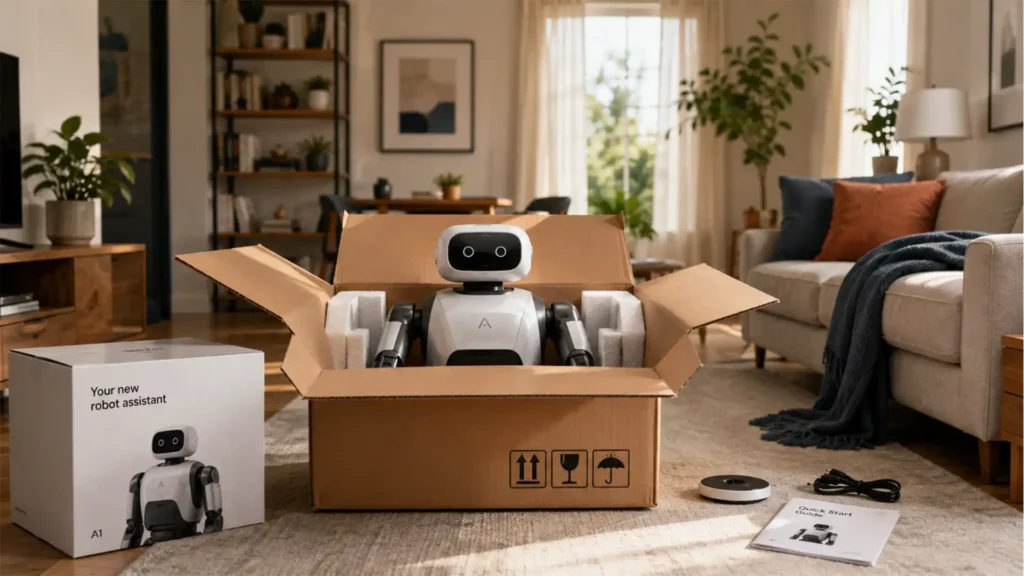
This article is an original analysis supported by the sources cited below
World Robotics 2025 report – service robots
International Federation of Robotics report release covering professional service robots, consumer service robots, medical robots, domestic-task robot sales, and market caveats.
NEO Home Robot
Official 1X product page describing NEO, Redwood AI, early autonomy, and Scheduled Expert Mode for remotely supervised tasks.
1X home robots
Official 1X company site describing its focus on safe humanoid home robots for chores and personalized assistance.
NVIDIA announces NVIDIA Isaac GR00T Reference Humanoid Robot for academic research
NVIDIA newsroom announcement for its open humanoid reference design using Unitree H2 Plus, Sharpa hands, Jetson Thor, and Isaac GR00T software.
NVIDIA announces Isaac GR00T N1
NVIDIA newsroom announcement describing Isaac GR00T N1, simulation frameworks, synthetic data tooling, and humanoid robot foundation model development.
NVIDIA Cosmos
Official NVIDIA page for Cosmos world foundation models, physical AI development tools, licensing information, and model resources.
GR00T N1: An open foundation model for generalist humanoid robots
Technical paper describing NVIDIA’s vision-language-action model architecture for humanoid robot reasoning and motor-action generation.
Cosmos world foundation model platform for physical AI
Technical paper outlining NVIDIA’s world foundation model platform for physical AI, simulation, data curation, and robot development.
iRobot reports fourth-quarter and full-year 2024 financial results
Official iRobot release noting the Roomba launch history, product portfolio, and more than 50 million robots sold worldwide.
Roborock reports 56.51% revenue growth in 2025
Official Roborock newsroom release covering 2025 revenue, overseas growth, R&D spending, and product development in smart cleaning robots.
Amazon Astro product page
Amazon product page describing Astro’s home monitoring role, movement limits, privacy controls, Ring integration, and single-floor indoor operation.
Matic robot vacuum
Official Matic product site describing visual perception, 3D mapping, vacuuming, mopping, obstacle handling, and home-cleaning controls.
LG ushers in zero labour home with its smart home AI agent at CES 2024
Official LG release describing its mobile smart home AI agent, appliance integration, environmental sensing, pet monitoring, and domestic hub concept.
ElliQ companion robot for seniors
Official ElliQ site describing the companion robot’s role in supporting older adults, social interaction, and healthy aging at home.
ElliQ, an AI-driven social robot to alleviate loneliness
Peer-reviewed article on ElliQ as a proactive AI-driven social robot designed to address loneliness and support older people.
The unboxing experience: Exploration and design of initial interactions between children and social robots
Research paper examining how social robot unboxing affects children’s perceptions and early robot relationship formation.
On bringing robots home
Research paper introducing Dobb-E and examining robot manipulation learning in real household environments.
Robot operation of home appliances by reading user manuals
Research paper on ApBot, a system that uses appliance manuals, visual grounding, and structured models to operate household appliances.
Preserving sense of agency
Research paper on user preferences for robot autonomy and user control across household tasks, including high-risk domestic contexts.
RobotValues: Evaluating household robots when human values conflict
Research paper introducing a benchmark for household robot planning under value conflicts such as safety, privacy, autonomy, and social appropriateness.
Investigating the privacy risk of using robot vacuum cleaners in smart environments
Research paper examining privacy risks from robot vacuum cleaners and the possibility of inferring events from network traffic metadata.
ISO 13482:2014 robots and robotic devices
ISO page for the safety standard covering personal care robots, including mobile servant robots, physical assistant robots, and person carrier robots.
Consumer and commercial robots
UL Solutions page describing robot testing and certification, including UL 3300 for consumer and commercial service robots.
AI Act
European Commission page explaining the EU AI Act, its risk-based framework, and its role in trustworthy AI governance.
Cyber Resilience Act
European Commission page describing cybersecurity requirements for hardware and software products with digital elements.
NIST cybersecurity for IoT program
NIST program page covering cybersecurity standards, guidance, and tools for IoT systems, connected products, and deployment environments.
U.S. Cyber Trust Mark
FCC page for the voluntary cybersecurity labeling program for wireless consumer IoT products.
The global market for humanoid robots could reach $38 billion by 2035
Goldman Sachs Research article outlining revised humanoid robot market projections and shipment assumptions.
State of venture 2025
CB Insights report page describing venture trends, including record robotics funding and industrial humanoid robot deal activity.
Apptronik raises $520M as VC funding for humanoid robotics explodes 300%
PitchBook article covering humanoid robotics venture funding growth and deal activity.
| Citing this article? Brief excerpts are welcome. Please credit Webiano.digital, name the author where stated, and include a link to https://webiano.digital and to this original article. Full or substantial republication requires prior written permission. Read our Copyright and Content Use Policy. |
This article was prepared with the assistance of artificial intelligence tools. The content underwent expert human review, and Webiano Digital & Marketing Agency assumes editorial responsibility for its final version and publication.