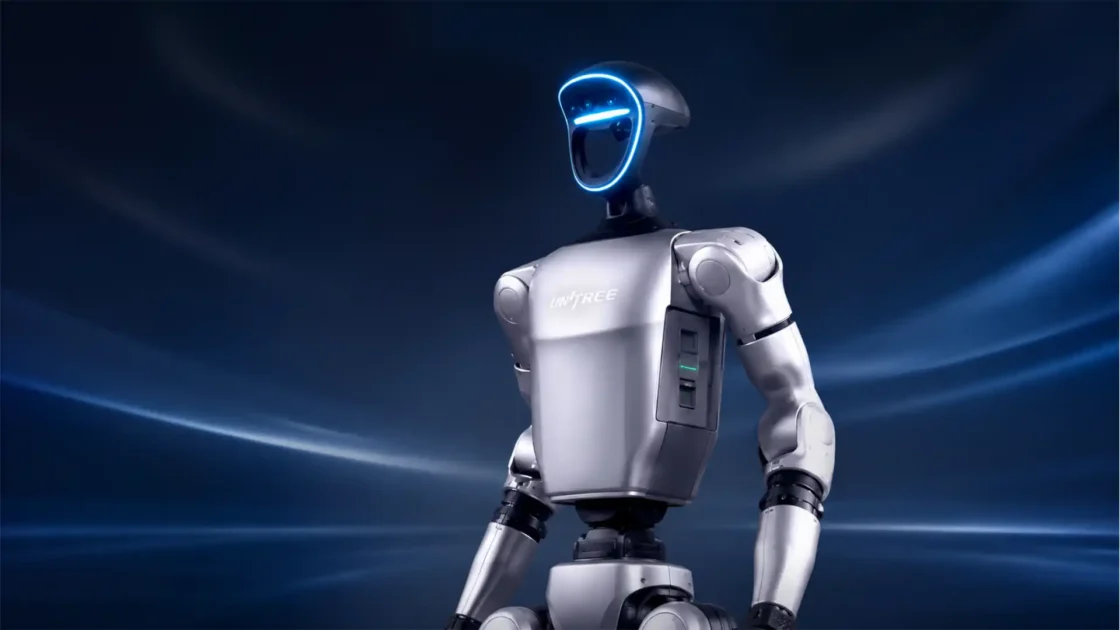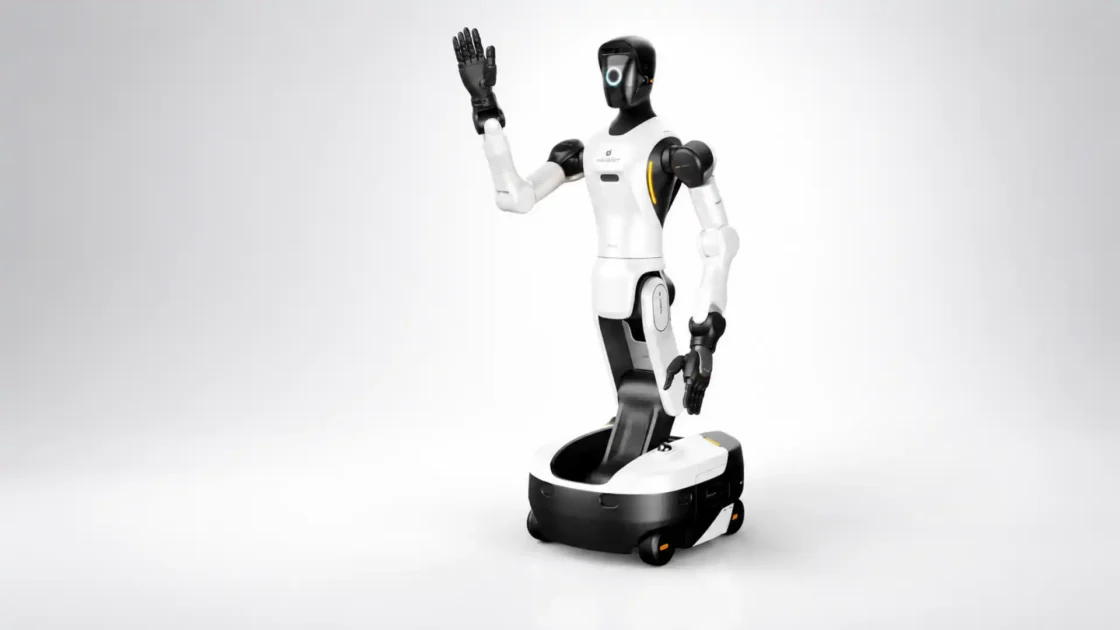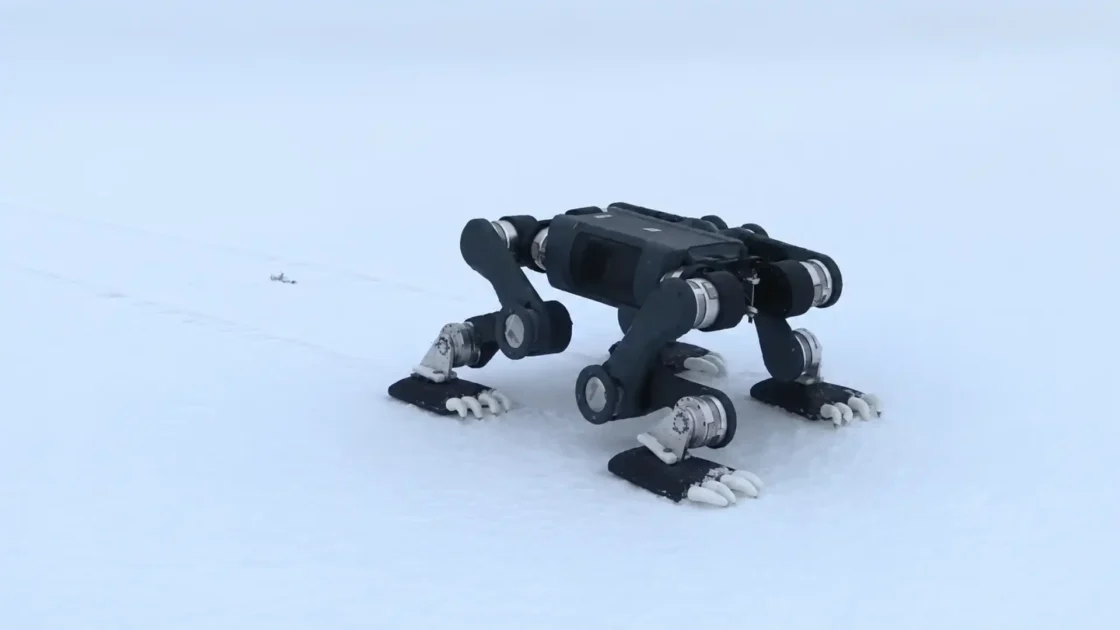
A humanoid robot can cost less than $10,000 to buy as a limited research platform, yet developing a new commercial humanoid from first principles can absorb hundreds of millions of dollars. Those figures do not conflict. A retail price covers one configured machine made after years of engineering; a development budget pays for the people, failed prototypes, software, test facilities, tooling, certification work, data collection, supply chain, and field support that make repeatable production possible. Unitree’s current catalogue illustrates the low end of purchase prices, with compact humanoids listed from several thousand dollars, while Figure and Apptronik have announced financing rounds above $1 billion and $935 million respectively for broader company programs that include artificial intelligence, manufacturing, and deployment. Funding is not the same as development cost, but it reveals the scale of capital available to teams seeking mass-market systems.
Table of Contents
The real price starts with the definition
For a practical answer, a credible laboratory prototype usually belongs in a low-single-digit-million to low-tens-of-millions budget, assuming a small expert team, extensive use of purchased components, limited custom tooling, and tightly defined demonstrations. A machine that walks slowly, carries a modest payload, and performs a rehearsed task is not yet a product. The budget rises when the robot must recover from disturbances, manipulate unfamiliar objects, work through a full shift, stop safely near people, survive falls, accept software updates, and be repaired by technicians rather than its inventors. Each requirement adds engineering disciplines and repeated test cycles. This cost band is an editorial estimate derived from documented engineering compensation, current hardware prices, and the scope of modern development programs; no authoritative industry tariff exists. U.S. wage data alone place median annual pay above $100,000 for mechanical and electrical engineers and above $150,000 for computer hardware engineers, before benefits, recruiting, laboratories, and management overhead.
A pre-production humanoid intended for customer pilots often requires roughly $20 million to $100 million or more across several years. That range can support a multidisciplinary organization, successive hardware generations, simulation infrastructure, teleoperation, data pipelines, safety engineering, small-batch manufacturing, and customer integration. The upper boundary moves quickly when a company designs its own actuators, hands, batteries, electronics, or foundation models. A team may spend less by licensing components and narrowing the task, but it then inherits supplier margins, interface constraints, and dependence on parts that may not survive industrial duty cycles.
A platform intended for scaled commercial deployment belongs in another category. Total program spending can reach several hundred million dollars and may exceed $1 billion before stable volume production, especially when the company is also building factories, training large models, operating robot fleets, and funding years of negative cash flow. Figure says its 2025 financing exceeded $1 billion and linked the money to Helix artificial intelligence and BotQ manufacturing. Apptronik said its 2026 round exceeded $935 million and would support production, training, data collection, and deployments. Agility built RoboFab with a stated peak capacity of 10,000 Digit robots annually, while 1X describes a vertically integrated factory and expansion toward much higher output. These disclosures show where money goes, not the exact cost of a single robot design.
The most honest answer therefore uses three numbers rather than one: prototype cost, product-development cost, and industrialization cost. It also separates non-recurring engineering from per-unit manufacturing expense. A prototype might contain $50,000 of purchased parts and still require $8 million of development. A mature robot might sell for $20,000 after its maker has spent $300 million creating the design, software, factory, and service network. Purchase prices can fall while total development spending climbs, because lower unit cost often demands more custom engineering, supplier negotiation, automated testing, and tooling.
Currency and location also matter. A university using shared laboratories in a lower-cost region may spend far less cash than a Silicon Valley company hiring scarce specialists, while still consuming comparable research effort. Conversely, rapid schedules raise costs through parallel teams, expedited parts, duplicated rigs, and discarded designs.
No public source establishes the precise lifetime development bill for WABOT-1, ASIMO, Atlas, Optimus, Digit, Figure, Apollo, or NEO. Companies disclose selected funding, specifications, factory capacity, and milestones, not complete project ledgers. Any exact claim that “a humanoid costs X to develop” without defining capability, volume, geography, and accounting scope should be treated cautiously. The defensible estimate is $2 million to $10 million for a focused research prototype, $20 million to $100 million-plus for a pilot-ready platform, and $100 million to more than $1 billion for a commercial program built for scale. Those bands are not price quotes. They are planning ranges anchored in the observable economics of engineering labor, hardware iteration, safety, data, manufacturing, and deployment.
Development cost is not the sticker price
The phrase “cost of a humanoid robot” hides four different accounts. Research expense pays for discovering whether a control method, actuator, hand, or perception system works. Product-development expense turns those discoveries into a repeatable design. Industrialization expense creates suppliers, tooling, assembly processes, quality controls, and factories. Operating expense keeps deployed robots charged, connected, maintained, insured, monitored, and useful. Mixing those accounts produces misleading comparisons, especially when one company publishes a retail price and another announces a financing round. Unitree can list a finished machine at a current catalogue price because the engineering investment has already been spread across its business. A newly formed team cannot reproduce that result by buying an equivalent quantity of motors and aluminum.
A bill of materials is only the visible core. It includes actuators, transmissions, structural parts, batteries, motor drives, wiring, computers, cameras, inertial sensors, force sensors, hands, cooling hardware, connectors, covers, and fasteners. Yet a working robot also depends on custom fixtures, calibration equipment, spare parts, test stands, chargers, protective rigs, machine tools, and measurement instruments. Prototype quantities are expensive because suppliers charge more per component, custom parts require setup, and failed revisions cannot be recovered through large production runs. A low-volume machined joint may cost many times the price of its eventual cast or forged version. Moving to the cheaper process requires engineering, tooling, validation, and a volume commitment.
Labor usually dominates early development. A humanoid combines mechanical design, electrical engineering, embedded systems, controls, motion planning, computer vision, machine learning, simulation, cloud infrastructure, safety, manufacturing, procurement, industrial design, testing, field service, and program management. Ten engineers paid for two years are not a ten-salary project. Employer benefits, payroll taxes, recruiting, office and laboratory space, computers, software, travel, management, and equipment expand the cash requirement. U.S. Bureau of Labor Statistics data show that private-industry benefits add a material amount beyond wages, while specialist engineering pay sits well above economy-wide medians. A startup competing for experienced robotics staff in a costly city may pay above national medians and add equity, bonuses, relocation, and immigration support.
Time creates another distinction. A demonstration budget can end when the robot completes a scripted sequence. A product budget continues through reliability growth, regression testing, documentation, security updates, supplier changes, customer trials, and accident investigation. A machine that works once is an experiment; a machine that works every shift is an operation. The second standard requires thousands of cycles, fault logging, controlled software releases, component traceability, service procedures, and replacement inventory. Field failures expose interactions that laboratory tests miss: reflective surfaces confuse vision, flooring changes traction, wireless networks drop, operators place objects unexpectedly, and heat accumulates during repetitive motion.
Accounting choices also change published numbers. A large company may distribute shared artificial-intelligence compute, factory engineering, legal work, and executive overhead across multiple programs. A startup may report total operating expense without identifying the humanoid share. Capital equipment can be depreciated over years rather than charged immediately. Customer-funded pilots, government grants, supplier credits, and research partnerships can reduce cash paid by the robot developer while leaving the real resource cost unchanged. Acquisition prices and venture rounds include expectations about future revenue and intellectual property, not only money already spent on engineering.
The sticker price becomes useful only after the intended comparison is named. For a buyer, the relevant measure may be purchase price or monthly subscription. 1X, for example, publishes both an ownership price and a subscription for NEO, while Agility markets Digit through Robots-as-a-Service arrangements. Those commercial forms move some maintenance and performance risk from the customer to the vendor. For a developer, the relevant measure is cash required to reach a defined technical and commercial milestone. For an investor, it is capital required until the company reaches repeatable revenue and acceptable margins. For a factory operator, it is total cost per successful task, including integration, downtime, supervision, energy, and service.
A clear estimate therefore begins with a scope statement: height and payload, wheeled or bipedal mobility, hand complexity, autonomy level, target environment, safety category, expected duty cycle, production volume, and service model. It then states which accounts are included. Without that discipline, a $5,000 retail robot, a $5 million research effort, and a $500 million commercialization program appear to answer the same question. They do not. The development price is the cost of reducing technical and commercial uncertainty, not merely the sum of parts attached to the first functional machine.
Mechanical people began as imagination before engineering
Humanoid robotics did not begin with motors or software. It began with a recurring human idea: build an artificial figure that moves, speaks, serves, entertains, or imitates life. Ancient stories, religious traditions, court automata, clockwork figures, and theatrical machines supplied the cultural vocabulary long before engineers could make a stable walking robot. These objects matter because they established the human form as an interface people immediately recognize. A face suggests attention, hands suggest manipulation, and legs suggest access to spaces built for bodies. Yet most early figures were mechanisms following fixed motions. They did not perceive a changing environment, calculate balance, or choose actions in the modern robotic sense.
Renaissance and early modern automata demonstrated that complex motion could be encoded mechanically through cams, gears, linkages, water pressure, and falling weights. Makers could create figures that wrote, played instruments, drew pictures, or moved their limbs in elaborate sequences. Their achievement was not autonomy but repeatability. A cam profile acted like a physical program: once shaped, it constrained the machine to a predetermined trajectory. The distinction between spectacle and adaptive behavior remains central today. A humanoid that performs a rehearsed dance may reveal excellent mechanical control without proving that it can handle an unscripted warehouse, home, or factory.
Industrialization changed the purpose of machines. Factories rewarded speed, force, accuracy, and repetition, not resemblance to people. The most productive robots of the twentieth century therefore became fixed arms, gantries, and specialized machines. Their geometry followed the task. A welding arm did not need a face, two legs, or five-fingered hands. It needed reach, stiffness, repeatability, and a protected work cell. This economic logic still challenges humanoids: if a conveyor, mobile base, or six-axis arm solves the problem more cheaply, the human shape is unnecessary.
The word “robot” entered popular culture through Karel Čapek’s 1920 play R.U.R., although the fictional workers were closer to artificial people than electromechanical machines. The term carried labor, social, and political meaning from the start. Engineers later applied it to programmable machinery, but public expectations retained the image of a general servant. That mismatch created a century of recurring disappointment. Industrial robots became economically important while household humanoids remained difficult. The public saw a humanoid body and expected human versatility; the machine delivered a narrow demonstration.
Modern robotics required several technical foundations to converge. Electric motors and power electronics made controlled motion practical. Feedback theory allowed systems to compare commanded and measured states. Digital computers supported real-time calculation. Sensors provided joint position, acceleration, force, vision, and range. Lightweight materials improved power-to-weight ratios. Rechargeable batteries eventually supported untethered operation. A humanoid is a systems problem created by the interaction of all these fields. Weakness in one area propagates: a heavy battery demands stronger legs; stronger legs consume more energy; larger actuators add mass; added mass worsens falls and raises safety risk.
The human body is an unforgiving reference. People walk with high energy economy, adapt foot placement before conscious thought, use compliant muscles and tendons, and recover from disturbances through whole-body coordination. Hands combine strength, touch, dexterity, and passive adaptation in a compact package. Human vision and proprioception operate continuously, while the nervous system integrates them with learned expectations. Replicating even a small subset requires mechanical, electrical, and computational resources that early automata could not approach.
Public fascination also affects financing. Familiar bodies attract attention, demonstrations, and investment, but that visibility can reward appearance before reliability and distort comparisons with less theatrical machines.
The historical starting point therefore depends on the definition. Mechanical humanoid figures are centuries old. Programmable industrial robotics began in the twentieth century. Full-scale intelligent humanoid research is commonly linked to Waseda University’s WABOT project, which started in 1970 and produced WABOT-1 in 1973. Waseda describes that machine as the world’s first full-scale humanoid robot, capable of bipedal walking, object handling, and simple Japanese communication.
That milestone did not erase the earlier history; it changed the engineering question. The goal was no longer to make a figure look alive for a performance. It was to coordinate perception, language, locomotion, and manipulation in one embodied system. The cost of humanoid development began rising sharply at that point, because each new capability required dedicated hardware, control systems, researchers, and integration. The lineage from automata to WABOT explains both the fascination and the expense: society asks one machine to combine the symbolic familiarity of a person with the reliability of industrial equipment.
WABOT-1 turned the human form into a research program
Waseda University’s WABOT project supplied one of the clearest technical starting points for modern humanoid robotics. The university says the cross-disciplinary effort began in 1970 under Professor Ichiro Kato and completed WABOT-1 in 1973. Waseda describes it as the world’s first full-scale humanoid robot. The machine combined a limb-control system, vision, conversation, tactile sensing, bipedal locomotion, and hands able to grip and transport objects. Its importance lies in integration rather than any single performance record. Researchers attempted to place perception, communication, manipulation, and walking inside one human-scale body at a time when computing and sensors were primitive by current standards.
WABOT-1’s abilities were limited. Historical accounts describe slow walking and simple communication, not free-ranging autonomy. Yet those limits reveal the enduring architecture of the problem. A humanoid must estimate its own posture, perceive external objects, plan an action, drive joints, and correct errors while maintaining stability. Every subsystem shares power, space, timing, and data with the others. Adding a hand changes arm mass and balance. Adding cameras changes head weight and processing demand. Changing gait alters vibration seen by the cameras. Integration creates costs that component lists do not show.
The project also demonstrated why universities played an early role. Commercial demand for a general humanoid did not exist in 1973. The work required patience, academic collaboration, and acceptance that useful products might remain decades away. A university could treat the robot as a platform for studying human motion, control, perception, and communication rather than as a product with quarterly revenue targets. Shared laboratories, graduate researchers, public funding, and institutional continuity made long-horizon investigation possible. The cash budget may have been modest compared with present venture-backed programs, but the intellectual effort was large.
Reliable public documentation does not provide a complete inflation-adjusted development bill for WABOT-1. Any precise modern-dollar figure would require records covering salaries, donated equipment, facilities, overhead, and years of related research. No defensible exact cost should be invented. The useful lesson is structural: the project needed a cross-disciplinary team and custom hardware before an ecosystem of robotics suppliers, open-source middleware, inexpensive cameras, or powerful embedded computers existed. Many components had to be designed, fabricated, or adapted locally. That increases engineering effort even when wages and equipment prices are lower than those in a modern commercial laboratory.
WABOT-2, announced in 1984, shifted emphasis toward refined sensory-motor coordination. Waseda reports that it could read a musical score and play an electronic organ with hands and feet. The choice of music was not decorative. Playing demands visual interpretation, timing, coordinated limbs, and controlled contact with keys and pedals. It offered a bounded task through which researchers could study integrated intelligence. The machine still operated inside a carefully defined setting, illustrating a pattern that continues: humanoid progress often appears first in constrained demonstrations before it survives variable workplaces.
Waseda continued developing bipedal and anthropomorphic platforms after WABOT. The university’s history presents humanoid research as a decades-long institutional program rather than a single invention. That continuity matters for cost estimation. A new robot inherits accumulated models, test methods, mechanical knowledge, software, trained researchers, supplier relationships, and failed experiments. The visible generation is financed partly by invisible generations before it. Comparing a startup’s first robot with a university’s tenth platform or an automotive company’s decades of research without accounting for inherited knowledge leads to false conclusions.
Documentation, drawings, and tacit laboratory practice also accumulated. That institutional memory reduces repeated mistakes, although it rarely appears as an asset on a project budget.
The WABOT lineage also explains the recurring appeal of a human-shaped machine. Buildings, tools, furniture, stairs, controls, and workflows were designed around human dimensions. A robot with compatible reach and locomotion might enter those environments without complete reconstruction. This argument remains one of the strongest commercial cases for humanoids. Yet compatibility is not automatic. Human environments contain clutter, soft objects, narrow passages, reflective surfaces, thresholds, crowds, and social expectations. Matching body proportions does not provide the intelligence or reliability needed to cope with them.
From a development-budget perspective, WABOT-1 marks the transition from isolated mechanisms to embodied systems research. The cost question stopped being “What does a walking mechanism cost?” and became “What does it cost to coordinate a mobile body that senses, reasons, communicates, and manipulates?” Present programs still answer that question with larger teams, faster computers, richer sensors, and more ambitious commercial targets. The tools changed profoundly; the integration burden remained across generations.
Honda converted decades of walking research into ASIMO
Honda began its humanoid work long before ASIMO became a public symbol. The company’s historical material traces a sequence of experimental bipedal machines through the 1980s and 1990s, followed by the public introduction of ASIMO on November 20, 2000. Honda described the new robot as small and lightweight compared with earlier prototypes and emphasized its human-like walking technology. ASIMO was the visible result of a long internal research chain, not a product assembled during one launch cycle.
Honda’s route illustrates cumulative development spending. Early machines focused on legs and dynamic walking. Later platforms added a torso, arms, improved balance, perception, and autonomy. Each generation answered a narrower question and supplied data for the next. A company pursuing the same objective today can buy better sensors and computers, use open software, and simulate many failures, but it still faces the need for repeated physical generations. Structural resonance, gearbox wear, cable routing, thermal behavior, foot contact, and fall damage cannot be understood from a slide deck.
ASIMO’s public abilities expanded over time. Honda describes autonomous decision-making based on the movement of people around the robot and identifies recognition of moving objects, prediction of their paths, and generation of its own path as parts of that autonomy. The company later summarized ASIMO’s contributions in terms of mobility, recognition, and task execution in human living environments. The program’s value extended beyond the robot itself. Knowledge from balance control, sensing, and human interaction could inform other mobility and robotics work, which makes project-level accounting difficult inside a diversified manufacturer.
Honda has not published a complete lifetime cost for ASIMO and its predecessors. Numbers repeated in unsourced articles should not be treated as audited program spending. The company ran the effort across decades, laboratories, prototype generations, demonstrations, and corporate functions. A reliable total would need to allocate engineers, facilities, equipment, supplier work, travel, public demonstrations, software, and shared research. The absence of a public total is itself a lesson: high-profile humanoid programs are commonly judged through technical milestones while their detailed economics remain proprietary.
ASIMO also shows the difference between technical achievement and commercial deployment. The robot demonstrated walking, running, stair use, recognition, communication, and coordinated behavior, but Honda did not sell it as a mass-market labor platform. It appeared in demonstrations, education, research, and public events. A demonstration robot can be maintained by expert staff, operated in prepared spaces, and scheduled around charging or repairs. A commercial worker must meet customer uptime, safety, service, and task economics. Crossing that boundary often costs more than producing the impressive prototype.
The body design reflected a practical compromise. A smaller, lighter robot reduces joint torque, energy use, and fall impact. It can also fit human spaces. Yet reducing size limits payload, reach, battery volume, and the types of tools the robot can use. Every humanoid program makes comparable trades. A full-size industrial machine gains reach and carrying ability but needs stronger actuators, larger batteries, reinforced structures, and stricter safety controls. There is no neutral human scale; dimensions are an economic decision.
ASIMO’s development occurred before the current surge in deep learning, large multimodal models, cheap depth cameras, and GPU-based simulation. Much behavior depended on carefully engineered models, state estimation, planning, and control. That work produced predictable behavior within known conditions but required substantial expert tuning. Present developers combine classical control with learned policies, teleoperation data, and simulation. The newer approach changes the cost distribution rather than eliminating cost: more money moves toward data systems, compute, machine-learning staff, and validation of model behavior.
Honda’s program also shaped public expectations. ASIMO’s polished appearance and smooth demonstrations made humanoids seem closer to everyday use than they were. The gap was not deception; it was the natural difference between a selected capability and a complete labor product. A successful demonstration proves possibility, not economic readiness. Modern viewers should apply the same discipline to current videos. They should ask whether the task was autonomous, whether it was rehearsed, how often it succeeded, how long the robot worked, what supervision was required, and whether the environment was altered.
The historical contribution is clear even without a cost ledger. Honda showed that sustained corporate research could turn awkward experimental bipeds into compact, socially legible machines with controlled walking and autonomous elements. It also showed that decades of engineering do not guarantee a direct commercial market. For anyone budgeting a humanoid today, ASIMO argues for milestone-based investment, inherited technology, and honest separation between research value and product revenue.
DARPA and Atlas moved humanoids into disaster response
The 2011 Fukushima Daiichi disaster sharpened interest in robots that could enter dangerous human-built spaces while operators stayed outside. DARPA’s Robotics Challenge was organized around that need. The agency described the program as an effort to develop human-supervised ground robots for complex tasks in hazardous, degraded environments, including the use of tools and vehicles designed for people. The challenge changed the reference task from polished demonstration to difficult field operation. Robots had to drive, walk over debris, open doors, use tools, connect hoses, and manipulate valves with poor communications.
Boston Dynamics built Atlas for the program. DARPA’s 2013 announcement called the original machine a physical shell for teams developing the software “brains and nerves.” The agency’s historical account describes a six-foot-two-inch, 330-pound robot connected to off-board power and computing. Those details expose the early economics of advanced humanoids: capability was purchased through mass, hydraulic power, external infrastructure, operators, and government-funded hardware. Atlas was not a product price benchmark. It was a research instrument built to accelerate a community of control, perception, and autonomy teams.
The challenge structure reduced duplication. Instead of requiring every software team to design an entire humanoid, DARPA supplied Atlas platforms to teams and provided simulators. Shared hardware allowed researchers to compare approaches and transfer algorithms between simulation and physical machines. This is a form of development subsidy: the public program absorbs platform expense and creates common infrastructure, while participating institutions focus their budgets on software, integration, and testing. A private company starting alone must fund the full stack or negotiate equivalent partnerships.
The finals also revealed how hard embodied autonomy remained. Robots moved slowly, fell, missed handles, and required human supervision. A humanoid operates near the edge of balance while interacting with uncertain objects; small perception or control errors can cascade into a fall. Recovery is costly because the robot may damage itself, the environment, or nearby people. Failure cost is a core line item in humanoid development. Teams need spare components, protective rigs, crash analysis, fault logging, and enough prototypes to continue while damaged units are repaired.
DARPA’s task design established a method still used in commercial programs: choose representative workflows, define measurable success, and test integrated systems under realistic conditions. A company may replace disaster tasks with tote handling, parts sequencing, machine tending, or household tidying, but the development logic is similar. The robot must complete the workflow, not an isolated motion. It must detect exceptions, recover safely, and communicate when it cannot proceed. The expensive work sits in the long tail of irregular situations rather than the first successful cycle.
Atlas continued after the challenge as a Boston Dynamics research platform. The hydraulic version became known for dynamic movements, then the company retired it in 2024 and introduced a fully electric generation intended for real-world industrial applications. Boston Dynamics said the new program builds on decades of research. In 2026 it presented Atlas as an enterprise humanoid for material handling and announced field testing with Hyundai. That transition compresses more than a decade of accumulated engineering into the current machine.
Hydraulics and electric actuation represent different cost structures. Hydraulic systems can deliver high power density and dynamic performance, but pumps, valves, fluid lines, seals, noise, leakage control, and maintenance complicate commercialization. Electric systems align better with industrial supply chains, cleaner workplaces, modular joints, and battery operation, yet they face thermal limits and gearbox demands. Moving from one architecture to another is not a component swap. It requires a new mechanical layout, controls, power system, thermal design, service strategy, and manufacturing process.
The DARPA era also clarified that teleoperation and autonomy exist on a spectrum. Operators could supervise and issue higher-level commands while the robot handled lower-level balance and motion. Present humanoids may use remote assistance when autonomy fails, during early deployments. That choice can reduce the amount of intelligence required before revenue begins, but it creates ongoing labor, latency, privacy, and communications costs. A robot’s apparent autonomy may hide a human operations layer.
For cost planning, the Atlas history offers three lessons. Public research programs can finance foundational hardware and community knowledge. Field tasks expose expensive integration failures that laboratory demonstrations conceal. Commercialization often requires architectural redesign even after spectacular research success. A team using Atlas as evidence that a humanoid can be built should also recognize the decades of institutional work, government support, specialist labor, and repeated platforms behind that evidence. The modern electric robot is not the starting point; it is the current account balance of a long program.
The present wave combines better hardware with artificial intelligence
The current humanoid surge is not caused by one breakthrough. It comes from a stack of improvements that matured at roughly the same time: compact electric actuators, better batteries, cheaper cameras, faster embedded computers, modern simulation, deep learning, large-scale cloud infrastructure, and investors willing to finance long development cycles. The body became more buildable while the software became more trainable. None of those advances removes the systems problem, but together they let smaller companies attempt work that once belonged mainly to universities, automotive groups, and government programs.
Modern suppliers sell motors, drives, encoders, harmonic and planetary transmissions, depth cameras, inertial units, force sensors, battery cells, and computers that can be integrated rather than invented from zero. Open-source software provides communication, visualization, drivers, and development tools. ROS documentation describes the framework as software libraries and tools for building robotic applications, with middleware that connects robot processes. These resources reduce setup work and improve interoperability, yet production teams still need to harden, secure, test, and maintain what they adopt. Open source lowers entry cost; it does not transfer product liability.
Simulation changed the number of experiments a team can run. NVIDIA’s Isaac Sim is presented as an open-source reference framework for physically based simulation, testing, synthetic data, and robot training. Digital environments allow developers to test software, generate sensor data, vary conditions, and train policies without risking a physical machine on every trial. This can reduce prototype damage and expose integration errors earlier. Simulation still needs accurate models, domain randomization, calibration, and real-world verification. Friction, cable behavior, contact, wear, lighting, and deformable objects remain hard to reproduce perfectly.
Artificial intelligence shifted attention from manually programming every action to learning behavior from demonstrations, reinforcement, large datasets, and multimodal models. Figure describes Helix as a vision-language-action model that unifies perception, language understanding, and learned control for a humanoid upper body. Tesla’s recruiting pages divide Optimus work across vision, foundation models, manipulation, reinforcement learning, controls, embedded software, hardware validation, and infrastructure. The organizational chart shows the true technical stack more clearly than a promotional video.
Learned systems create new costs. Teams need teleoperation hardware, data capture, annotation or curation, storage, model training, evaluation, fleet feedback, and safeguards against regression. A policy that succeeds on average may still fail dangerously in a rare configuration. Updating a model can improve one task and degrade another, so releases need broad validation. The robot’s physical state also changes as joints wear, batteries age, cameras move, and payloads vary. Data operations therefore become a continuing production function rather than a one-time research expense.
Capital availability has expanded accordingly. Figure announced more than $1 billion in committed Series C capital in 2025. Apptronik said its Series A exceeded $935 million in 2026. These rounds finance companies, not isolated robots, and may support manufacturing, artificial intelligence, hiring, pilots, and working capital. They should not be read as proof that every serious humanoid requires a billion dollars. They do show that investors expect commercialization to demand far more than a clever prototype.
At the other end, published robot prices have fallen. Unitree lists compact humanoid models from several thousand dollars and larger platforms at higher prices, excluding tax and shipping. 1X publishes a $20,000 early-access ownership option for NEO alongside a subscription. Cheap access to a body changes who can experiment, but a purchased platform imposes limits on payload, duty cycle, interfaces, safety certification, repair, and commercial rights. A research lab can test algorithms on such a machine without funding a complete mechanical program; a company promising industrial labor must validate the whole product and service.
The market is also learning to narrow its first tasks. Agility’s Digit handles totes in logistics. Figure has reported work at BMW. Apptronik has announced manufacturing pilots. These are bounded workflows with measurable throughput and established economic value. They do not prove general human-level capability. They show that a humanoid may earn revenue before it can perform every task, provided the first task matches its reach, payload, mobility, safety, and reliability.
The present wave is therefore cheaper at the entry point and more expensive at the ambition ceiling. A small team can buy hardware, download software, rent compute, and produce a demonstration faster than earlier generations. A company seeking a safe, autonomous, mass-produced labor platform must finance hardware, models, data, factories, support, and years of field learning. Technological progress lowers the cost of each experiment while raising expectations for the finished system.
A useful budget depends on the milestone
Budgeting becomes clearer when the target is expressed as a milestone rather than a vague promise to “build a humanoid.” A milestone defines the body, environment, task, autonomy, duty cycle, and proof required. The same team might reach a tethered walking demonstration for a few million dollars, then spend ten times more making the machine untethered, safe, maintainable, and useful. Each step removes a different type of uncertainty. Early work asks whether the concept moves. Later work asks whether customers can depend on it.
The first budget tier is a research demonstrator. It may use purchased actuators, a commercial computer, simple grippers, a safety tether, and external power. The environment is prepared and the task rehearsed. A university group or small company can sometimes build this for about $2 million to $10 million, especially when it uses shared facilities and existing software. This is an editorial planning band, not a published industry average. It assumes a narrow goal and does not include a production line, broad certification, or nationwide service.
The second tier is an integrated alpha platform. The robot is untethered, carries its own battery and compute, performs several linked actions, and survives repeated testing. The team begins custom joint, electronics, hand, and structural work. It also builds simulation, logging, teleoperation, and calibration systems. A plausible budget is about $10 million to $30 million. Spending can rise quickly if the company hires a large team before the architecture stabilizes or pursues full-size dexterity from the start.
The third tier is a pilot-ready product. The robot must work at a customer site, fit into safety procedures, operate for useful periods, report faults, accept controlled updates, and be repaired. It needs multiple units because one machine cannot support development, destructive testing, customer pilots, and demonstrations simultaneously. The likely range becomes about $20 million to $100 million-plus, depending on vertical integration and schedule. Public funding rounds in the sector support the view that serious commercialization requires substantial capital, though financing is broader than engineering expense.
Planning ranges by development milestone
| Milestone | Typical evidence | Indicative cumulative budget | Main exclusions |
|---|---|---|---|
| Research demonstrator | Tethered or supervised task in a prepared lab | $2M–$10M | Production tooling, broad safety validation, service |
| Integrated alpha | Untethered multi-step task with repeated tests | $10M–$30M | Large customer fleet, mature supply chain |
| Pilot-ready platform | Customer-site operation with support and fault handling | $20M–$100M+ | High-volume factory and global service |
| Low-rate commercial system | Paid deployments, controlled manufacturing, fleet software | $75M–$300M+ | Full mass-market scale |
| Scaled humanoid company | Custom hardware, AI platform, factory, data and support network | $300M–$1B+ | No fixed upper bound |
These bands overlap because teams inherit different technology, share facilities, outsource different layers, and define “ready” differently. They are best used for practical scenario planning, not valuation.
The fourth tier is low-rate commercial production. The company has paid deployments or contracted service, but volume remains limited. Spending covers supplier qualification, tooling, manufacturing engineering, quality systems, spare inventory, field technicians, security, fleet management, and customer success. A reasonable cumulative planning range is $75 million to $300 million-plus. Agility’s RoboFab, Figure’s BotQ, and 1X’s factory disclosures show that manufacturing capacity becomes a major project of its own.
The final tier is a scaled platform company. It designs much of the body, trains its own models, operates data infrastructure, builds factories, and supports fleets across customers. Current financing announcements place some companies above $1 billion of fresh capital, while others may reach commercialization with less through partnerships, revenue, parent-company resources, or narrower tasks. The correct practical upper limit is open-ended, because capital also funds inventory, acquisitions, sales, legal work, and losses during expansion.
Contingency should be explicit at every tier. New actuators arrive late, imported components change, prototypes fall, batteries fail qualification, and customer workflows move while the robot is being designed. A reserve of 20 to 30 percent may be prudent for first-of-kind hardware, though the correct figure depends on contract structure and technical maturity. Contingency is not permission to avoid discipline; it recognizes that uncertainty is the object being purchased down.
A budget should also distinguish cash from access. Donated components, university laboratories, parent-company compute, customer engineers, and government grants reduce the developer’s cash requirement without making those resources valueless. Comparisons should state whether shared assets and in-kind support are counted. A supposedly cheap project may depend on infrastructure built by someone else over many years.
Milestones should include failure criteria. “Walks” might mean ten controlled steps on a flat laboratory floor, or eight hours of navigation across ramps, thresholds, and changing payloads. “Autonomous” might mean no joystick during the nominal cycle but remote help during exceptions. “Safe” might mean operation behind a barrier, speed-limited collaboration, or validated behavior near untrained members of the public. Budget error often begins when a word is accepted without a test.
A strong development plan releases money only when evidence improves. Early prototypes should answer architecture questions cheaply. Customer pilots should begin only after core reliability and safety tests. Factory spending should follow a design stable enough to manufacture. The cheapest failed humanoid program is the one stopped before expensive scaling, while the most costly mistake is building inventory around an unproven task or unstable design at commercial scale.
People are the largest early expense
A humanoid program may look like a hardware business, but its early cash burn is usually driven by people. The robot is the output of a multidisciplinary organization. Mechanical engineers design structures, joints, feet, covers, and thermal paths. Electrical engineers create motor drives, power distribution, sensing, and safety circuits. Embedded developers make hard real-time systems behave predictably. Controls engineers handle balance, force, trajectory generation, and state estimation. Machine-learning teams build perception and learned policies. Manufacturing, test, procurement, safety, security, and field teams turn prototypes into an operation.
Published wage data provide a floor for planning, not a full budget. The U.S. Bureau of Labor Statistics reports 2024 median annual wages of $102,320 for mechanical engineers, $111,910 for electrical engineers, and $155,020 for computer hardware engineers. Private-industry compensation includes benefits beyond wages; BLS reported average employer costs of $46.60 per hour in March 2026 across private workers, with benefits forming a substantial share. Robotics specialists in expensive technology centers may command more than national medians, especially when companies compete for rare experience in whole-body control, dexterous manipulation, or robot learning.
A simple staffing model exposes the scale. Twenty technical employees with average salary and bonus costs of $150,000 represent $3 million a year before employer taxes, benefits, recruiting, facilities, equipment, travel, contractors, and management. A fully loaded figure might be materially higher. Over three years, even a compact team can consume more than $10 million before buying substantial prototype hardware. Headcount multiplied by time explains why schedules matter as much as parts. A six-month delay affects every salary and overhead line while the company may also repeat builds and postpone revenue.
Team composition changes through the program. Early work needs senior architects who can make high-consequence choices about size, actuation, power, compute, and software. The middle phase expands design, integration, testing, and data collection. Commercialization adds manufacturing engineers, supplier quality, compliance, product security, technical writers, service, and customer operations. Hiring too early raises burn before the design is stable. Hiring too late creates bottlenecks, undocumented systems, and dependence on a few founders.
Experience can reduce iteration count. An engineer who has already designed torque-controlled joints or recovered a biped from falls may avoid months of mistakes. That expertise costs more, but the alternative can be more expensive. The relevant metric is cost per uncertainty removed, not salary alone. Teams should pay for senior judgment at architecture boundaries and use less costly labor for repeatable work only after processes are clear.
Location matters. Salaries, laboratory rents, insurance, machine-shop access, and employment taxes vary widely. A university may provide shared test space and subsidized equipment. A startup in California may face high compensation and rent but gain access to experienced staff, investors, suppliers, and customers. A manufacturer in China may benefit from dense motor, battery, machining, and electronics supply chains. Remote software work can reduce office expense, but hardware integration still requires people near the machines.
Equity does not make labor free. Startups may conserve cash by granting shares, yet equity is economic compensation and dilutes owners. Contractors can fill specialist gaps without permanent headcount, but they may charge higher rates and retain less product context. Academic partnerships can advance research, though publication timelines, intellectual-property terms, and product deadlines differ. Parent companies can lend staff and facilities, hiding costs inside broader accounts.
Retention deserves its own reserve. Losing the engineer who understands a custom drive, calibration chain, or balance controller can halt integration and force months of reconstruction. Documentation, code review, paired ownership, and repeatable build procedures reduce that concentration risk. They consume time now but protect the schedule later.
Management and coordination grow with team size. Humanoid subsystems are tightly coupled, so interface errors are common. A change in joint torque affects battery size, cooling, structure, gait, and safety. Teams need configuration control, design reviews, requirement tracking, test ownership, and release discipline. Coordination is engineering work, not administrative decoration. Weak program management produces duplicate effort, late integration, and expensive redesign.
A useful budget separates direct engineering headcount, shared support, recruiting, facilities, equipment, and contingency. It also assumes attrition and time to hire. A plan that prices only ideal salaries and instant productivity will fail. The first robot may contain tens of thousands of dollars in parts, but the knowledge embodied in its design may represent thousands of person-months. For an early humanoid company, protecting focus, reducing architectural churn, and retaining key staff are among the strongest cost controls available today.
Hardware architecture locks in years of spending
The earliest architecture choices determine much of a humanoid program’s later cost. Height, mass, degrees of freedom, actuator type, battery placement, hand design, compute location, and structural materials interact so strongly that one choice can force several others. A kilogram added high on the body is not merely a kilogram of material. It increases joint torque, structural load, energy consumption, fall impact, and control difficulty. Teams that begin with an attractive exterior before resolving system budgets often discover that the robot cannot meet payload, runtime, or thermal targets at the same time.
Body scale is the first lever. A compact robot needs less torque and creates less energy in a fall, making laboratory work safer and components cheaper. Unitree’s R1, for example, is listed at about 1.23 meters and roughly 27 to 29 kilograms depending on version. A full-size industrial humanoid offers adult reach, carries larger loads, and interacts with standard workstations, but it requires more powerful joints and a larger energy store. Human compatibility has a mechanical price.
Degrees of freedom determine versatility and complexity. More joints allow natural posture, obstacle avoidance, dexterous reach, and whole-body manipulation. They also add motors, drives, encoders, cables, bearings, software states, calibration work, and failure points. Unitree lists 20 to 40 joints across R1 configurations and 31 for H2, while G1 variants are described with 23 to 43 joint motors. Those published ranges show how configuration changes the platform. A robot intended only to move totes may not need a fully articulated spine or five-fingered hands.
Actuation architecture shapes the entire machine. Electric rotary joints are common because motors, power electronics, and batteries fit modern supply chains. Designers still choose among direct drive, planetary gears, harmonic drives, belts, screws, and other transmissions. High reduction can produce torque from a compact motor but introduces friction, backlash, reflected inertia, and impact sensitivity. Low reduction improves backdrivability but demands larger motors and currents. Hydraulic systems provide high power density yet bring pumps, valves, fluid management, noise, and maintenance. Boston Dynamics’ move from hydraulic Atlas to an electric version shows that research performance and commercial architecture can diverge.
Structural material presents another trade. Machined aluminum is accessible for prototypes and easy to revise, but it wastes material and costs more at volume. Carbon composites reduce mass but complicate tooling, repair, and joining. Castings and forgings lower unit cost at scale but require stable geometry and expensive tools. Sheet metal and molded polymers may suit covers and brackets. Prototype-friendly design is rarely production-optimal design. A company must decide when evidence is strong enough to freeze interfaces and fund tooling.
Power distribution and thermal design are often underestimated. Peak joint loads can create large current demands. Batteries, busbars, connectors, fuses, motor drives, and wiring must handle those loads without excessive mass or heat. Heat from motors, gearboxes, computers, and batteries accumulates inside an enclosed body. Fans add noise and dust paths; liquid cooling adds pumps, hoses, and leak risk; passive cooling constrains sustained output. A robot may perform a powerful motion once yet overheat during a shift.
Cable routing is a hidden architecture problem. Wires and hoses cross moving joints, flex thousands of times, and must avoid pinching, abrasion, electromagnetic interference, and service obstruction. Connectors must survive vibration while remaining accessible. A late cable failure can stop an entire robot even when every major component works. Designing modular limbs and replaceable harnesses costs more early but reduces field repair time.
The architecture must also anticipate falls. Protective covers, sacrificial parts, rounded surfaces, joint limits, shock absorption, and emergency shutdown all affect mass and appearance. A laboratory robot may rely on an overhead tether; a deployed machine cannot. Fall tolerance is a product requirement, not a control feature alone. Mechanical design, software, safety strategy, and service inventory must agree on what happens when balance is lost.
Good teams build quantitative budgets before detailed geometry: mass by body segment, peak and continuous torque, energy per task, thermal limits, compute power, payload, reach, and cost targets. They track margins as the design evolves. Architecture reviews should include manufacturing and service staff, not only researchers. The cheapest joint on a spreadsheet may be difficult to assemble, calibrate, cool, or replace.
Once custom tooling, software models, test rigs, and supplier contracts form around an architecture, change becomes expensive. That does not justify freezing a weak design. It just means early prototypes should answer the highest-risk questions before scale. The first architecture is a hypothesis; the production architecture is a financial commitment.
Actuators turn performance goals into heat, weight, and cost
Actuators are the muscles of a humanoid, and their design determines much of the robot’s price, mass, sound, efficiency, and service life. A joint module commonly combines a motor, transmission, bearings, encoder, housing, drive electronics, temperature sensing, wiring, seals, and mechanical stops. A quoted motor price is not a joint price. The module must produce both peak and continuous torque, survive impacts, fit inside the body, reject heat, report its state, and remain controllable across thousands or millions of cycles.
The first distinction is peak performance versus sustained performance. A motor can deliver high torque briefly before winding temperature, magnets, electronics, or lubrication reach limits. Humanoid videos often emphasize a jump, lift, or rapid recovery because peak output is visible. Industrial work exposes continuous limits. Repeated lifting, squatting, or walking turns electrical losses and gearbox friction into heat. A robot that completes ten cycles and then cools for twenty minutes may be technically impressive but economically weak.
Transmissions multiply torque but introduce compromises. Harmonic drives offer compact high reduction and low backlash, which suits precise joints, yet they can be costly and sensitive to shock or wear. Planetary gears can be strong and manufacturable but may add backlash and packaging complexity. Belts and cable drives relocate motors and reduce distal mass, though routing, tension, and maintenance become harder. Direct-drive joints remove much of the gearbox but require larger motors and currents. No transmission wins every joint. Hips, knees, ankles, shoulders, wrists, and fingers face different torque, speed, compliance, and packaging needs.
Backdrivability matters near people. A joint that yields under external force may reduce impact and allow force control, but easy backdriving can make it harder to hold posture without power. Series-elastic elements improve force sensing and shock tolerance while adding deflection, control complexity, and parts. Brakes can hold a pose or protect against power loss, yet add weight and failure modes. Designers must decide whether safety comes from low mass, compliant mechanics, active sensing, limited speed, protective separation, or several layers together.
Custom actuators can improve power density, packaging, noise, and unit cost at scale. They also require electromagnetic design, tooling, supplier qualification, endurance testing, motor-control firmware, and production calibration. Purchased modules shorten schedules and reduce non-recurring engineering, but they may be too heavy, expensive, noisy, or poorly supported. Vertical integration trades supplier margin for development risk. A startup should custom-design only where a component blocks the product target or creates durable advantage.
Actuator testing consumes both equipment and time. Dynamometers measure torque, speed, efficiency, and thermal behavior. Endurance rigs repeat representative load cycles. Impact tests examine falls and collisions. Environmental tests cover dust, temperature, humidity, and vibration. Production requires end-of-line checks and traceability so a field failure can be linked to materials, processes, firmware, and calibration. One weak bearing, connector, adhesive, or heat-treatment process can undermine an otherwise strong joint.
Supply-chain economics appear early. A prototype team might buy a few dozen units at retail or engineering-sample prices. A commercial robot may need several dozen actuators per body, multiplied across hundreds or thousands of robots, spares, test rigs, and replacements. Small changes in joint cost then have large effects. Unitree’s published configurations span more than twenty joint motors, showing why actuator count matters to total hardware economics.
Repair strategy changes design. A sealed integrated joint may be compact and quick to replace but expensive to discard. A serviceable module lowers parts waste yet requires technician time, tools, contamination control, and post-repair calibration. Field customers care about mean time to repair, spare availability, and whether one failed wrist stops the whole robot. A cheaper actuator can create a more expensive fleet if it fails often or takes hours to replace.
Software and mechanics cannot be separated. Torque control depends on current sensing, encoder quality, friction models, communication timing, and structural stiffness. Learned policies trained on one joint response may degrade as components wear or temperature changes. Teams need identification routines and controllers that tolerate variation. Simulation also needs faithful actuator models; otherwise policies exploit unrealistic strength, speed, or contact.
For budgeting, actuator development should include architecture studies, prototype modules, test rigs, failure analysis, firmware, supplier work, production tooling, calibration equipment, and spares. It should also include redesign after the first endurance data arrive. The actuator budget is an investment in every motion the robot will ever make. Saving money by skipping sustained-load and lifetime testing usually moves the cost into field failures, damaged robots, delayed pilots, and customer distrust.
Hands are often harder than legs
Walking attracts attention, but hands frequently determine whether a humanoid performs useful work. Locomotion moves the robot to the task; manipulation earns the task’s value. A hand must reach around objects, establish stable contact, regulate force, tolerate uncertain geometry, sense slip, survive impacts, and fit within strict mass and power limits. Human hands solve these problems through bones, tendons, skin, touch receptors, compliance, and decades of learning. Engineering an approximation is expensive even before autonomy is considered.
The simplest option is not a humanlike hand. A parallel gripper, suction cup, hook, or task-specific end effector may handle boxes, totes, panels, or tools more reliably and cheaply. Industrial automation has long favored such devices because fewer moving parts mean easier control and maintenance. A humanoid company should begin with the objects and workflows that create revenue, then select the least complex end effector that covers them. Five fingers are justified only when task breadth outweighs cost and reliability penalties.
Finger count is a poor measure of dexterity. The important variables are independent degrees of freedom, force, speed, workspace, fingertip geometry, compliance, tactile sensing, and control. Tendon-driven hands can place motors in the forearm, reducing hand mass, but cables stretch, wear, and require tensioning. Directly actuated fingers package motors near joints, increasing distal mass and heat. Underactuated mechanisms let one motor conform around varied objects, sacrificing independent motion for simplicity. Mechanical intelligence can replace some software, but it narrows controllable behavior.
Touch is another cost layer. Force or tactile sensors can detect contact location, pressure, shear, and slip. Rich sensing supports delicate manipulation and recovery, yet sensors must survive repeated contact, impacts, contamination, and cable flex. Their signals drift and vary across units. Data pipelines must record touch alongside vision, joint state, and commands. Sanctuary AI has emphasized dexterous manipulation and tactile technology in its public program, illustrating that hands can become a company’s central research asset rather than a peripheral component.
Hands also influence whole-body design. A heavy hand increases shoulder torque and energy use. A wide wrist may not fit tools or shelves. Strong fingers create pinch hazards. Sharp or rigid fingertips damage objects and people. Covers and soft materials improve contact safety but wear. Quick-change end effectors expand task range but add interfaces, latches, identification, and storage systems. Every hand decision propagates into arms, control, safety, payload, and service.
Manipulation data are expensive. A walking policy can generate many steps in simulation, but realistic contact with deformable bags, cables, clothing, or mixed objects remains difficult. Teleoperators may demonstrate grasps using instrumented devices. Robots then repeat actions, collect failures, and receive policy updates. Rare events dominate: an object shifts, packaging tears, a transparent item confuses vision, a handle bends, or a finger lands between stacked parts. The long tail of objects becomes a data budget.
Testing must go beyond successful grasps. Engineers measure grip force, repeatability, object damage, slip recovery, cycle life, contamination tolerance, and post-impact calibration. Standard objects support comparison, but customer parts matter more. A warehouse hand may face cardboard dust and labels; an automotive hand meets oil, metal edges, and precise fixtures; a home hand encounters fabric, liquids, pets, and children. No single hand design can be assumed safe and capable everywhere.
Production hands are especially difficult because they contain many small precision parts. Assembly labor, cable routing, adhesives, preload, sensor placement, and calibration can dominate unit cost. Tolerances stack across fingers, and small variation changes grasp behavior. A prototype hand built carefully by its designer may perform well while production units vary. Repeatable assembly is part of dexterity.
Object presentation can reduce hand cost. Fixtures, bins, handles, and packaging that expose reliable grasp points may turn a dexterous challenge into a repeatable operation.
The budget decision is therefore strategic. A narrow industrial robot may launch with simple grippers and add richer hands later. A general-purpose home robot may need compliant, quiet, washable, socially acceptable hands from the start. A research platform may expose interfaces so laboratories can attach their own end effectors. These paths require different teams and tooling.
A realistic hand program includes mechanical design, actuation, sensors, embedded electronics, control, teleoperation, object datasets, durability rigs, safety analysis, and replacement inventory. It also anticipates broken fingers. Hands contact the uncertain world first and often, so they become consumable damage points. A humanoid with perfect walking and unreliable hands is an expensive mobile camera. Product budgets should reflect manipulation as a primary system, not an accessory added after the legs work.
Sensors and computers create the robot’s nervous system
A humanoid needs continuous evidence about its own body and the world around it. Joint encoders report position; current sensors estimate motor effort; inertial units measure acceleration and rotation; force sensors detect contact; cameras and depth sensors observe people, objects, and surfaces; microphones may support speech; temperature and voltage sensors protect hardware. Perception is not one camera mounted in a head. It is a synchronized measurement system whose errors directly affect balance, manipulation, and safety.
Sensor selection begins with the environment. Warehouses may have repeating racks, reflective wrap, dust, changing light, and moving equipment. Factories add metal surfaces, sparks, vibration, and strict safety zones. Homes contain mirrors, transparent objects, soft materials, stairs, pets, and privacy concerns. A sensor package that performs in one setting may fail in another. Redundancy raises cost and data volume but can cover blind spots or degraded conditions.
Calibration is a major hidden expense. Cameras must be located relative to the robot’s body; joint zero positions must be known; force sensors need bias correction; clocks must align. A millimeter error at a camera or wrist can become a large grasp error at reach. Calibration also changes after impacts, repairs, temperature cycles, or component replacement. A production robot needs calibration procedures, fixtures, records, and automatic checks, not a one-time laboratory adjustment.
Compute architecture determines latency, power, thermal load, and dependence on networks. Low-level balance and safety functions generally require local deterministic processing. Perception and learned policies may run on onboard accelerators or remote servers, depending on latency and privacy. Cloud processing adds scale and fleet learning but introduces connectivity risk and recurring cost. A robot that stops whenever Wi-Fi fails is unsuitable for many operations. A robot that sends household video off-site raises a different class of trust and regulatory questions.
Embedded computers must survive vibration, temperature, power transients, and repeated updates. They need secure boot, signed software, logging, diagnostics, and rollback. Development boards can accelerate prototypes, but commercial designs may require custom carriers, connectors, cooling, electromagnetic-compatibility work, and long-term component availability. The computer is also a product lifecycle commitment. Semiconductor parts become obsolete, and replacing one can trigger software, thermal, and compliance revalidation.
Bandwidth grows quickly. Multiple high-resolution cameras, depth streams, tactile arrays, joint data, and audio create large volumes. Recording everything helps diagnosis and machine learning but consumes storage and network capacity. Teams must choose sampling rates, compression, retention, and privacy controls. Field fleets need upload policies that do not overwhelm customer networks or expose sensitive information. Data architecture therefore belongs in the hardware budget from the start.
Safety sensing requires independent thought. The perception system used to perform a task may not be sufficient for protective functions. A neural model can recognize a person, but a safety case may demand validated detection, speed monitoring, emergency stops, force limits, and fault-tolerant circuits. NIST emphasizes measurement and test methods for robot perception, mobility, manipulation, and safety, while ISO standards separate robot design from application integration. Commercial perception must be measurable, not merely convincing in a video.
Computing cost extends beyond the body. Developers use workstations, build servers, data storage, simulation clusters, model-training systems, and observability platforms. NVIDIA’s robotics tools emphasize simulation, synthetic data, policy training, and software-in-the-loop testing. These methods reduce some physical testing but create infrastructure and specialist staffing needs.
Procurement should consider more than specification sheets. Camera and processor availability may change during a product’s life, and a vendor can revise firmware or discontinue a part. Dual sourcing reduces dependence but creates additional calibration and validation work. Long-term supply agreements require forecasts and commitments before demand is certain. Teams therefore need an approved-component process and a plan for redesign when electronics age out.
Sensor and compute failures also strongly shape service. A camera lens scratches, a connector loosens, an inertial sensor drifts, or a fan clogs. The robot needs health monitoring that identifies the fault before behavior becomes unsafe. Modules should be replaceable without hours of recalibration. Spare strategy must reflect lead times and fleet size.
A complete budget should include sensors, computers, custom electronics, thermal hardware, wiring, calibration equipment, data storage, security engineering, and replacement over the program. It should also include the integration time needed to make measurements trustworthy. A humanoid does not act on reality; it acts on estimates of reality. The quality, timing, and integrity of those estimates determine whether expensive mechanics become useful or dangerous during real operation.
Batteries make runtime an economic constraint
Untethered humanoids carry their energy source, so every minute of runtime has a mass, volume, thermal, safety, and financial cost. A larger battery is not free endurance. It adds weight that the legs must accelerate and support, which increases energy use and actuator size. That feedback loop makes battery sizing a system problem rather than a simple capacity choice.
The first requirement is a duty-cycle model. Walking without payload, standing, lifting, crouching, manipulating, computing, cooling, and wireless communication draw different power. Peak current matters during dynamic motion, while average power determines runtime and heat. A robot may operate intermittently in a warehouse and charge between tasks, or it may need continuous work across a shift. Without a measured task profile, runtime claims are difficult to compare.
Cell chemistry and pack design introduce trade-offs among energy density, power, cycle life, cost, temperature behavior, and safety. The pack also needs a battery-management system, fuses, contactors, current sensing, thermal monitoring, structural protection, connectors, and charging hardware. A prototype can use an adapted commercial pack, but a product needs controlled suppliers, traceability, transport compliance, service procedures, and response plans for damage. The battery is both an energy component and a hazardous-energy system.
Placement affects balance. A central torso pack reduces limb inertia and can keep the center of mass near the hips. It may compete with compute, cooling, and structural space. A removable pack enables fast swaps but requires a secure, high-current interface that operators can handle safely. Fixed packs simplify structure but create downtime during charging. Boston Dynamics has described autonomous battery swapping for its enterprise Atlas, showing that runtime can be addressed through operations as well as chemistry.
Charging strategy changes fleet economics. One robot with a short runtime may need idle periods; a larger fleet can rotate through chargers; a swap station adds capital equipment and spare packs; wireless or opportunity charging adds infrastructure and efficiency losses. Robots-as-a-Service vendors may own this complexity, while customers see a monthly price. A development budget should include chargers, electrical installation, fire precautions, software scheduling, and replacement batteries.
Battery aging must be modeled. Capacity and power capability decline with cycles, calendar time, temperature, and usage. As packs age, a robot may fail to complete the same task or hit voltage limits during peak motion. Policies trained on a fresh pack must tolerate weaker performance. Fleet software needs state-of-health data, retirement thresholds, and inventory planning. Runtime is a moving value across the product life.
Thermal management links the battery to the rest of the body. Motors and computers heat nearby cells; cold conditions reduce performance; insulation traps heat. Fans consume energy and admit dust. Liquid cooling adds mass and leak risk. A robot designed around short demonstrations may discover that sustained industrial work exceeds its thermal envelope even when battery capacity appears adequate.
Falls create special battery risk. The pack must withstand impact, puncture, crushing, and connector strain. Protective structures add weight. Emergency responders and technicians need clear isolation procedures. Shipping damaged lithium batteries is difficult, so service models must address local handling. These obligations do not appear in an online cell price.
Pack replacement creates a deferred cost that early forecasts often omit. If a fleet needs new batteries before the mechanical body wears out, the vendor must price that obligation into sales, subscriptions, warranties, or service reserves. Used packs need safe transport, diagnosis, or recycling. These processes grow more complex across countries with differing rules.
Energy use also affects the customer’s business case, though electricity may be smaller than labor, depreciation, and service. More important is availability. A cheap robot that spends much of the day charging may deliver fewer successful tasks than a costlier robot with swaps or higher efficiency. Cost per productive hour matters more than nominal runtime.
Designers can reduce battery demand through lighter structures, lower-loss actuators, regenerative behavior, lower idle power, task planning, and mechanical support. A wheeled base may outperform legs where stairs are unnecessary. External tools can supply lifting force. Workflows can be arranged around charging. The humanoid form should be used only where its access and manipulation justify the energy penalty.
Battery budgeting includes pack prototypes, management electronics, chargers, safety tests, transport, replacement inventory, recycling, and integration with fleet operations. It also includes failed packs and certification delays. Teams should validate energy and thermal models early with representative motions, not marketing cycles. A humanoid that cannot sustain its target workflow has not reached product architecture, regardless of how well it performs the first minute.
Software turns a moving body into a usable system
The software stack of a humanoid spans timescales from microseconds to months. Motor-control loops regulate current and torque. Joint controllers track motion. State estimation fuses encoders and inertial data. Whole-body control coordinates balance and contact. Perception identifies people, objects, and terrain. Planners select actions. Learned policies generate behavior. Fleet systems deploy updates, monitor health, and assign work. Software cost grows from the number of interactions, not only the number of code lines.
Real-time layers demand predictable timing. A delayed web request is inconvenient; a delayed balance update can cause a fall. Embedded systems must handle communication faults, sensor dropouts, overheating, low voltage, and emergency stops. Engineers need hardware-in-the-loop rigs, timing analysis, fault injection, and deterministic release procedures. General software practices remain necessary, but physical consequences make testing stricter.
Middleware reduces basic integration work. ROS provides libraries, tools, messages, and communication patterns used widely in robotics research and development. It allows teams to connect sensors, controllers, visualization, and planning modules without inventing every interface. A commercial product still needs version control, security hardening, resource management, startup ordering, diagnostics, and long-term maintenance. A prototype stack proves communication; a product stack proves controlled behavior under faults.
Whole-body control is a defining expense. The robot must respect joint limits, torque limits, contacts, balance, collision constraints, and task goals at once. Manipulating a heavy object changes the center of mass and available foot forces. Reaching into a shelf can create self-collision or tip risk. Classical model-based control offers interpretable constraints and fast feedback. Learned policies may handle complexity and adaptation. Many present systems combine them rather than choosing one exclusively.
Perception and planning face uncertainty. Cameras lose depth on reflective or transparent surfaces. Objects are partially hidden. People move unpredictably. Maps become stale. A robot must estimate confidence and select a safe fallback. Software that works in a curated demonstration may fail when lighting changes or a customer moves a cart. Exception handling often costs more than the nominal sequence.
Updates create a lifecycle obligation. New software can improve performance across a fleet, but it can also introduce regressions. Teams need staged rollout, canary robots, rollback, compatibility checks, and evidence that safety behavior remains intact. Hardware versions multiply the test matrix: one actuator revision, camera model, battery pack, or hand can change behavior. Configuration management becomes a major operational system.
Cybersecurity enters through every connection. Remote support, teleoperation, cloud logging, and fleet updates create attack surfaces. A compromised humanoid has physical force and access to real spaces. Secure boot, authentication, encryption, least privilege, key rotation, vulnerability response, and audit logs must be engineered. Security work rarely improves a demonstration, which makes it easy to defer, but customers and regulators may block deployment without it.
Observability is equally important. Developers need synchronized logs of sensor state, commands, model versions, faults, and operator interventions. When a robot drops an object or stops unexpectedly, the team must reconstruct the event. Rich logs accelerate diagnosis but raise storage and privacy costs. Fleet analytics should distinguish hardware degradation, software regressions, environmental difficulty, and operator error.
Data and model licensing can add contractual complexity. Training sets may contain customer imagery, operator demonstrations, third-party code, or synthetic assets with different rights. A company needs provenance records and terms that permit commercial use, retraining, and fleet improvement. Losing access to a dataset or library can force expensive replacement work.
Customer-facing software also matters throughout deployment. Customers need workflow configuration, status dashboards, maintenance alerts, access controls, and performance reports. Technicians need diagnostic tools and guided procedures. Teleoperators need low-latency interfaces and clear authority boundaries. A humanoid sold without these systems transfers hidden engineering work to the customer.
A realistic software budget includes embedded development, controls, perception, machine learning, simulation, cloud infrastructure, security, developer tools, quality assurance, user interfaces, and operations. It should fund maintenance for the entire supported product life, not only launch. Software is the recurring cost center that keeps changing after the mechanical design freezes.
The strongest cost control is strong architectural discipline. Clear interfaces, automated tests, reproducible builds, simulation, hardware-in-the-loop, and staged deployment reduce expensive failures. They require investment well before initial revenue. Teams that treat software as an improvised layer around hardware often accumulate technical debt exactly where reliability is most important. A useful humanoid is not a body with an application installed; it is a managed cyber-physical system whose code, models, hardware, data, and people remain aligned.
Data collection has become a second factory
Modern humanoid programs manufacture two products at once: physical robots and training data. The data pipeline can become as capital-intensive as the hardware pipeline because useful behavior must be demonstrated, recorded, cleaned, replayed, evaluated, and updated across changing robot versions. A model cannot learn reliable manipulation from vague ambition. It needs observations linked to actions, outcomes, failures, contact states, and task context.
Teleoperation is one common source. A human controls the robot or a related interface while cameras, joint positions, forces, commands, and success labels are recorded. The operator supplies judgment that the robot does not yet possess: where to grasp, how much force to apply, when to retry, and when to stop. That creates useful trajectories, but it also requires teleoperation hardware, low-latency communications, trained operators, safety supervision, data storage, and quality control. A remote human is both a teacher and an operating expense.
Interfaces affect data quality. A joystick may be simple but poorly represent whole-body motion. Motion-capture suits, instrumented gloves, exoskeletons, virtual-reality controllers, and bilateral force-feedback systems can produce richer demonstrations, though they cost more and require calibration. The mapping from human body to robot body is not exact because proportions, joint limits, strength, and hand structure differ. Retargeting software must convert intent into feasible motion while preventing self-collision and loss of balance.
Real-world collection is slow and risky. One robot can generate only one physical trajectory at a time, and hardware needs charging, repair, recalibration, and supervision. A failed grasp may damage the object or hand. Fleet collection increases throughput but multiplies machines, staff, space, and logistics. Unitree’s G1-D platform advertises support for many robots collecting data concurrently, which reflects the sector’s shift toward dedicated data infrastructure rather than occasional laboratory recordings.
Simulation expands volume. Developers can create varied objects, lighting, friction, positions, and disturbances, then run many virtual robots in parallel. Synthetic data reduce dependence on every physical example and allow safe exploration of falls or collisions. NVIDIA presents Isaac Sim, Isaac Lab, and related tools as a pipeline for simulation, synthetic data, policy training, and validation. Simulation produces scale, while real robots provide correction. The expensive work lies in making the virtual and physical distributions close enough that learned behavior transfers.
Data curation matters as much as quantity. Repeated easy trajectories can overwhelm rare but important failures. Incorrect timestamps, drifting calibration, dropped frames, or operator mistakes contaminate training. Teams need schemas, versioning, automated checks, sampling rules, and provenance. They also need evaluation sets that are not silently reused for training. A model that appears to improve on familiar scenes may fail on a new customer site.
Privacy and ownership complicate deployment data. Factory video may expose confidential products, layouts, or workers. Home data may reveal faces, conversations, documents, and routines. Contracts must define what is recorded, where it is processed, how long it is retained, who may train on it, and how deletion requests are handled. Remote assistance raises additional questions because a human may see private spaces. The cheapest data pipeline on paper can be commercially unusable if customers reject its terms.
Model evaluation is a recurring cost. Teams need task success rates, intervention rates, cycle time, object damage, safety events, energy use, and performance across environmental variation. A single average conceals weak cases. Releases should be tested against prior capabilities to detect regressions. Physical evaluation consumes robot time and staff, while simulation evaluation consumes compute and maintenance of benchmark scenes.
Data also age. A new hand, camera, joint, or control frequency changes the relationship between observations and actions. Customer packaging and workflows change. Models trained on older hardware may need adaptation or complete recollection. This makes hardware stability economically useful: every redesign can depreciate part of the dataset.
A realistic budget therefore includes teleoperation stations, operators, robot fleets, simulation engineers, storage, networking, data tooling, privacy review, model training, evaluation, and continuous field feedback. It should state the expected cost per usable demonstration and per validated task, not only total terabytes. The objective is not to collect the most data; it is to buy the evidence required for reliable behavior.
Companies that build a strong data factory may improve faster as deployments grow, because each intervention and failure becomes training material. Companies that lack traceability accumulate footage without learning. The physical robot remains the visible asset, but the hidden competitive system is often the loop that turns human demonstrations and field exceptions into tested software releases.
Simulation saves prototypes but creates its own engineering bill
Simulation is one of the strongest tools for controlling humanoid development cost. It lets teams test controllers, generate training experience, reproduce failures, and run many experiments without occupying or damaging physical robots. A simulated fall costs compute; a real fall can cost a limb, a floor, and days of schedule. That difference makes virtual testing economically compelling, especially during early control and machine-learning work.
A useful simulator needs more than attractive graphics. It must represent rigid-body dynamics, contacts, friction, actuator limits, sensor timing, latency, noise, joint compliance, and environmental geometry. Humanoids are sensitive to small errors because balance and manipulation depend on contact. A policy may learn to exploit an unrealistically sticky foot, frictionless gearbox, perfect depth map, or delay-free controller. When transferred to hardware, the trick disappears and the robot falls.
Model creation therefore consumes engineering. Mechanical CAD must be converted into simulation assets with correct mass, inertia, joint axes, limits, collision shapes, and materials. Actuator behavior needs identification from physical tests. Cameras require optical models and noise. Facilities need digital replicas or representative layouts. The simulator becomes another product that must be calibrated, versioned, and tested.
NVIDIA describes Isaac Sim as a physically based environment for robot simulation, testing, and synthetic data, with Isaac Lab supporting reinforcement learning, demonstrations, and motion planning. Its documentation also presents software-in-the-loop workflows that connect robot policies and ROS commands to simulated humanoids. These tools reduce the need to build every foundation internally, but teams still need domain models, integration, compute orchestration, and validation.
Domain randomization addresses imperfect models by varying mass, friction, lighting, delays, camera properties, and object positions during training. The policy learns to tolerate a distribution rather than one ideal world. Too little variation causes brittle transfer; too much can make learning slow or produce conservative behavior. Choosing the ranges requires physical measurements and judgment. Randomization does not excuse poor models.
Simulation supports several economic functions. Controls teams can test joint limits and recovery strategies before hardware is complete. Perception teams can generate labeled images without manual annotation. Machine-learning teams can run parallel experience. Safety teams can explore rare fault combinations. Manufacturing teams can test reach and collision in proposed workcells. Sales teams may visualize deployments, though those visualizations should not be confused with validated performance.
Compute cost can still be large. High-fidelity contact, photorealistic rendering, and thousands of parallel environments require GPUs, storage, networking, and orchestration. Cloud resources convert capital expense into usage charges but can create unpredictable bills. On-premises clusters require procurement, power, cooling, maintenance, and staff. Simulation lowers the marginal cost of an experiment only after the platform has been built.
Simulation governance prevents duplicated worlds. Controls, perception, safety, and sales teams may each create separate assets with different scales, coordinate frames, materials, and assumptions. A shared asset pipeline, naming rules, ownership, and review process reduce inconsistency. Otherwise, engineers spend time debugging whether a failure belongs to the robot, the policy, or an outdated virtual scene.
Verification requires a disciplined sim-to-real loop. Engineers run the same motion or task in simulation and on hardware, compare trajectories, forces, energy, timing, and failure modes, then adjust models. Regression tests ensure a simulator update does not invalidate prior results. Multiple hardware revisions may need separate parameter sets. Without this work, simulation can accelerate the wrong design.
Some questions remain inherently physical. Gear wear, cable fatigue, connector loosening, adhesive failure, acoustic noise, skin damage, battery aging, and contamination require real tests. Deformable objects, fluids, and complex tactile contact remain difficult. Human reactions and workplace behavior cannot be reduced to physics alone. Simulation should replace dangerous or repetitive experiments, not evidence itself.
Budgeting should separate simulator development, asset creation, compute, licenses or support, model identification, and correlation testing. It should also measure saved hardware hours and reduced damage, rather than assuming virtual work is free. A mature program may maintain digital twins of the robot, test rigs, chargers, and customer sites, all connected to automated software releases.
The financial return is strongest when test coverage is measured continuously when simulation enters early and remains linked to physical evidence. A team that postpones it may accumulate controllers and models that cannot be tested systematically. A team that trusts it blindly may discover transfer failures late. The economical position therefore sits between those practical extremes: use simulation to reliably multiply learning, then spend scarce robot time on the experiments that prove reality.
Prototypes are instruments for buying down uncertainty
A prototype is useful only when it answers a question. Building a humanoid that looks complete before its hardest assumptions are tested is an expensive form of decoration. Strong programs sequence prototypes around uncertainty: actuator rigs before full legs, a single finger before a hand, a leg pair before a finished torso, a battery mule before a sealed body, and software-in-the-loop before autonomous field trials.
Early rigs are deliberately incomplete. A motor dynamometer measures torque, efficiency, and heat. A drop fixture tests foot or joint impacts. A suspended leg explores control without risking a full fall. An arm on a bench develops manipulation while the walking platform is unfinished. These rigs reduce coupling, making failures easier to diagnose. They also produce data for simulation and supplier decisions.
Integrated prototypes become necessary because interactions cannot be learned from isolated parts. Wiring changes compliance, covers trap heat, battery placement shifts balance, and arm motion disturbs walking. The first full body should therefore be treated as a measurement platform, not a near-product. Engineers need access panels, instrumentation, replaceable structures, and generous margins. Prototype convenience and production elegance often conflict.
Iteration count drives cost. Each hardware revision involves design, review, procurement, fabrication, assembly, calibration, software adaptation, and testing. Long-lead components can stall progress. Teams may build several units of each generation so controls, manipulation, reliability, and customer groups can work in parallel. One robot creates queueing: every repair or demonstration blocks everyone else.
Falls must be budgeted, not treated as surprises. Overhead tethers, padded areas, remote emergency stops, sacrificial covers, and trained spotters reduce damage during early walking. Spare joints, hands, cameras, and structural parts keep tests moving. Failure analysis should record the sequence, loads, software version, and damaged components. A broken prototype is useful only when the program learns faster than it spends.
Reliability testing differs from feature testing. A feature test asks whether the robot can lift a tote. A reliability test repeats the cycle until something degrades. Engineers track wear, temperature, calibration drift, loose fasteners, cable damage, battery behavior, and error rates. Accelerated tests increase load or frequency, but they must represent real failure mechanisms. Passing a short demonstration says little about thousands of cycles.
Environmental tests broaden the evidence. Floors vary in friction and compliance. Lighting changes perception. Dust enters joints and fans. Temperature affects batteries, grease, sensors, and computing. Electromagnetic interference disturbs communication. Shipping vibration can damage a robot before deployment. Customer sites also introduce Wi-Fi constraints, safety rules, forklifts, people, and unexpected objects.
Design verification confirms that the robot meets specifications. Validation asks whether those specifications solve the customer’s problem. A robot may meet payload, reach, and cycle-time targets yet fail because operators dislike its intervention process or because integration requires too much facility change. Customer pilots are experiments in workflow, not public relations events. They need success criteria, baseline data, incident reporting, and authority to stop.
Prototype budgeting should include parts, fabrication, assembly labor, rigs, metrology, software adaptation, test staff, facilities, repairs, and disposal. It should include expedited shipping and supplier mistakes. A contingency reserve is especially important before interfaces stabilize. The budget should also price opportunity cost: a prototype used for a trade show cannot collect endurance data at the same time.
Supplier prototypes should be treated as experiments too. A new gearbox, sensor, or battery may meet a vendor specification yet fail once installed, so incoming inspection and comparative trials belong before fleet adoption.
Version discipline prevents confusion. Every unit needs a known hardware configuration, firmware, calibration state, and repair history. Test results without configuration traceability are weak evidence. As fleets grow, asset management becomes necessary: where each robot is, who owns it, which parts are installed, and whether it is safe to run.
The cheapest development sequence attacks irreversible decisions last. Teams can change software rapidly, machine prototype parts moderately quickly, and alter production tooling only at high cost. They should delay castings, molds, custom chips, and long-term volume commitments until representative tests support the design. Tooling should follow learning, not attempt to replace it.
A mature prototype program therefore looks less like a parade of polished generations and more like a portfolio of questions. Some rigs never become products, yet they prevent larger mistakes. The goal is not to minimize the number of prototypes. It is to maximize evidence per dollar and reach the production design with the fewest costly unknowns still alive.
A credible budget model shows where the money goes
Top-line ranges are useful, but a founder, university, manufacturer, or investor needs a model that links money to work. A humanoid budget should be built from people, prototypes, infrastructure, data, manufacturing, deployment, and contingency. The percentages change by strategy. A company buying an existing body spends more on software and tasks; a vertically integrated builder spends more on actuators, electronics, tooling, and supply chain.
Consider an illustrative three-year program targeting a pilot-ready, full-body industrial humanoid. The team begins near twenty people and grows toward sixty, builds several hardware generations, creates simulation and teleoperation systems, and deploys a small pilot fleet. The example is not a report of any named company. It is an editorial model using engineering compensation, observed sector scope, and common product-development categories. Published U.S. wages above $100,000 for several engineering disciplines support the labor order of magnitude, while current financing and factory announcements show that later commercialization can require much more.
People are the largest line. Assume an average annual loaded cost covering salary, bonus, benefits, payroll obligations, recruiting, equipment, and workplace support. The exact figure varies by region and seniority. A three-year average of forty-five employees at $220,000 loaded cost produces about $29.7 million. That is not a claim about sector payroll; it is transparent arithmetic for planning.
Hardware covers custom joints, structures, hands, sensors, batteries, electronics, fabrication, spares, and failed revisions. Ten to twenty integrated bodies across generations can consume millions even when parts per robot appear modest. Test rigs and metrology add more. Compute and data include workstations, cloud or cluster use, storage, teleoperation, simulation, and model evaluation.
Illustrative three-year pilot-ready program
| Cost category | Illustrative amount | Share | Main purpose |
|---|---|---|---|
| Loaded team cost | $29.7M | 55% | Engineering, product, test, operations |
| Prototype hardware and spares | $7.0M | 13% | Multiple generations, failures, pilot units |
| Laboratories and test equipment | $3.0M | 6% | Rigs, metrology, safety areas, charging |
| Compute, simulation, and data | $4.5M | 8% | Training, storage, teleoperation, evaluation |
| Tooling and supplier development | $3.5M | 6% | Low-rate production preparation |
| Customer pilots and field service | $2.5M | 5% | Integration, travel, support, repairs |
| Legal, safety, security, and insurance | $1.8M | 3% | Contracts, compliance, product assurance |
| Contingency | $2.0M | 4% | Delays, redesign, supplier and test failures |
| Total | $54.0M | 100% | Pilot-ready milestone |
The model is deliberately explicit so readers can replace the team size, geography, make-or-buy choices, robot count, and schedule with their own assumptions.
The model lands near $54 million. Its value is not the precise total but the visibility of assumptions. A ten-person research team using a purchased platform could spend far less. A company designing custom hands, actuators, foundation models, and a factory could spend several times more. A shorter schedule may cost more because work is parallelized and expedited.
Stage ownership also matters. The research lead may prioritize technical novelty, the product lead may prioritize customer fit, and manufacturing may prioritize repeatability. A budget should assign a responsible owner and acceptance evidence to every line. Without ownership, shared costs become everyone’s concern and nobody’s decision.
Facilities can swing the model. A company leasing industrial space may need reinforced floors, electrical upgrades, charging zones, machine guarding, fire precautions, network infrastructure, secure data areas, and a machine shop. Shared university or parent-company facilities reduce cash but can constrain access and scheduling. Dedicated laboratories increase control while adding rent, maintenance, and depreciation.
Prototype accounting should distinguish development bodies from saleable inventory. Test robots may be repeatedly modified, crashed, or cannibalized and cannot be valued like finished goods. Pilot units may need customer-specific tooling and on-site spares. If finance assumes those machines can later be sold at price, the plan may overstate recoverable value.
Cash timing matters. Tooling deposits and component orders occur before robots ship. Inventory consumes cash. Customers may pay after acceptance, while salaries continue monthly. Grants and pilot payments can offset burn, but contracts may restrict use. A budget should therefore include a monthly cash-flow model, not only cumulative totals.
The model should also show exclusions. The table does not include a high-volume factory, global sales, nationwide service, large inventory, broad home-market testing, acquisitions, or years of operating losses after pilots. Adding those goals can move the program into the hundreds of millions. Figure, Apptronik, Agility, and 1X publicly connect capital and facilities to artificial intelligence, production, and deployment, indicating that industrialization is a separate financial phase.
Revenue assumptions deserve equal scrutiny. A pilot contract may include services, support, acceptance tests, or cancellation rights. Booked contract value does not necessarily arrive as cash at shipment. Subscription and Robots-as-a-Service models smooth customer spending but leave the developer financing hardware and service until recurring revenue repays it.
Sensitivity analysis identifies the dangerous assumptions. Team size, average loaded cost, schedule, prototype count, custom actuator scope, compute intensity, and field failure rate can each move the total materially. The model should present base, lean, and adverse cases. A budget without an adverse case is a fundraising story, not a control system.
Milestone gates protect capital. The program should not commit to factory tooling before reliability evidence, or expand a fleet before one workflow has acceptable intervention and service rates. Spending should rise as uncertainty falls. The final number will always be imperfect, but a transparent model makes disagreement useful: stakeholders can argue about specific assumptions rather than repeat an unsupported universal price.
Safety and regulation begin before the first customer
A humanoid combines mobility, mass, stored energy, software, and close human contact. Safety cannot be added after the robot learns the task. It influences joint torque, speed, materials, covers, emergency stops, perception, braking, battery protection, software architecture, operating zones, training, and customer workflow. Deferring it creates redesign at the most expensive stage.
Hazards begin with normal motion. A hand can pinch, an arm can strike, a falling body can crush, and a carried object can drop. Abnormal conditions add runaway joints, sensor faults, communication loss, overheating, battery damage, software errors, and unexpected human entry. Maintenance creates separate risk because guards may be open and stored energy present. Cybersecurity faults can become physical hazards when commands or updates are compromised.
Risk assessment provides structure. Teams identify hazards, estimate severity and exposure, apply inherently safe design where possible, add protective measures, and communicate residual risk. Reducing mass and force may be stronger than relying only on perception. Mechanical stops, brakes, current limits, speed limits, protective separation, emergency stops, and supervised modes can form layers. No single artificial-intelligence model should carry the entire safety case.
Standards depend on the application. ISO 10218-1:2025 addresses safety requirements for industrial robots, while ISO 10218-2:2025 covers integration and robot applications. ISO’s service-robot work under ISO 13482 addresses personal and professional service contexts and physical human contact. The correct framework for a humanoid may depend on whether it functions as industrial machinery, a mobile manipulator, a service robot, or part of a specific machine system. Legal advice and conformity assessment must be jurisdiction-specific.
OSHA’s robotics material in the United States describes robot systems as including the manipulator, end effector, control system, power sources, sensors, and communications. That systems view matters: a safe body can become unsafe when integrated with conveyors, tools, chargers, or human procedures. OSHA also points employers toward hazard evaluation and risk controls.
Testing needs objective measures. NIST works on robot mobility, manipulation, perception, human interaction, and safety performance. A commercial developer may need tests for stopping distance, human detection, force, stability, payload retention, fault response, and interaction clarity. “Behaves safely” must become measurable requirements and repeatable evidence.
Functional safety adds engineering and documentation. Safety-related circuits may require redundancy, diagnostics, fault tolerance, and controlled development processes. Software changes must be reviewed for their effect on safety functions. Learned policies complicate assurance because behavior emerges from training data and model parameters rather than explicit rules alone. Teams may constrain learned outputs inside verified limits, separate safety controllers from task controllers, and validate updates before deployment.
Human factors matter as well. People infer intention from motion, gaze, sound, and body orientation. A robot should communicate whether it has seen a person, where it plans to move, and when it needs help. Ambiguous behavior can trigger unsafe reactions even when the machine follows its internal plan. Operator training, signage, access control, and clear intervention procedures are part of the system.
Data protection can also become safety-adjacent. Cameras and microphones used for navigation may capture workers or residents, while remote support may expose private spaces. Access control, retention limits, visible recording states, and local processing choices affect trust and deployment approval. A customer that blocks data collection may also change the robot’s learning and support model.
Insurance and liability influence cost before revenue. Insurers and customers may request test reports, incident procedures, maintenance records, cybersecurity controls, and contractual allocation of risk. A serious incident can stop a pilot, damage equipment, injure someone, and create legal exposure. Product recalls or field retrofits can be existential for a young company.
Safety also affects economics positively. Lower force or speed may reduce throughput, but controlled collaboration can avoid cages and facility reconstruction. A robot that detects faults early may protect itself and maintain uptime. Reliable incident data improve design. The objective is not maximum motion; it is acceptable risk at useful productivity.
The budget should include safety engineers, standards access, external laboratories, legal review, documentation, risk assessment, protective equipment, test rigs, incident investigation, insurance, and customer integration. It should also include schedule for redesign after testing. Standards evolve, and a product sold across regions faces different machinery, radio, battery, privacy, and workplace requirements.
A development team should decide its first operating envelope early: fenced or collaborative, industrial or public, autonomous or supervised, fixed workflow or general access. Narrowing the envelope can make evidence achievable. Expanding it later requires new analysis and tests. A humanoid is commercially ready only when its useful behavior and its safety argument mature together.
Manufacturing changes the robot more than the factory
A humanoid that works in a laboratory is not automatically manufacturable. Production demands repeatable parts, controlled processes, known suppliers, short assembly time, calibration, testing, traceability, and repair. Industrialization is a redesign of the product and the organization. The machine must stop depending on the intuition of the engineer who built the first unit.
Prototype methods encourage flexibility. Engineers machine parts from solid material, hand-route cables, adjust shims, tune each joint, and modify assemblies between tests. Those methods are reasonable while requirements change. They become costly and inconsistent at volume. Production shifts toward castings, forgings, molded covers, stamped parts, automated winding, standardized fasteners, jigs, and end-of-line tests. Each shift requires stable drawings, tooling, process development, and supplier qualification.
Design for assembly matters because humanoids contain many joints, wires, sensors, and covers. A connector hidden behind three structural parts adds minutes to every build and hours to every repair. A harness that can be installed in multiple orientations creates errors. Too many fastener types complicate tools and inventory. Seconds and mistakes multiply across every robot. Manufacturing engineers should join architecture reviews before geometry freezes.
Supply chains need both performance and continuity. A prototype can depend on a specialized component with a twelve-week lead time; a factory cannot tolerate frequent shortages. Suppliers need forecasts, quality agreements, change notification, and capacity. Single sourcing may secure a unique part but creates disruption risk. Dual sourcing improves resilience while increasing validation work because nominally equivalent motors, bearings, cells, or cameras may behave differently.
Agility says Digit contains roughly 6,000 parts and that about 75 percent are sourced from the United States. It also describes RoboFab in Oregon with peak capacity of 10,000 robots annually. Figure reported ramping Figure 03 production from one robot per day to one per hour at BotQ, while 1X describes vertically integrated production of motors, batteries, structures, transmissions, sensors, and other components. These company statements show different manufacturing strategies, not audited cost comparisons.
Vertical integration offers control over performance, supply, and margin. It also requires equipment, process specialists, maintenance, yield management, and capital. Buying parts reduces factory scope but leaves the company exposed to vendor pricing and priorities. The right boundary depends on differentiation and volume. A custom actuator may justify internal production if it determines capability and appears dozens of times in every robot. A standard fastener rarely does.
Quality systems convert tests into evidence. Incoming inspection checks supplier parts. In-process tests catch errors before final assembly. End-of-line tests verify joints, sensors, batteries, communication, safety functions, and calibration. Serial numbers link failures to lots and process conditions. Statistical control reveals drift before customers see it. The test equipment itself needs calibration and maintenance.
Yield is a crucial economic measure. If a process produces many defective joints or hands, labor and material are wasted. Rework can hide poor yield while consuming skilled technicians. Early low-rate production often has low yield because drawings, tools, and training are immature. Budget models should include scrap, rework, supplier returns, and engineering support on the line. A theoretical bill of materials assumes every part becomes a good robot; reality does not.
Factory capacity should follow demand and design maturity. Large facilities create impressive headlines but carry rent, depreciation, staffing, and inventory obligations. Outsourced manufacturing can reduce initial capital and provide process expertise, though the robot developer must transfer knowledge and protect quality. Apptronik has announced collaboration with Jabil, reflecting a partnership route rather than owning every production layer.
Packaging and shipping deserve design attention too. A tall, heavy robot may require custom crates, lifting points, shock monitoring, and costly freight.
Manufacturing also changes software. Each robot needs secure identity, firmware installation, calibration data, configuration records, and acceptance results. Factory systems must connect to engineering change control and fleet databases. A wrong software image can make correct hardware unsafe. Production is the first fleet deployment.
The budget includes tooling, fixtures, factory equipment, supplier deposits, process engineering, quality staff, test stations, inventory, scrap, rework, logistics, and working capital. It should include pilot builds intended to expose process problems before volume. The target is not merely a lower unit price. It is predictable output with known quality and serviceable configuration.
A company that industrializes too early freezes mistakes into tools and stock. A company that waits too long cannot meet customer commitments or learn production realities. The transition should be gated by stable interfaces, representative endurance tests, and credible demand. Manufacturing begins when the design can be repeated, not when the first robot can be photographed.
Unit cost falls only after development cost rises
The relationship between development spending and manufacturing cost is counterintuitive. A cheaper production robot often requires more engineering before launch. Custom motors, integrated electronics, molded parts, automated calibration, simplified assembly, and supplier contracts can reduce unit cost, but each demands non-recurring investment. Buying expensive off-the-shelf modules may be the cheapest path to ten prototypes and the most expensive path to ten thousand robots.
Unit cost begins with the bill of materials but does not end there. Direct labor, factory overhead, scrap, rework, warranty reserve, packaging, freight, duties, software infrastructure, support, and financing all matter. A robot sold below its hardware cost can still appear cheap to the customer if investors subsidize growth. A subscription can hide the capital cost while moving risk to the vendor. Purchase price therefore reveals little about gross margin or lifetime economics.
Current public prices show the range of market entry points. Unitree lists small humanoids from several thousand dollars, a G1 around the low five figures, and larger H2 or H1 configurations at higher prices. 1X publishes a $20,000 early-access ownership option and a monthly subscription for NEO. These offers differ in size, capability, support, autonomy, market, and terms. They are not interchangeable cost benchmarks.
Volume changes supplier economics. At low quantities, the developer pays engineering-sample prices and setup charges. At higher quantities, suppliers can automate, purchase materials in bulk, and spread tooling. The robot company may negotiate lower prices in exchange for forecasts and non-cancellable orders. That creates inventory risk if demand misses the plan or the design changes.
Learning curves reduce assembly time and defects as workers and processes improve. Design changes can produce larger gains by eliminating parts, connectors, calibration steps, and fasteners. A modular joint used across several body locations increases volume and simplifies spares, though one design may not be ideal for every torque level. Commonality trades local performance for system economy.
Warranty converts reliability into money. If a hand fails every few hundred hours, the vendor pays for parts, labor, shipping, downtime, and customer dissatisfaction. A low bill of materials with high field failure can produce negative margins. Reliability testing and better components raise development and unit cost before sale but reduce lifetime service. The correct design minimizes total cost for the required performance, not purchase cost in isolation.
Depreciation matters to buyers. A factory may evaluate the robot over several years and divide capital, integration, service, and energy by productive hours or successful tasks. A vendor using Robots-as-a-Service performs a similar calculation internally. The machine’s residual value is uncertain because hardware and software evolve rapidly. A platform that can receive new skills or swap modules may retain value longer, but upgradeability itself needs interfaces and validation.
Throughput is the denominator. A $20,000 robot that completes one useful task every two minutes may be more expensive per task than a $100,000 machine operating faster with less supervision. Availability, intervention, charging, and changeover determine productive time. Cost per successful autonomous cycle is the business metric that connects engineering to value.
Integration can exceed hardware price for early deployments. Mapping a site, installing chargers, connecting warehouse or manufacturing software, changing fixtures, training staff, and validating safety all add cost. Repeating the same deployment across similar sites lowers that burden. A general humanoid sold into completely different environments may face high integration every time, which limits scale despite a low unit price.
Software pricing adds another layer. Vendors may charge subscriptions for fleet management, autonomy, support, or data services. Customers should ask what happens if the subscription ends, connectivity fails, or the vendor disappears. Developers should include cloud costs, teleoperation, updates, and support in gross-margin models. A robot sold once can create years of obligations.
The path to low unit cost therefore passes through design stability, volume, yield, reliability, and service learning. Early prices may be strategic and unrelated to mature economics. Public funding can support below-cost pilots while companies gather data. That is rational only if the program has a credible route to repeatable tasks and lower service burden.
A development budget should model unit economics at several volumes and failure rates. It should show the break-even price, working capital, warranty exposure, and payback under realistic utilization. The robot is affordable only when its task economics survive without hidden subsidy. Falling catalogue prices are encouraging, but they do not erase the capital spent creating the design or the operational cost of making it useful.
Deployment converts technical capability into customer value
The first customer site is where a humanoid stops being an internal project and becomes part of another organization’s operation. Deployment is not delivery. The vendor must understand the workflow, measure the baseline, map the space, connect software, install charging, train staff, define exceptions, validate safety, and support the robot after the launch team leaves.
Task selection determines success. Early commercial workflows should be repetitive, measurable, physically suitable, and painful enough that a customer will pay. Tote movement, parts loading, machine tending, and sequencing fit because objects, destinations, and throughput are defined. A vague promise to “help workers” cannot be engineered or priced. The team needs cycle time, payload, reach, travel distance, environmental variation, and intervention thresholds.
Agility’s Digit deployment with GXO illustrates a bounded operation: moving totes between mobile robots and conveyors under a Robots-as-a-Service agreement. Agility later reported more than 100,000 totes moved. Figure reported that Figure 02 loaded more than 90,000 parts during an eleven-month BMW deployment and contributed to production across 30,000 cars. These are company-reported milestones, not independent audits, but they provide the kind of concrete operating evidence the sector needs.
Site variation creates hidden engineering. Floor friction, aisle width, lighting, wireless coverage, workstation height, object presentation, and traffic patterns may differ from the laboratory. Customer information-technology rules can restrict cloud connections or software installation. Safety teams may require barriers, speed limits, permits, and training. Every exception becomes either integration work or product learning.
Remote support is common during early deployments. Engineers watch logs, answer alarms, guide recovery, and sometimes teleoperate through unfamiliar situations. This can make a pilot productive before full autonomy, but the labor should be counted. A robot that needs one remote operator per machine is not economically equivalent to an autonomous fleet. Intervention rate, duration, and skill level belong in performance reports.
Workflow redesign can create more value than raw robot intelligence. Presenting parts consistently, adding handles, adjusting rack height, scheduling robot and human traffic, or connecting conveyors may reduce difficulty. Critics sometimes call this “cheating,” but industrial automation has always shaped environments. The economic question is whether the change costs less than solving the same variability through hardware and software. A humanoid’s appeal is lower facility modification, not zero modification.
Integration software connects the robot to warehouse management, manufacturing execution, safety systems, and work orders. It assigns tasks, confirms completion, handles priorities, and records exceptions. Interfaces need authentication, versioning, and recovery from network faults. Customer systems may be old or customized. The robot must join an operation that already has rules.
Physical infrastructure deserves a site budget. Chargers need power, clearance, and fire planning. Robot routes may need floor markings, protected network coverage, docking space, and places for failed units. Even when the humanoid uses human workstations, supporting equipment occupies real floor area. Temporary pilot infrastructure should not be mistaken for the cost of a permanent fleet.
Training covers operators, supervisors, technicians, information security, and emergency response. People need to know what the robot can do, what its signals mean, when to approach it, and how to stop or recover it. Clear procedures reduce misuse and fear. User feedback should be captured systematically, because repeated confusion often signals a design flaw.
Acceptance criteria protect both parties. A pilot should specify uptime, successful cycles, intervention, payload, speed, safety events, object damage, and support response. It should define excluded conditions and how changes are approved. Without a baseline and agreed metrics, a technically active pilot can fail to prove business value.
Field service needs local capability. Shipping a damaged humanoid back to headquarters is slow and expensive. Modular parts, remote diagnostics, technician training, spare inventory, and repair documentation reduce downtime. Partnerships, such as Agility’s support arrangement with Ricoh, indicate that service networks can become part of commercialization.
Deployment costs should be separated into one-time integration and recurring operation. Reusable software, standard chargers, common workcells, and documented playbooks lower the next site’s cost. If every deployment remains a research project staffed by the core engineering team, the company cannot scale.
The strongest early product is therefore a repeatable deployment package, not just a capable body. It combines robot, software, safety evidence, site survey, training, support, and measurable output. Commercial readiness appears when the second site is easier than the first. That learning curve should be budgeted and tracked as carefully as actuator cost or model accuracy across the entire installed base over repeated customer deployments worldwide.
Maintenance decides whether a fleet earns money
Robots wear. Bearings develop play, cables fatigue, covers crack, batteries age, cameras move, fans clog, and hands contact objects thousands of times. A humanoid’s business case is written in maintenance records after the launch video ends. Reliability and service determine availability, customer trust, warranty cost, and the number of technicians needed per deployed robot.
Preventive maintenance replaces or inspects parts before failure. The schedule may use operating hours, cycles, temperature exposure, impact events, or health indicators. Too much preventive work wastes parts and downtime; too little produces unexpected stops. Early fleets lack enough history for precise intervals, so vendors begin conservatively and update schedules as evidence grows.
Predictive maintenance uses sensor data to identify degradation. Rising motor current, temperature, vibration, backlash, battery resistance, or calibration error can warn of failure. The robot already contains rich sensing, but turning logs into trustworthy predictions requires data labeling, fleet comparison, and false-alarm control. Diagnostics are a product capability, not a dashboard decoration.
Modularity affects repair economics. A technician can swap an arm, joint, hand, battery, or compute module quickly if interfaces are accessible and calibration is automated. Smaller modules reduce replacement cost but increase connectors and service steps. Larger modules simplify swaps but may discard working parts. The best boundary depends on failure patterns, technician skill, shipping, and inventory.
Mean time to repair is as important as mean time between failures. A reliable robot that takes a week to restore may still underperform a machine with more frequent but fifteen-minute repairs. Remote diagnosis should identify likely parts before a technician travels. Service manuals, tools, training, and parts kits must match the field reality rather than the engineering lab.
Spare inventory ties up cash. Rare expensive modules may sit unused across regions, while a missing low-cost connector can stop a machine. Forecasts need failure rates, installed base, supplier lead time, repair turnaround, and service-level commitments. Parts may be refurbished and returned to stock, which requires test procedures and traceability. Fleet growth creates a working-capital problem behind the robots.
Software maintenance continues in parallel. Security patches, model updates, bug fixes, compatibility changes, and new skills must be released without destabilizing deployed work. A hardware repair may change calibration or firmware. A model update may alter forces and wear. Service and software teams therefore need shared configuration records.
Repair data must be structured. Free-text notes hide recurring patterns, while standardized failure codes, photographs, replaced-part records, and post-repair tests make reliability analysis possible across the fleet.
Customer support has tiers. Operators need quick answers for routine alarms. Field technicians handle modules and calibration. Engineering investigates new failure modes. Escalation paths should protect scarce researchers from every minor issue while ensuring serious incidents reach the right experts. Training customers to perform basic recovery can reduce vendor labor, but responsibility and safety boundaries must be clear.
Robots-as-a-Service puts maintenance risk largely on the vendor. That alignment can reassure customers because payment is tied to availability or output, yet it exposes the provider to underestimated failure rates. Agility’s commercial agreements use a service model, while 1X offers subscription and ownership options for NEO. Different contracts allocate hardware, support, and performance risk differently.
Fleet software should measure availability, intervention, failure categories, repair time, parts use, and task output. A high uptime number can still mislead if the robot is powered but not productive. Metrics should connect technical events to customer impact. One recurring hand fault may matter more than many harmless warnings.
Maintenance also feeds design. Field failures should enter a closed-loop process with root-cause analysis, corrective action, and verification. Suppliers need evidence when their parts fail. Engineering changes must be prioritized by fleet impact, not novelty. The deployed fleet is the most expensive test laboratory and the most honest one.
A credible commercial budget includes warranty reserves, technicians, training, service vehicles or partners, spare parts, repair centers, remote operations, software support, and incident management. It should model several failure-rate scenarios because early estimates will be wrong. Revenue recognition and customer penalties may depend on acceptance and uptime.
The goal is graceful degradation. A robot should detect problems, move to a safe state, preserve logs, and return to service quickly. It should not turn a minor sensor fault into a fall or require a senior engineer for routine replacement. Humanoid companies that master maintenance may outcompete mechanically impressive rivals because customers buy completed work, not mechanical novelty. Reliability turns development spending into recurring value.
Funding announcements reveal scale but not exact cost
Humanoid companies often disclose investment rounds because financing is public evidence of momentum. Those announcements are useful, but capital raised is not money spent on one robot. A round can fund payroll, factories, artificial intelligence, data collection, acquisitions, inventory, sales, legal work, customer pilots, and years of operating losses. It also provides a cash reserve for future plans that may change.
Figure announced in September 2025 that its Series C exceeded $1 billion in committed capital at a stated $39 billion post-money valuation. The company linked the financing to scaling its Helix platform and BotQ manufacturing. Apptronik announced in 2026 that its Series A exceeded $935 million and said the money would support production, deployments, and training and data facilities. These disclosures establish access to capital and declared uses; they do not establish the cumulative engineering cost of Figure 03 or Apollo.
Sanctuary AI reported in 2023 that it had received more than C$100 million since its founding in 2018. That figure covered a company pursuing both hardware and artificial intelligence. Agility has funded Digit, factories, fleet software, pilots, and service. Parent-backed programs such as Tesla Optimus, Honda ASIMO, and Boston Dynamics Atlas may draw on broader corporate resources without separate fundraising disclosures. Private accounting makes direct comparison impossible.
Valuation is even less useful as a development-cost measure. It reflects investor expectations about future markets, intellectual property, team, competition, and potential returns. A company valued at billions has not necessarily spent billions. Conversely, a long-running corporate program may consume substantial resources without a standalone valuation.
Funding does reveal timing. Large rounds often appear when companies move from prototypes toward factories, fleets, and customer deployments. That transition requires working capital before revenue catches up. Tooling deposits, component orders, buildings, hiring, and support occur in advance. Investors are financing the gap between technical evidence and repeatable commercial economics.
Government funding played a comparable enabling role historically. DARPA’s Robotics Challenge financed shared hardware, competitions, simulation, and research teams, accelerating knowledge that later companies could use. Universities spread work across grants and institutions. The apparent cost to one organization may exclude resources paid by others.
Partnerships also substitute for cash. A manufacturing partner contributes process expertise and equipment. A customer supplies a site, engineers, workflow data, and pilot payments. A cloud or semiconductor partner may provide compute or technical support. A university contributes laboratories and researchers. These in-kind resources have economic value even when they do not appear in the developer’s bank outflow.
Revenue can finance development, though early humanoid revenue is often pilot or service income rather than mature product margin. Agility has described commercial deployments and multi-year agreements. Figure has reported factory work at BMW. Paid use is stronger evidence than a demonstration, but contract values, costs, acceptance terms, and margins are usually private.
A careful analyst therefore uses funding as an upper context, not an invoice. The question becomes: What capability, team, facility, and runway is the capital intended to support? A $50 million round may be ample for a focused platform using suppliers and one task. The same amount may be insufficient for custom hands, motors, foundation models, a factory, and consumer deployment.
Financing terms matter as well. Debt, equipment leases, customer advances, grants, and equity carry different repayment, control, and dilution consequences. A factory financed through leasing may reduce initial cash while raising fixed obligations. A strategic investor may provide customers or suppliers but also influence product direction. These choices affect the capital required even when the technical plan is unchanged.
Burn rate matters more than headline size. A company with $300 million and a large team may have less runway than a disciplined company with $50 million and partnerships. Hardware inventory and customer support accelerate cash use as fleets grow. Delays in reliability or certification can consume reserves quickly.
Funding also changes incentives. Large capital allows parallel experimentation and faster hiring, but it can encourage premature scale, broad promises, or expensive facilities before task economics are proven. Limited capital forces focus but may prevent sufficient reliability testing. The best-financed program is not automatically the best-engineered program.
For estimating development cost, public rounds should anchor scenarios alongside wages, product prices, factory announcements, and deployment evidence. They support the conclusion that scaled commercialization can require hundreds of millions or more. They do not justify assigning an exact amount to any robot. The honest statement remains conditional: development cost depends on scope, inherited technology, make-or-buy choices, location, schedule, safety, volume, and the level of autonomy promised.
Current programs illustrate different cost strategies
No present humanoid company offers a complete audited project ledger, but public programs reveal distinct ways to spend. The sector is not following one technical or financial blueprint. Some companies emphasize vertical integration, some buy more components, some begin in logistics, some target homes, and some rely on parent-company resources. Their published milestones are best read as strategy evidence rather than proof of final economics.
Agility Robotics has concentrated on Digit as a mobile manipulation platform for logistics and manufacturing. The company built RoboFab in Oregon, announced a peak capacity of 10,000 robots annually, and deployed Digit through commercial service agreements. Its GXO workflow moves totes between existing automation and conveyors, a narrow task with measurable output. This route spends heavily on a full product system: robot, Arc fleet software, manufacturing, field integration, and service.
Figure has pursued tightly integrated hardware and artificial intelligence. It raised more than $1 billion in its 2025 Series C, developed the Helix vision-language-action system, built BotQ manufacturing, and reported deployments at BMW. In 2026 it said Figure 03 production had increased to one robot per hour and later showed the new platform at BMW in a sequencing workflow. Its strategy links model capability, hardware generation, factory scale, and customer data.
Apptronik emerged from a long robotics lineage associated with work for NASA and later focused Apollo on manufacturing and logistics. The company announced a commercial agreement with Mercedes-Benz, collaboration with Jabil, and a Series A exceeding $935 million by 2026. It said the capital would support production, training, data collection, and deployments. That combination shows how a humanoid business can use manufacturing partners while still raising large sums for the broader platform.
Boston Dynamics represents the long institutional path. Atlas began as a DARPA-supported hydraulic research platform and evolved through years of dynamic-control work. The company retired the hydraulic version and introduced an electric Atlas intended for industrial applications, later presenting field testing with Hyundai. The current product inherits decades of research that no startup budget can recreate instantly.
Tesla’s Optimus follows a parent-company strategy. Tesla states that the goal is a general-purpose biped for unsafe, repetitive, or boring tasks and recruits across deep learning, vision, motion planning, controls, manipulation, hardware, embedded systems, and infrastructure. The company can draw on automotive manufacturing, batteries, electronics, artificial intelligence, and capital, though it does not disclose an isolated lifetime Optimus development cost.
Unitree demonstrates price-led access. Its catalogue lists compact and full-size humanoids at published prices far below the capital raised by large Western programs. The comparison is not contradictory because a catalogue robot, a commercial labor service, and a vertically integrated general-purpose company deliver different scopes. Unitree’s platforms can lower the cost of academic and application research by giving teams a body without requiring them to design every joint.
1X targets the home and publishes both ownership and subscription terms for NEO. It also describes vertically integrated manufacturing of critical components and a factory capacity plan. Home deployment adds soft-contact design, privacy, remote assistance, diverse objects, and untrained users. A lower visible purchase price can coexist with heavy factory and operations investment.
Sanctuary AI has emphasized dexterous manipulation and a hardware-agnostic physical-artificial-intelligence direction. Its public material highlights hands, touch, and deployment of intelligence across robotic systems. That strategy may concentrate spending on manipulation data and software rather than treating bipedal locomotion as the only center of value.
Different strategies also shift where failure appears. A vertically integrated company carries component and factory risk; a platform buyer carries supplier dependence; a home robot carries privacy and unstructured-environment risk; an industrial specialist carries customer-concentration and workflow risk. Capital needs follow those exposures. The apparent simplicity of one layer often rests on complexity transferred to a partner, operator, or customer.
These programs cannot be ranked responsibly from funding or videos alone. Buyers and investors need task success, intervention, uptime, service burden, safety evidence, unit economics, and repeatability across sites. The available public record is gradually improving as companies report factory milestones and operating counts, but independent comparable data remain seriously limited.
The practical financing lesson is to choose and document a strategy before selecting any serious development budget. A logistics specialist, home assistant, research platform, and general industrial worker need different bodies, hands, data, safety, and service. Cost follows the problem boundary. Copying another company’s fundraising total without copying its inherited technology, partners, market, and risk profile produces a meaningless plan for every program.
A small team can enter without building everything
A new team does not need to begin with a blank sheet. The lowest-cost credible path is usually to own one difficult layer and borrow the rest. A laboratory can buy a humanoid platform, use open middleware, rent compute, and focus on a control method or task. A startup can begin with a commercial mobile base and arm before committing to legs. A manufacturer can partner with a robot vendor and develop the workflow rather than the body.
The first decision is whether a humanoid shape is necessary. Stairs, ladders, narrow passages, human tools, and distributed workstations may justify legs and anthropomorphic reach. Flat warehouses often favor wheels. A fixed arm may solve machine tending. A conveyor may remove transport entirely. Rejecting an unnecessary humanoid can save more money than any component negotiation.
If the form is justified, the team should narrow the body. Simple grippers reduce hand cost. A compact scale reduces torque and fall energy. A tether or external power can accelerate early control research. Purchased actuators and computers avoid custom development. Narrow hardware creates room to test the real hypothesis. The team can add complexity only when evidence shows that the missing feature blocks the task.
Buying a current platform changes the budget from millions in mechanical development to tens of thousands in equipment plus staff, depending on configuration and support. Unitree’s published prices make this route visible, though shipping, tax, spares, safety equipment, repairs, and software work add cost. The purchased machine may not carry the intended payload or survive industrial cycles, so it is a research shortcut rather than automatic commercialization.
Open software also reduces entry friction. ROS supplies common communication and tooling, while simulation platforms provide physics, synthetic data, and training workflows. Teams should still budget integration, maintenance, security, and validation. Free software is free acquisition, not free ownership.
Shared facilities are another lever. Universities, maker spaces, incubators, contract manufacturers, and test laboratories provide equipment that would be costly to buy. External machine shops turn capital expense into per-part expense. Cloud compute does the same for training. These choices preserve cash but create scheduling, confidentiality, and supplier dependencies.
A small team should avoid parallel full-stack ambition. One group can own locomotion, another manipulation, another data or deployment. Partnerships need clear interfaces and intellectual-property terms. The risk is integration: each layer may work alone and fail together. A system architect must still control requirements, timing, and safety.
Milestones should be ruthless. Month six might require a purchased platform to complete one supervised workflow. Month twelve might require repeated operation with measured intervention. Custom hardware should begin only after the purchased system exposes a proven limit. Customer pilots should wait until the team can support failures. Every milestone should decide whether the next expense is justified.
The lean budget must still include safety and spares. A low-cost robot can injure people or damage property. Tethers, exclusion zones, emergency stops, protective equipment, battery handling, and trained operators belong from the first test. Spare hands, joints, cables, and cameras prevent one failure from stopping the program.
Data collection can also start narrowly. Record demonstrations for one object family and one workstation. Build evaluation sets before large training runs. Use simulation to vary conditions, then verify on hardware. Avoid collecting terabytes without labels, provenance, or a learning plan. The useful measure is successful behavior gained per hour of operator and robot time.
Commercial claims should match evidence. A small team may prove a useful component, license software, sell research tools, or provide integration services before it sells a complete humanoid. Those business models require less capital and can generate revenue while capability grows. They also avoid assuming responsibility for every safety, manufacturing, and service layer.
A realistic lean program might spend several million dollars over two years on a ten-person team, purchased robots, compute, facilities, and pilots. Geography and compensation can move that figure widely. The point is not the exact number. It is that focused application development can be an order of magnitude cheaper than creating a new mass-produced humanoid platform.
The discipline is to keep the project’s identity tied to the customer problem, not the body. If a wheeled base solves the task, use it. If a purchased hand works, do not invent one. If teleoperation makes an early service economic, disclose and price it. Small teams win by removing one costly uncertainty better than larger organizations, not by imitating every layer at once.
A decision framework prevents the budget from becoming fiction
A humanoid budget is credible only when each dollar connects to a requirement and a test. The planning process should begin with the task, not a fundraising target. Define who pays, what work is performed, where it happens, how often it succeeds, what supervision is allowed, and which hazards are acceptable. The body and organization then follow from those answers.
Start with a workflow baseline. Measure human cycle time, variability, injury exposure, staffing difficulty, downtime, and facility constraints. Identify the objects, tools, distances, heights, and exceptions. A robot cannot be evaluated against an undefined problem. The baseline also prevents automation from claiming savings that came from unrelated process changes.
Next define the operating envelope. State floor types, slopes, thresholds, lighting, temperature, dust, network availability, public access, and human proximity. Define payload, reach, speed, runtime, charging, and intervention. Every broad adjective should become a boundary. “General-purpose,” “safe,” “autonomous,” and “industrial” are not requirements until tests exist.
Choose the least complex embodiment that covers the envelope. Compare fixed automation, mobile bases, wheeled manipulators, and bipeds. Include facility modification in each option. A humanoid may win where human infrastructure is costly to change, but it should earn that form through total economics rather than symbolism.
Build a make-or-buy matrix. For each actuator, hand, sensor, computer, battery, software layer, simulator, factory process, and service function, score strategic differentiation, supplier availability, unit volume, schedule, intellectual property, and failure consequence. Custom development should be reserved for bottlenecks or durable advantage. Everything else competes for the same scarce engineers and cash.
Create a staged architecture. The research demonstrator proves physics and control. The alpha proves integrated operation. The pilot platform proves customer workflow, safety, and support. Low-rate production proves repeatability. Scale proves unit economics. Each stage needs entry criteria, evidence, budget, and a stop decision. Advancing on enthusiasm alone turns unresolved risk into larger commitments.
Model three financial cases. The lean case assumes timely hiring, stable suppliers, low failure, and narrow scope. The base case uses realistic iteration and contingency. The adverse case includes delays, redesign, weak yield, slower customer acceptance, and higher intervention. Cash-flow timing should include deposits, inventory, payment terms, and revenue recognition. Runway should survive the adverse case long enough to learn.
Track technical metrics alongside money. Useful measures include task success, autonomous minutes per intervention, cycle time, availability, energy per task, object damage, fall rate, repair time, parts consumption, and cost per completed cycle. A program can hit a spending plan while failing technically, or hit demonstrations while failing economically. The dashboard must join both.
Independent review reduces optimism. External safety experts, manufacturing partners, customers, and experienced roboticists can challenge assumptions. Reviews should focus on evidence, not presentation. A red-team exercise should ask which single failure could force redesign, stop deployment, or exhaust cash. The resulting risks need owners and tests.
Contracts should reflect uncertainty. Pilot agreements can define limited scope, shared data rights, support hours, acceptance, and change control. Supplier contracts can address quality, lead time, revisions, and warranty. Employment and partnership terms should protect intellectual property without blocking collaboration. Legal expense is cheaper before conflict.
The schedule should include decision latency. Supplier negotiations, safety reviews, customer approvals, hiring, and facility permits continue even when engineers are ready. Ignoring those queues creates false compression and premature spending.
The plan must identify inherited assets. Existing patents, code, facilities, staff experience, parent-company supply chains, customer data, and purchased platforms reduce development work. They should be valued honestly. Comparing teams without this inventory makes one appear mysteriously faster or cheaper.
Communication should preserve uncertainty. State which figures are verified, which are vendor claims, which are calculations, and which are editorial planning ranges. Do not convert venture funding into development cost or catalogue price into manufacturing cost. Precision without evidence is not accuracy.
The final decision is not whether humanoids are impressive. It is whether a defined humanoid system can reach a paying workflow before the organization runs out of capital and credibility. A good framework may conclude that the project should remain research, narrow its task, buy a platform, use wheels, or stop. That is not failure. It is disciplined allocation.
When the answer remains yes, the budget becomes a living control document. Actual hiring, failures, iteration, yield, intervention, and customer results update the forecast. Spending rises only with evidence. A believable humanoid plan is a sequence of falsifiable commitments, not one heroic total attached to a distant vision.
The defensible answer is a range with conditions
The question “How much does it cost to develop a humanoid robot?” has no honest single-number answer. A focused research prototype can plausibly require about $2 million to $10 million. A pilot-ready platform commonly belongs in a broader $20 million to $100 million-plus planning range. A company pursuing custom hardware, advanced artificial intelligence, low-rate production, customer fleets, and high-volume manufacturing may need $100 million to more than $1 billion across its development and commercialization program. These are editorial planning bands derived from public wages, product prices, financing, factories, and deployment scope, not audited industry averages.
The lower band assumes a small expert team, purchased components, shared facilities, simple hands, limited autonomy, and a prepared environment. It buys evidence that a body can walk or complete a defined task. It does not buy mature safety, industrial reliability, high-volume tooling, nationwide service, or a broad artificial-intelligence platform. A purchased research robot can lower the entry cost further when the project is primarily software or application work.
The middle band assumes a full integrated body, several prototype generations, multiple robots, simulation, teleoperation, data systems, reliability testing, safety engineering, and customer pilots. It includes enough organization to support a machine outside the inventor’s laboratory. The range widens because custom actuators, hands, batteries, and model training each add teams and time.
The upper band begins when the objective becomes a repeatable business rather than a platform. Factories, supplier commitments, quality systems, inventory, fleet software, service, insurance, security, global compliance, and operating losses demand capital before volume revenue arrives. Figure and Apptronik’s billion-scale financing, Agility and 1X factory programs, and Boston Dynamics’ decades of Atlas research show the scale available or inherited by serious commercial efforts. They do not prove that every winner must spend the same amount.
The historical answer is clearer. Mechanical humanlike figures existed long before modern robotics, but Waseda’s WABOT project, launched in 1970 and completed as WABOT-1 in 1973, is widely presented by the university as the first full-scale humanoid robot. It integrated bipedal walking, manipulation, sensory systems, and simple communication. Honda then spent decades refining bipedal mobility into ASIMO, introduced in 2000. DARPA’s Robotics Challenge and Atlas shifted attention toward hazardous field tasks and human-built environments. The present wave adds electric actuation, simulation, machine learning, teleoperation data, and manufacturing ambition.
Across that history, the central cost has remained integration. Motors, cameras, batteries, and computers improve, yet combining them into a body that balances, manipulates, understands, stops safely, survives, and earns money remains difficult. The first successful motion is cheap compared with the thousandth reliable shift.
The cost can be reduced through focus. Choose one workflow, use the simplest body, buy non-strategic components, share facilities, simulate dangerous tests, instrument every prototype, and delay tooling until the architecture stabilizes. Design safety, calibration, repair, and data ownership from the start. Measure intervention and service, not just demonstration success.
The cost can also be hidden. Parent companies absorb staff and facilities. Universities supply researchers. governments fund foundational work. Suppliers provide samples. Customers contribute sites and engineers. Venture rounds finance years before revenue. A cash estimate should therefore state which resources are included. Cheap to one balance sheet does not mean cheap to society.
Time is the variable most often omitted from the answer. A smaller annual team can still accumulate a large lifetime cost over a decade, while a heavily staffed company spends faster to reach the same milestone sooner. Calendar speed may protect market position, but parallel development raises coordination and scrap. Any estimate should state both cumulative dollars and years.
Purchase prices should be interpreted separately. Unitree and 1X publish prices that make humanoid hardware accessible to more researchers and early users. Those prices do not reveal the capital already spent on development, nor do they guarantee industrial duty, autonomy, safety, or service for a particular task. The buyer must calculate total deployment and operating cost.
The best estimate is produced by a bottom-up model. Count loaded people by discipline and year. Add prototypes, spares, facilities, compute, data, testing, tooling, pilots, safety, legal work, service, inventory, and contingency. Define the milestone and exclusions. Run lean, base, and adverse cases. Update them with evidence.
That method may yield $5 million for a university demonstrator, $50 million for an industrial pilot program, or $500 million for a vertically integrated platform and factory. Each can be correct because each buys a different outcome. The price of a humanoid is the price of the uncertainty you choose to remove.
Questions readers ask about humanoid robot development
A narrow laboratory demonstrator can plausibly cost about $2 million to $10 million when it uses bought actuators, shared facilities, existing software, a prepared environment, and close supervision. That is an editorial planning range, not an audited industry average. A custom full-size machine with dexterous hands, batteries, onboard computing, and repeated testing can exceed it quickly.
A pilot-ready program commonly belongs in a much higher planning band: about $20 million to $100 million or more. Low-rate commercialization may require $75 million to $300 million-plus, while a vertically integrated company building hardware, AI, factories, and field support can require hundreds of millions or more. Public billion-dollar funding rounds show available capital, not exact engineering expenditure.
No. A selling price reflects product scope, expected production volume, margin strategy, support, financing, and sometimes deliberate market entry pricing. Development cost includes years of engineering, failed prototypes, test facilities, software, data, tooling, and safety work. Sticker price and development cost answer different questions.
Waseda University describes WABOT-1, completed in 1973, as widely considered the world’s first full-scale humanoid robot. It walked on two legs, grasped objects, and communicated in simple Japanese. Earlier automata and robotic mechanisms imitated human features, but WABOT-1 integrated locomotion, manipulation, perception, and communication in a research platform.
Honda states that its humanoid research began in 1986. The company unveiled ASIMO on November 20, 2000, after a sequence of experimental legged and humanoid machines. ASIMO was therefore not a sudden product launch; it represented roughly fourteen years of accumulated research before its public debut.
The original Atlas was developed for the DARPA Robotics Challenge, which focused on human-supervised robots performing disaster-response tasks in environments built for people. The program tested mobility, manipulation, tools, vehicles, communications, and resilience under difficult conditions rather than ordinary consumer use.
People usually dominate early and middle-stage budgets. Humanoid development requires mechanical, electrical, embedded, controls, perception, machine-learning, simulation, safety, manufacturing, product, and field expertise. Salary is only part of the loaded cost; benefits, recruiting, equipment, facilities, management, and the time required to coordinate disciplines also matter.
Actuators are central, but the complete joint matters more than the motor alone. Gear reduction, bearings, encoders, brakes, force sensing, motor drives, wiring, thermal paths, structures, sealing, and assembly all contribute. Their specifications also alter battery size, cooling, body mass, control performance, and failure rates, so a joint decision spreads through the whole machine.
They can be. A hand must fit many objects, tolerate impacts, sense contact, manage cables or transmissions, and produce useful forces without becoming too heavy. Walking is difficult, but manipulation adds an enormous long tail of object shapes, materials, poses, and failure modes. A humanoid that walks reliably but cannot grasp reliably has limited economic use.
Simulation lowers the marginal cost of repeated and dangerous experiments and supports regression testing, synthetic data, control development, and facility planning. It does not eliminate physical testing because contact, friction, backlash, wiring, heat, wear, and sensor noise never match perfectly. NVIDIA presents Isaac Sim as a platform for robotics simulation and synthetic data generation, illustrating the role of such infrastructure.
They require operator interfaces, secure communications, synchronized logs, storage, annotation, quality control, privacy controls, and staff who create or review demonstrations. A remotely assisted robot also carries continuing labor cost during deployment. Data becomes useful only when the program can trace it to a task, robot version, environment, outcome, and model evaluation.
There is no universal percentage. Safety work includes hazard analysis, protective functions, limits, emergency stops, validation, documentation, test fixtures, cybersecurity, training, insurance, and customer-site integration. The 2025 editions of ISO 10218 address industrial robot and robot-system safety, while OSHA guidance discusses hazards associated with industrial robotics.
Not necessarily. Industrialization initially raises spending because the company must redesign parts for repeatable assembly, qualify suppliers, buy tooling, create test stations, document processes, hold inventory, and establish quality controls. Unit cost can fall later, but only if the design remains stable and production volume is high enough to absorb those fixed investments.
A company finances more than the parts in one machine. Capital may fund model training, laboratories, several hardware generations, factories, inventory, hiring, customer pilots, field service, working capital, and operating losses. Unitree’s published robot prices and Figure’s Series C announcement therefore measure different economic objects.
For many indoor tasks, it can be. Wheels remove the need for dynamic legged balance and may improve runtime, payload, reliability, and serviceability on flat floors. A biped becomes rational when stairs, thresholds, narrow human spaces, reach requirements, or the need to use existing human infrastructure outweigh those disadvantages.
A skilled ten-person team can create a focused prototype, especially with a purchased body, commercial joints, open-source software, shared facilities, and a narrow task. It is unlikely to cover custom full-body hardware, general dexterity, AI training, product safety, manufacturing, deployments, and fleet support at commercial depth simultaneously. Scope discipline matters more than ambition in the pitch.
The budget should include loaded labor, prototypes and spares, laboratories, machining and metrology, compute, simulation, data operations, teleoperation, software infrastructure, safety, legal work, cybersecurity, tooling, supplier development, pilot deployment, field service, inventory, insurance, and contingency. It should also state which parent-company, university, government, or partner resources are provided in kind.
Start with the next evidence-bearing milestone, not the eventual dream. Define the task, environment, body, autonomy, duty cycle, fleet size, safety boundary, and acceptance test. Then price the team and physical resources needed to pass it, add an adverse case, and release larger commitments only when evidence improves.
Developing a serious humanoid usually costs tens of millions of dollars, while turning it into a manufactured and supported commercial platform can cost hundreds of millions or more. A narrow research demonstrator may be built for a few million, and a well-financed vertically integrated company may deploy more than a billion dollars across hardware, AI, factories, inventory, and market expansion. The conditions attached to the number matter more than false precision.
Author:
Jan Bielik
CEO & Founder of Webiano Digital & Marketing Agency
This article is an original analysis supported by the sources cited below
The Robots of Waseda A 50-Year Journey in Humanoid Innovation
Waseda University’s historical account documents WABOT-1, WABOT-2, and the research lineage that followed.
Honda Debuts New Humanoid Robot ASIMO
Honda’s November 2000 announcement records ASIMO’s debut and principal technical characteristics at launch.
What we learned from ASIMO
Honda reviews the long-running ASIMO program, its operating experience, and the safety questions revealed by sustained demonstrations.
DARPA Robotics Challenge
DARPA explains the disaster-response goals, competition structure, and technical tasks of the Robotics Challenge.
Atlas Robot Debuts
DARPA’s innovation timeline describes the original Atlas platform and its role in the Robotics Challenge.
An Electric New Era for Atlas
Boston Dynamics explains the retirement of hydraulic Atlas and the move to a fully electric platform intended for industrial applications.
Atlas Humanoid Robot
Boston Dynamics’ current product page presents the company’s commercial direction for Atlas and its intended factory work.
AI and Robotics
Tesla’s official page describes its robotics, autonomy, training-compute, and Optimus recruitment program.
Figure Exceeds $1B in Series C Funding at $39B Post-Money Valuation
Figure’s financing announcement provides a verified example of the capital now available to a vertically integrated humanoid company.
Helix A Vision-Language-Action Model for Generalist Humanoid Control
Figure describes its vision-language-action model and the relationship between learned control, onboard operation, and humanoid manipulation.
F.02 Contributed to the Production of 30,000 Cars at BMW
Figure reports operational results from its BMW deployment, including vehicle and component handling figures.
Ramping Figure 03 Production
Figure details its production ramp, factory systems, robot output, and manufacturing targets.
Apptronik Closes Over $935 Million Series A
Apptronik’s announcement states its Series A total and identifies production, deployments, training, and data collection as uses of capital.
Apptronik and Mercedes-Benz Enter Commercial Agreement
Apptronik describes the Apollo pilot and proposed logistics tasks inside Mercedes-Benz manufacturing facilities.
Opening RoboFab World’s First Factory for Humanoid Robots
Agility Robotics provides the size and planned production capacity of its RoboFab facility.
GXO Signs Industry-First Multi-Year Agreement with Agility Robotics
Agility documents a commercial Robots-as-a-Service deployment of Digit in logistics operations.
Digit Moves Over 100,000 Totes in Commercial Deployment
Agility reports a concrete workload milestone from Digit’s deployment at GXO.
Agility Robotics and Ricoh Partner to Support Expanding Humanoid Robot Market
Agility describes a field-support partnership that illustrates the service infrastructure required around deployed robots.
Unitree R1
Unitree’s official R1 page provides published pricing, configurations, mass, and joint-count information.
Unitree H2 Destiny Awakening
Unitree’s official H2 page provides published price and specifications for a larger humanoid platform.
Humanoid Robot G1
Unitree’s G1 page documents configuration ranges, manipulation features, and product limitations disclosed by the manufacturer.
Order NEO
1X’s order page sets out the company’s purchase and subscription offers for NEO.
NEO Factory Building Your NEO
1X describes its factory footprint, staffing, component production, testing, and planned capacity expansion.
Sanctuary AI Unveils Phoenix
Sanctuary AI’s announcement describes the Phoenix humanoid and the company’s integrated hardware-and-intelligence approach.
Sanctuary AI Deploys First Humanoid General-Purpose Robot Commercially
Sanctuary AI documents an early commercial deployment and explains the combination of internally developed and sourced technology.
Isaac Sim Robotics Simulation and Synthetic Data Generation
NVIDIA’s developer page describes Isaac Sim’s role in robotics simulation, testing, and synthetic-data workflows.
ROS Documentation
The official ROS documentation provides the reference point for the open-source middleware and tools discussed in the software-cost analysis.
ISO 10218-1:2025 Robotics Safety requirements Part 1 Industrial robots
ISO identifies the current industrial-robot product-safety standard and its scope.
ISO 10218-2:2025 Robotics Safety requirements Part 2 Industrial robot applications and robot cells
ISO identifies the current safety requirements for industrial robot applications and cells.
ISO FDIS 13482 Robotics Safety requirements for service robots
ISO’s project page records the draft revision addressing safety requirements for service robots and its development status.
Robotics
NIST describes its robotics measurement science, performance evaluation, and standards-related work.
OSHA Technical Manual Section IV Chapter 4
OSHA’s technical manual explains industrial robot hazards, safeguarding, installation, maintenance, and worker-protection considerations.
Mechanical Engineers Occupational Outlook Handbook
The U.S. Bureau of Labor Statistics provides wage and employment data for mechanical engineers used to test labor-cost assumptions.
Electrical and Electronics Engineers Occupational Outlook Handbook
The U.S. Bureau of Labor Statistics provides wage data for electrical and electronics engineering occupations.
Computer Hardware Engineers Occupational Outlook Handbook
The U.S. Bureau of Labor Statistics provides wage data for computer hardware engineers.
Employer Costs for Employee Compensation
The U.S. Bureau of Labor Statistics reports employer compensation costs, supporting the distinction between salary and loaded labor expense.
| Citing this article? Brief excerpts are welcome. Please credit Webiano.digital, name the author where stated, and include a link to https://webiano.digital and to this original article. Full or substantial republication requires prior written permission. Read our Copyright and Content Use Policy. |
This article was prepared with the assistance of artificial intelligence tools. The content underwent expert human review, and Webiano Digital & Marketing Agency assumes editorial responsibility for its final version and publication.