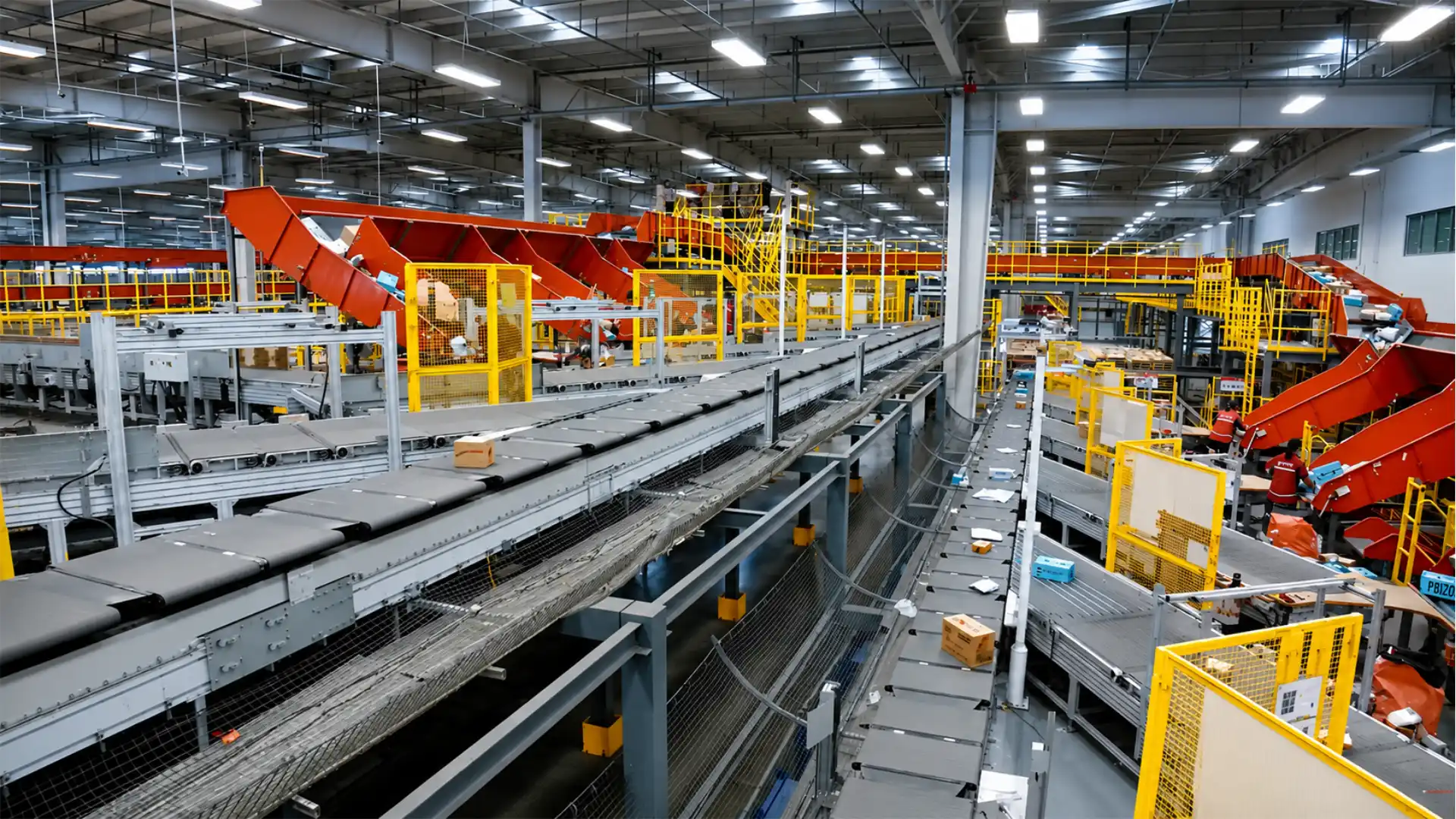
A viral claim says China now has a “ghost logistics center” run entirely by autonomous AI robots, with zero human workers. The stronger reading is less cinematic and more consequential: China is building some of the world’s most automated warehouses, sorting centers, and port terminals, but the public phrase “zero human workers” is doing more work than the evidence supports. The real story is not a single haunted warehouse. It is a national industrial shift toward logistics systems where people move farther from the warehouse floor and closer to supervision, maintenance, software, training, exception handling, and capital planning.
Table of Contents
The viral claim arrived before the evidence
The phrase “ghost logistics center” spread across social platforms because it sounds like a clean image of the future: a dark building, no staff, fleets of robots, software dispatching every parcel, machines working through the night without lights, breaks, or fatigue. The wording is powerful because it gives a messy industrial process a single dramatic frame. It also collapses several different technologies into one picture: automated storage, robotic picking, parcel sorting, autonomous mobile robots, machine vision, remote port operations, scheduling software, and humanoid robot pilots.
The problem is verification. The strongest public searches for the exact claim lead mostly to short social posts, reposted video captions, and thin news-style pages. One widely indexed article says a logistics center in China has “reportedly” become fully automated and operates with autonomous AI robots and no human workers on site, but it does not name the operator, location, site specifications, audit method, or primary announcement. Its own disclaimer says third-party material is not guaranteed for quality, accuracy, or completeness. That is not enough to verify the strongest version of the claim.
The phrase has also been attached to footage and descriptions that appear to mix warehouses, ports, sorting centers, and factories. Some posts describe humanoid robots doing package sorting. Others show automated container yards. Some use the phrase “ghost logistics center” for any facility that runs in darkness or with few people visible. These are not the same thing. A port terminal with automated guided vehicles is not a parcel warehouse. A goods-to-person warehouse is not a humanoid robot site. A remotely operated terminal is not a building with no humans in the operating chain.
The danger is not that the public is excited by robots. The danger is that the public claim turns a real transformation into a cartoon. China does have heavily automated logistics assets. JD Logistics has public figures for large “Asia No.1” parks. Cainiao has described robotic warehouse plans. China’s ports have invested in automated terminals. Robotics companies in Shenzhen, Beijing, Shanghai, Hangzhou, and elsewhere are selling storage, sorting, mobile transport, and humanoid systems. The verified trend is large. The viral sentence is too neat.
That distinction matters for businesses, investors, policymakers, warehouse workers, and readers trying to understand AI. Automation does not need a flawless “zero worker” site to reshape work. A warehouse that cuts floor labor from hundreds of people to a small maintenance and control team already changes economics. A port terminal that moves operators into remote rooms already changes skills and bargaining power. A sorting center that runs with thousands of robots already changes parcel speed and site design. The real issue is not whether one building is literally empty. The issue is how much human labor is being relocated, reduced, hidden, or reclassified.
China’s verified warehouse automation story is already big enough
The most credible place to start is not an unnamed “ghost center,” but JD Logistics. JD’s Kunshan Asia No.1 Intelligent Logistics Park in Jiangsu province is publicly described by JD as a massive logistics park with more than 500,000 square meters of floor area after phase two, over 80 sorting lines, and a fleet of 10,000 intelligent sorting robots. JD says the sorting center can process up to 4.5 million parcels per day and reach a sorting accuracy rate of 99.99% during peak events such as its 618 shopping festival.
Those numbers are more useful than the ghost label. They show the scale of Chinese e-commerce logistics: millions of parcels per day, dense urban delivery promises, massive promotional peaks, and a logistics network built around speed as a consumer expectation. JD also says the Kunshan park supports same-day or next-day delivery for over 93% of JD retail orders from East China, covering Jiangsu, Zhejiang, Shanghai, and Anhui, a region with roughly 200 million people.
JD’s first Asia No.1 warehouse opened in Shanghai in 2014, long before the current wave of viral AI posts. The company described it at launch as a highly automated facility tied to its national fulfillment infrastructure and same-day or next-day delivery ambitions. That history matters because the current “ghost logistics” narrative often makes the technology sound sudden. In reality, China’s warehouse automation has been built through years of sorting equipment, automated guided vehicles, robotic storage systems, warehouse management software, and peak-season stress tests.
China Daily reported in 2017 that JD had set up an unmanned warehouse in Jiading, Shanghai, with nearly 1,000 robots and fully automatic operations across receiving, storage, packaging, and sorting. The phrase “unmanned warehouse” appeared there years before the current social-media phrase “ghost logistics center.” Even then, the core claim was about automated warehouse processes, not the absence of every human from the business operation.
A 2018 FreightWaves report on JD described a facility capable of handling 200,000 orders per day with four employees, whose work centered on servicing the robots. That is a crucial detail. It shows what the industrial shift often looks like: not no humans, but radically fewer humans inside the direct fulfillment process. The labor footprint changes from walking aisles and picking goods toward technical support, maintenance, monitoring, and intervention.
The same pattern appears across the sector. Cainiao, Alibaba’s logistics arm, has described its use of smart logistics systems, cross-border warehouses, and robotic warehouse plans. In March 2026, Cainiao announced a plan to establish a large-scale robot warehouse network in markets including Hong Kong, the United States, and Europe. That is not a single ghost warehouse. It is a cross-border fulfillment strategy tied to faster local delivery and inventory placement.
The verified story, then, is not weak. It is stronger than the viral version because it is measurable. It has named companies, named facilities, capacity figures, robot counts, delivery promises, and operating roles. The evidence supports the claim that China is pushing warehouse automation at large scale. It does not support the clean public claim that a newly named logistics center is proven to be operated entirely by autonomous AI robots with no human workers anywhere in the chain.
The word “ghost” hides more than it reveals
“Ghost warehouse” is an old idea with a new social-media costume. In industrial language, the better-known phrase is “lights-out” manufacturing or “dark warehouse.” It refers to a facility that can run without normal human lighting because machines do not need a comfortable visual environment. The phrase can be useful when describing a high-automation zone. It becomes misleading when it implies that humans have disappeared from the wider operation.
A dark warehouse may still require human engineers, software staff, safety inspectors, maintenance crews, cleaners, security staff, quality auditors, inventory planners, delivery drivers, building managers, and vendor technicians. Some may work off-site. Some may enter only when equipment fails. Some may work during maintenance windows. Some may supervise systems from a control room. Some may be employed by contractors rather than the warehouse operator. A building with few people visible on camera is not the same as a supply chain with no human labor.
The term also blurs levels of automation. A facility can be automated in storage but manual in exception handling. It can use robots for transport but humans for picking. It can use robotic arms for packing but humans for returns inspection. It can run automated sorting belts but rely on people for loading trailers. It can have driverless vehicles in a closed yard but human drivers on public roads. Each boundary changes the real labor story.
This matters because logistics is full of edge cases. Parcels are torn, wet, mislabeled, crushed, oddly shaped, or placed in the wrong tote. Inventory arrives with mismatched barcodes. Pallets lean. Bags rip. Batteries fail. A sorter jams. A gripper drops a reflective item. A robot needs recalibration. A network link goes down. A supplier sends a box whose dimensions do not match the master data. Software plans the route, but the real world keeps adding exceptions.
AI improves exception handling, but it does not erase it. Most warehouse AI is not a general mind directing a factory by intuition. It is a stack of narrower systems: forecasting, slotting, routing, computer vision, robotic motion, fleet scheduling, parcel identification, order batching, and energy management. Many are powerful. Many are brittle outside their designed domain. The more automated a site becomes, the more costly its rare failures can be.
The word “ghost” also hides the social shift. If a robot warehouse needs only a small on-site team, the displaced work does not vanish evenly. Some workers move up into maintenance, system operation, robot training, and technical roles. Others do not. Some roles are created in robotics vendors, software companies, maintenance contractors, and data-labeling operations. Others are lost at the warehouse site. The net effect depends on local labor markets, wages, training pipelines, demand growth, and whether automation increases total throughput enough to support other jobs elsewhere.
The phrase is catchy, but it is blunt. A sharper description would be: China is building high-throughput logistics centers where machines perform many repetitive floor tasks and humans increasingly manage the system from the edges. That sentence is less viral. It is much closer to the facts.
JD Logistics shows the model behind the mythology
JD’s logistics network matters because it connects automation to a business model. JD is not automating warehouses as a science project. It built logistics infrastructure because Chinese e-commerce competition has trained shoppers to expect fast delivery, dense coverage, low friction, and high reliability. The firm’s “Asia No.1” parks are part of that promise.
The Kunshan site is a useful case because its public figures connect robot deployment to parcel volume. A fleet of 10,000 sorting robots is not a gimmick when the facility is designed to handle millions of parcels per day. Sorting is one of the best fits for warehouse robotics because parcels can be scanned, routed, and moved through mapped zones with known destinations. The value comes from speed, repeatability, and capacity during shopping festivals.
The site also shows why automation is not only about labor cost. Parcel networks suffer when they cannot absorb peaks. A shopping festival creates huge bursts of demand. Adding temporary labor helps, but training, fatigue, error rates, safety, and site congestion become constraints. Robots and automated lines let the operator build a system that runs around the clock and routes flow through software. The business gain is not just fewer workers; it is tighter control over speed, accuracy, and peak capacity.
JD’s older Shanghai Asia No.1 facility also shows the long arc. When JD launched the Shanghai warehouse in 2014, it linked automation to same-day and next-day delivery. By 2023, the Kunshan park was positioned as part of a much wider network of intelligent logistics hubs. The shift is from a showcase building to a national operating system for fulfillment.
Academic work on JD’s “Asia One” unmanned warehouse describes how large-scale intelligent warehousing depends on hardware and software systems working together, not robots acting alone. The warehouse is a coordinated system of storage, picking, packing, sorting, and dispatching. That is the right lens. The robot fleet is visible. The routing logic, data model, workflow design, inventory discipline, and exception rules are less visible, but they are where much of the performance comes from.
This is also where the public story often goes wrong. A viral video shows robots moving. The real system is the relationship between robots, inventory, orders, building layout, replenishment, software, loading docks, delivery routes, and customer promises. A warehouse robot is valuable only when the surrounding operation has been rebuilt for it. Adding robots to a chaotic facility does not produce a ghost warehouse. It usually produces a more expensive form of chaos.
JD’s model has strategic weight because it turns logistics from a cost center into a competitive barrier. When a retailer can promise faster delivery across a huge region, suppliers and consumers adjust around that promise. Competitors must respond. The logistics system becomes part of the brand. Automation then becomes not only a warehouse decision, but a platform decision.
Cainiao’s robot plans show the cross-border angle
Cainiao’s role is different from JD’s because Alibaba’s ecosystem has long relied on a broader network of merchants, partners, marketplaces, warehouses, and carriers. Cainiao has often operated as a logistics technology and coordination layer rather than only as a warehouse owner. Its automation story is tied to cross-border e-commerce, reverse logistics, local fulfillment, and delivery commitments.
Cainiao describes itself as a major e-commerce supply chain provider and a large cross-border logistics player, with services across domestic Chinese logistics, international logistics, overseas local operations, warehousing, customs, and reverse logistics. That breadth matters because automation is not limited to one warehouse process. It sits across order flow, inventory placement, customs processing, routing, and delivery promises.
The company’s 2026 robot warehouse network announcement points to the next stage. Cainiao said it would build a large-scale robot warehouse network in key markets including Hong Kong, the United States, and Europe. The goal is not only to show robots in China, but to put inventory nearer to overseas consumers and support faster cross-border fulfillment.
That move reflects a broader shift in e-commerce. Cross-border sellers cannot rely only on low-cost international shipping when consumers expect local-like delivery. They need overseas stock, better forecasting, faster sorting, and returns processes. Robot warehouses help when the SKU count is high, order patterns move quickly, and labor supply is tight or costly. Automation becomes a way to export the operating style of Chinese e-commerce into overseas fulfillment nodes.
Cainiao’s earlier Wuxi warehouse is also relevant. Reporting on the site described 700 automated guided vehicles using IoT systems to drive, load, unload, plan routes, avoid collisions, and distribute parcels. The same report said the warehouse could fulfill more than 50% more orders than a traditional warehouse in the same period. Those claims speak to a practical warehouse goal: fewer wasted movements, shorter travel distance, and higher flow through the site.
Alibaba Cloud’s Cainiao case study describes a logistics cloud that tracks packages through the supply chain and supports Cainiao’s 24-hour domestic and 72-hour international delivery ambition. That software layer is central. A robot warehouse without strong data integration is just local automation. A logistics cloud turns many sites, carriers, merchants, and customers into a coordinated network.
For the ghost warehouse claim, Cainiao’s example gives a caution. A high-automation Cainiao facility may look empty on video, but the business depends on merchants, data systems, customs rules, partner carriers, warehouse management software, local operations teams, and delivery staff. The visible floor may be automated. The logistics chain remains human, legal, commercial, and physical.
China’s robotics push is an industrial policy story
China’s logistics automation cannot be separated from its broader robotics strategy. The country is not only buying robots; it is trying to build domestic robotics capacity across manufacturing, logistics, ports, elder care, humanoids, and service sectors. That matters because warehouse automation sits inside a national effort to raise industrial productivity, reduce exposure to demographic pressure, and move up the robotics value chain.
The International Federation of Robotics reported that 542,000 industrial robots were installed globally in 2024, more than double the number a decade earlier, with Asia accounting for 74% of new deployments. China’s annual installations reached 295,000 units in 2024, about 54% of global deployments, according to reports based on IFR data. Those numbers put China at the center of global industrial robot demand.
China’s operational stock of industrial robots also passed the two-million mark in 2024, representing 43% of the global stock, according to the IFR executive summary. That matters because cumulative stock changes what companies can do. A country with a deep installed base develops technicians, integrators, parts suppliers, software vendors, safety practices, and buyer familiarity. The adoption curve becomes easier.
Policy has helped build that base. The IFR’s analysis of China’s 14th Five-Year Plan for the robotics industry says the plan emphasizes high-end and intelligent development and sets tasks for the sector. China’s government has also supported humanoid and embodied-intelligence development. A 2025 State Council English-language article said Beijing had unveiled a three-year action plan for embodied intelligence, backed by a 100-billion-yuan fund, with related programs in Guangdong, Sichuan, and Shanxi.
Reuters reported in 2025 that Chinese humanoid robotics firms such as AgiBot and MagicLab were drawing support amid a push to apply AI-powered humanoids to manufacturing tasks, with state procurement for humanoid-related technology rising from 4.7 million yuan in 2023 to 214 million yuan in 2024. Reuters also reported more than $20 billion in subsidies and support programs tied to the sector.
This policy backdrop helps explain why warehouse automation in China can spread quickly. The same supply base that supports industrial robots can support warehouse AMRs, robotic arms, sensors, lidar, servo motors, battery systems, charging infrastructure, industrial vision, and fleet software. Logistics companies benefit from the manufacturing ecosystem, and robot makers benefit from massive logistics demand.
The “ghost logistics center” phrase works because China already has the industrial base to make it feel plausible. The phrase may exaggerate a specific claim, but it lands in a real environment: high robot deployment, strong e-commerce demand, policy backing, and a dense hardware supply chain.
The robot supply chain is becoming Chinese, not only China-based
A decade ago, China’s robot story was often about foreign suppliers selling into Chinese factories. That is changing. Chinese firms now compete in mobile robots, warehouse systems, industrial arms, humanoids, sensors, electric drives, vision systems, and fleet software. This shift matters because domestic suppliers can cut cost, speed iteration, and tune products for local operating conditions.
CSIS ChinaPower reported in February 2026 that China produced 57% of its industrial robots domestically, compared with a much lower share a decade earlier, and that China’s industrial robot output grew 14% year over year in 2024. The same trend appears in warehouse robotics, where Chinese companies such as Geek+, Hai Robotics, Quicktron, ForwardX, Hikrobot, and others compete in goods-to-person, autonomous mobile robot, case-handling, and sorting systems.
Geek+ describes itself as a warehouse robotics provider serving e-commerce, retail, apparel, grocery, third-party logistics, and manufacturing. Its public site highlights goods-to-person workflows, storage use, order fulfillment, and case studies with high claimed picking rates and accuracy figures. Hai Robotics markets automated storage and retrieval systems, including goods-to-person solutions based on its HaiPick technology. Quicktron describes autonomous mobile robots for warehouses, fulfillment centers, and factories, using sensors and AI technology for navigation.
These suppliers make the “ghost” idea more economically plausible, even where the exact viral claim is unverified. A logistics company no longer needs to wait for one foreign integrator to build a custom mega-system. It can source mobile robots, storage robots, scheduling software, robotic forklifts, conveyors, and vision modules from a maturing domestic ecosystem. That lowers project friction and gives Chinese operators more vendor options.
The local ecosystem also changes the learning loop. A robot maker can test systems with e-commerce clients during Chinese shopping peaks, gather operational data, improve hardware, improve dispatch logic, and redeploy the next version. Warehouse automation is not only a product market; it is a learning market. The operators with the most parcels, returns, SKUs, and peak days generate the most lessons.
That makes Chinese logistics automation a global competitive issue. If Chinese vendors build lower-cost systems that work at scale, they can sell abroad. Cainiao’s robot warehouse network plans show one version of that. Geek+, Hai Robotics, and others already serve overseas markets. Warehouse automation is becoming both a domestic productivity tool and an export category.
Humanoid robots are not the core of warehouse automation yet
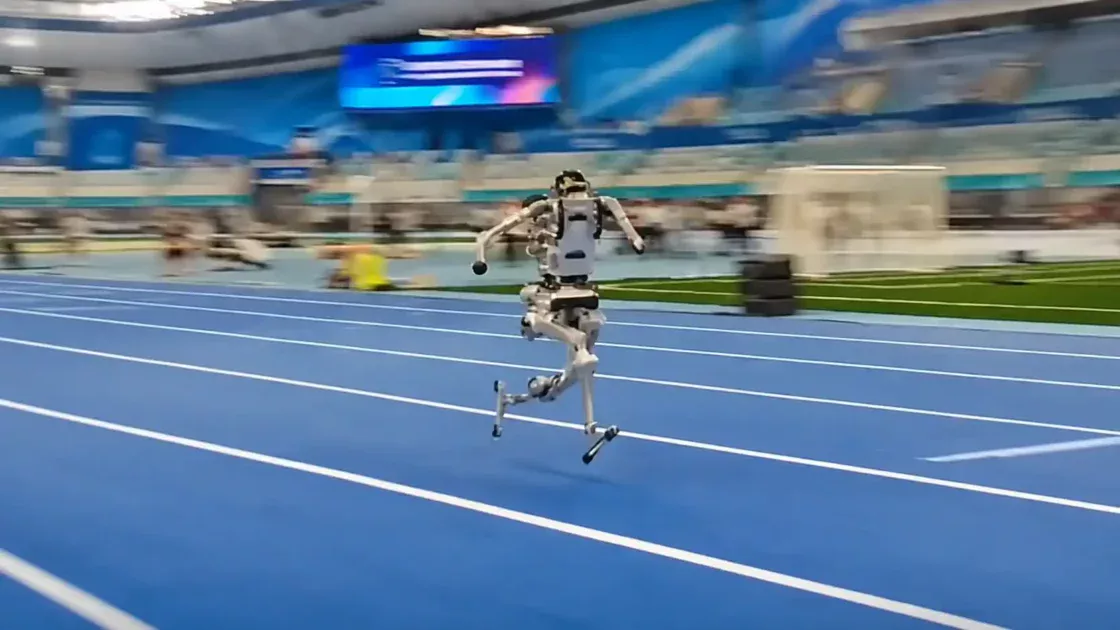
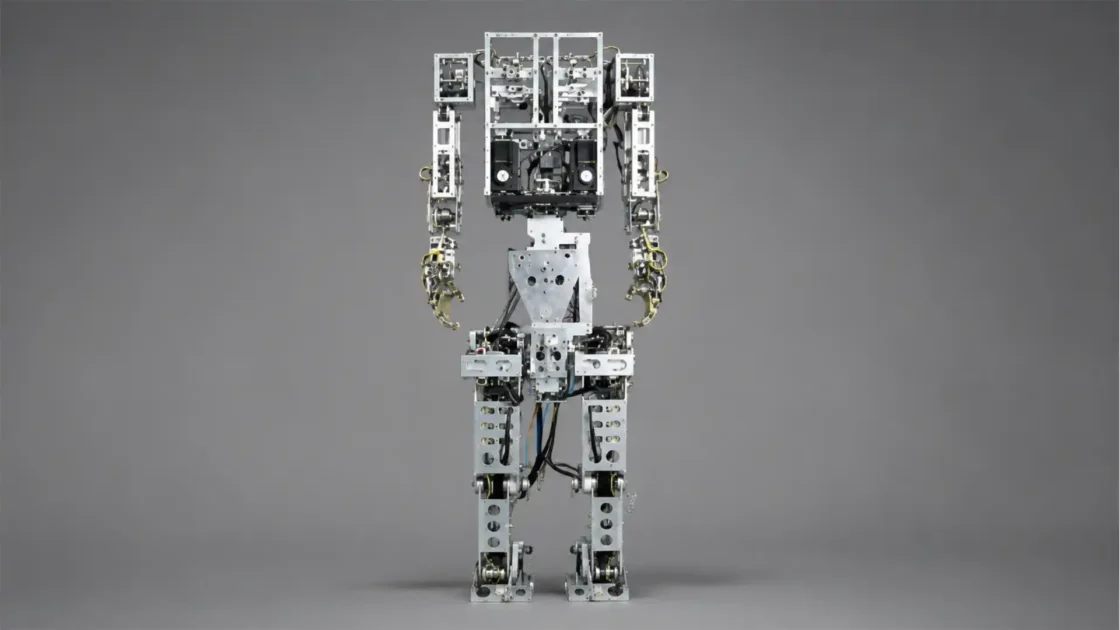
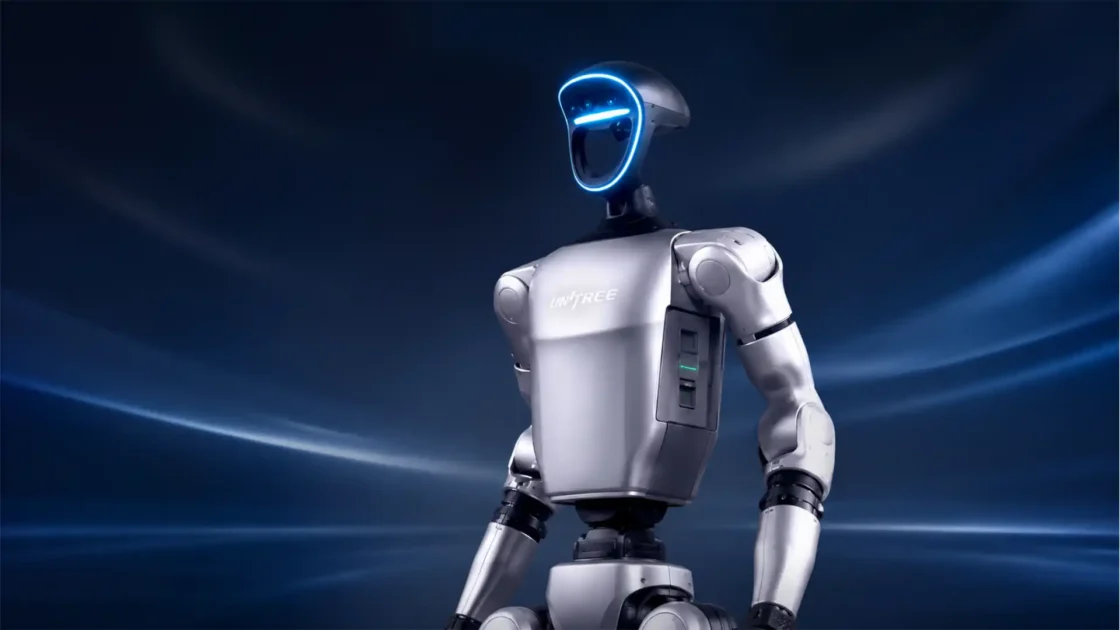
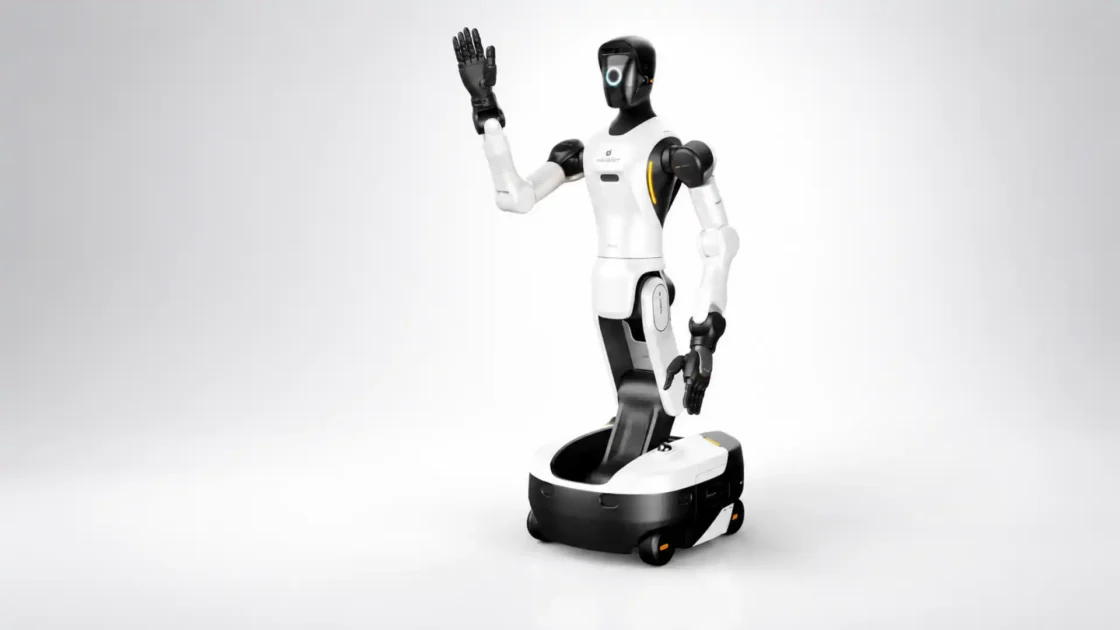
Many viral posts about China’s ghost logistics centers now mention humanoid robots. That makes the story more dramatic, but it risks confusing the current state of logistics automation. Most working warehouse automation is not humanoid. It is mobile platforms, conveyors, automated storage grids, robotic arms, sortation systems, scanners, lifts, shuttle systems, automated guided vehicles, robotic forklifts, and software.
Humanoid robots are being tested because they promise a different kind of flexibility. A humanoid could, in theory, use tools, doors, carts, totes, shelves, and workstations designed for humans. That would reduce the need to rebuild every facility around machine-specific infrastructure. It is an attractive idea. It is also much harder than moving a shelf from one mapped point to another.
Reuters reported that Chinese humanoid companies were training robots through repeated physical tasks, with AgiBot generating data from operations such as folding a shirt, making a sandwich, and opening doors. The point is embodied learning: a robot must learn how objects behave in the real world, not only in a digital model. The Guardian reported in March 2026 on China’s robotics boom, including training centers where human teleoperators collect action sequences for humanoid robots and factories testing robots on basic tasks such as unstacking cardboard boxes.
That is promising, but it is not the same as a fully autonomous warehouse staffed by humanoids. Warehouses require reliable handling of many object types, labels, packaging materials, weights, surface finishes, and exceptions. A humanoid robot that can sort a limited set of boxes under controlled conditions is not yet a general warehouse worker. A robot that works for hours in a demo does not automatically support a 24/7 parcel network during a shopping peak.
The more mature warehouse systems avoid general dexterity when they can. Goods-to-person robots move shelves or totes. Sortation robots move parcels on known surfaces. Automated storage systems store bins in grids. Robotic arms handle constrained picking tasks where vision, grippers, and item data are tuned. These systems succeed because they narrow the task.
Humanoids may become useful in logistics first where the task is repetitive but the environment is human-shaped: moving empty totes, handling cartons, unloading simple containers, feeding lines, or doing inspection. They are less likely to replace a full warehouse operation first. The near-term logistics robot is usually a specialized machine, not a metal person.
Ports reveal the same pattern on a larger canvas
Some viral “ghost logistics” clips show container terminals rather than warehouses. This is another reason the claim needs care. Ports use different automation systems, different safety rules, different labor structures, and different equipment. Yet they reveal the same central shift: humans move from direct equipment operation toward remote control, monitoring, maintenance, and exception management.
Shanghai’s Yangshan automated terminal is one of the best-known Chinese examples. Public information from the Shanghai Free Trade Zone described Yangshan Phase IV as an automated container port expected to use 26 bridge cranes, 120 rail-mounted gantry cranes, and 130 automated guided vehicles. Trial operations began with 10 bridge cranes, 40 rail-mounted gantry cranes, and 50 AGVs. Huawei’s case material on Yangshan says workers remotely control bridge cranes, rail-mounted gantry cranes, and AGVs, while automated systems carry out production tasks under system instruction.
That sentence is vital: workers remotely control equipment. A port may look empty from a drone shot because operators are not seated in cranes or driving yard trucks. But people still supervise and intervene. They may sit in an operations center rather than high above a ship. Automation changes where the worker sits. It does not prove the worker is gone.
Tianjin Port offers another public case. Huawei says Tianjin’s Smart Zero-Carbon Terminal has 30% lower investment than traditional automated terminals, 10% less container re-handling, over 17% lower energy use, and operates with 60% fewer staff. Again, the reported result is fewer staff, not zero staff. The reduction is still large. For labor, cost, and training, 60% fewer staff is a major operational shift.
Qingdao’s automated port development also shows China’s ambition. People’s Daily reported in 2025 that Qingdao Port’s automated terminal team set a record with average single quay crane operation reaching 60.9 TEUs per hour, and noted that China had no automated terminal among its top ports in 2013 before Qingdao launched its project. APM Terminals’ Qingdao New Qianwan Container Terminal page describes automated guided vehicles with programmed routes and tasks, including the ability to recognize when recharging is needed.
The port analogy strengthens the warehouse analysis. In both cases, the public sees machines moving through huge spaces. The hidden system includes scheduling, energy management, safety zones, remote operators, maintenance technicians, network infrastructure, and control rooms. The visible absence of workers on the ground is real. The claim that humans are absent from the operation is usually too strong.
Automation is a stack, not a single machine
A robot-run logistics center is not one technology. It is a stack of hardware, software, data, workflow design, and maintenance discipline. The parts must work together. A failure in any layer can slow the whole site.
At the floor level, mobile robots or AGVs move goods. They may carry shelves, totes, parcels, pallets, or containers. They need maps, sensors, route plans, battery management, charging rules, and collision avoidance. In a dense site, fleet scheduling becomes a central problem because one robot’s path affects hundreds or thousands of others. Traffic jams are not only urban problems.
At the storage level, a warehouse may use high-density racks, shuttle systems, grid storage, automated storage and retrieval systems, or mobile racks. The layout must match SKU velocity. Fast-moving products need different placement than slow-moving products. Heavy items, fragile items, regulated goods, cold-chain products, apparel, electronics, and returns each create different constraints.
At the picking level, goods-to-person systems reduce worker travel by bringing inventory to stations. Robotic arms may pick items when the item set is suitable. Vision systems identify objects, labels, damage, orientation, and bin locations. Packing systems may size boxes, apply labels, and route parcels to sorters.
At the software level, warehouse management systems track inventory, orders, waves, replenishment, stock accuracy, and exceptions. Warehouse control systems coordinate conveyors, robots, lifts, sorters, and scanners. AI may improve demand forecasts, slotting, route plans, anomaly detection, and labor planning. The best systems do not simply automate an old layout; they redesign the process around machine movement.
At the network level, logistics sites connect to upstream suppliers, marketplace orders, payment status, customer promises, carrier capacity, customs data, and last-mile delivery. A robot warehouse can be fast inside its walls and still fail if trucks queue outside, inventory data is wrong, or delivery routes are overloaded.
The public sees robots. The operator manages a living industrial system. This is why “zero worker” claims need technical caution. Removing the person from one station often adds a person in another layer. The work becomes less visible and more technical.
Human work is being relocated, not simply erased
A logistics center with fewer workers on the floor still contains human labor. The question is where that labor goes. In an automated warehouse, people may move into roles such as robot fleet maintenance, control-room operation, systems integration, safety monitoring, data labeling, facility engineering, battery management, spare-parts logistics, vendor support, quality auditing, inventory control, and exception handling.
This relocation is not neutral. A picker who walked aisles may not automatically become a robotics technician. The new job may require electrical training, software familiarity, mechanical troubleshooting, or data literacy. Some workers can be retrained. Some cannot. Some will not be offered the path. Automation changes the skill ladder inside logistics.
Amazon’s warehouse robotics experience offers a useful comparison outside China. The Associated Press reported that Amazon uses robots such as Robin, Cardinal, Sparrow, Proteus, Digit, and Sequoia across warehouse tasks, while still relying on human workers and facing questions about retraining and workforce adaptation. Amazon’s own robotics page says Sequoia lets the company identify and store inventory up to 75% faster by moving inventory through mobile robots and containerized storage to employees or picking stations. That is a classic mixed model: robots move and position inventory; people remain in parts of the process.
DHL’s public automation material points in the same direction. DHL Supply Chain says it expects up to 30% of its global material-handling equipment fleet to use some form of robotic automation by 2030. Its innovation materials frame robotics as a mix of mechanized automation, software tools, and human labor rather than a clean replacement of all staff.
The Chinese pattern may be faster and more aggressive in some sites, but the labor logic is similar. Automation reduces the number of humans needed for repetitive movement and direct handling. It raises demand for people who can keep the system running. It creates a labor divide between those who can move into technical roles and those whose tasks are engineered out of the building.
The phrase “zero human workers” is too crude for this transition. A better question is which workers are being removed from the floor, which new roles are being created, and who has access to them.
The economics start with movement
Warehouses are built around movement. People walk to shelves. Forklifts move pallets. Conveyors move cartons. Trucks wait at docks. Parcels move from receiving to storage to picking to packing to sortation to outbound. Much warehouse cost comes from travel time, waiting time, congestion, errors, and rework.
Robots attack movement. A goods-to-person system cuts walking by moving goods to a station. A sortation robot cuts manual sorting by routing parcels across a mapped field. An automated forklift cuts pallet moves. A shuttle or grid system improves storage density and retrieval speed. A robotic arm cuts repeated lifting or placing. Software reduces wasted routes.
This is why warehouse automation often starts with the most repetitive flows. A robot does not need to solve every problem. It needs to solve the highest-volume, most predictable movement in the site. If 60% of the daily labor hours involve moving items between known points, automation can change the economics even if humans still handle exceptions.
China’s e-commerce giants have strong incentives to automate movement because the order volume is huge and delivery promises are tight. During major shopping festivals, the difference between a stable automated sorter and a labor-heavy manual process can determine whether parcels leave the building on time. A robot fleet does not call in sick during a peak. It does, of course, need maintenance, spare parts, charging, and software stability.
The same principle applies to ports. Automated guided vehicles move containers between quay and yard. Automated stacking cranes place containers in blocks. Remote crane operators handle tasks from safer control rooms. Energy systems manage charging. The value comes from cutting idle time, improving predictability, reducing emissions in electric yards, and increasing throughput per square meter.
The deepest economic shift is that warehouse design moves from people walking through inventory to inventory moving through machines. Once that shift happens, the building can be laid out differently. Aisles can shrink. Lighting needs can fall in machine-only zones. Picking stations can be tuned for ergonomics. Inventory can be placed according to algorithmic velocity rather than human browsing logic.
The limits show up at the edges
Automation performs best where the environment is constrained. Warehouses and port terminals are attractive because operators control the site. They can map routes, restrict pedestrian access, standardize bins, set traffic rules, install markers, build charging zones, and enforce workflow discipline. Public roads, mixed supplier docks, and messy returns flows are harder.
The limits show up at the edges. Goods arrive from outside in inconsistent forms. Drivers bring trailers at uneven times. Suppliers ship cartons that do not match expected dimensions. Returns arrive opened, damaged, dirty, or missing labels. Batteries degrade. Sensors drift. Grippers wear out. Conveyor belts jam. Software updates create bugs. Emergency rules stop machines. Fire safety, insurance, and local regulation require human oversight.
This is why even advanced sites rarely eliminate human presence from the whole chain. They automate the cleanest internal loops first. The receiving dock, returns area, maintenance bay, and exception station remain harder. Some tasks are technically possible to automate but not worth the cost. If an edge case happens only a few times per day, a human intervention may be cheaper than a custom machine.
The phrase “with zero human workers” ignores this cost logic. Industrial operators do not automate everything because they can. They automate where throughput, quality, safety, cost, and reliability justify it. In many sites, the rational target is not zero humans. It is fewer bottlenecks, fewer injuries, fewer errors, lower travel time, more throughput, and more predictable peaks.
This is especially true for humanoids. A humanoid robot may someday handle many edge cases because it can use human-like tools and spaces. Today, many humanoid systems remain in pilot or training stages. The Guardian’s reporting on Chinese humanoid development makes clear that large human-operated training centers still collect data for these robots. The human labor is upstream, training the machine that may later enter the warehouse.
The edge cases are where the “ghost” story becomes visible as marketing. A facility can look empty during normal automated flow. It becomes human-dependent when something unusual happens.
The public often mistakes remote work for no work
Automated facilities are designed to remove people from dangerous, tiring, or low-value positions. In a port, that may mean a crane operator no longer sits high above a ship. In a warehouse, it may mean a worker no longer walks miles per shift to find inventory. In a sorting center, it may mean parcels move across robotic fields instead of being manually sorted into chutes.
From a camera angle, this looks like no workers. In practice, the worker may have moved to a control room. Huawei’s Yangshan material says workers remotely control bridge cranes, gantry cranes, and AGVs. Long Beach Container Terminal, a leading automated terminal in the United States, says it uses 18 all-electric ship-to-shore cranes, 6 all-electric rail-mounted intermodal yard cranes, and 69 electric automatic stacking cranes. The Port of Long Beach describes its Middle Harbor redevelopment as involving nearly 200 pieces of all-electric cargo-handling equipment, including ship-to-shore cranes, automated guided vehicles, and stacking cranes.
These systems remove many people from the yard surface, but they do not make labor disappear. Operators, technicians, planners, and maintenance teams remain. The International Transport Forum’s container automation work is useful here because it warns that automation often covers selected sub-processes, not the full terminal. It notes that few terminals are fully automated in all processes and that remote crane operators remain part of many systems.
This distinction matters for labor politics. Dockworker unions and warehouse workers often oppose automation not because they misunderstand it, but because they see how remote operation and fewer floor roles change headcount, job quality, bargaining power, and career paths. Reuters reported on U.S. port automation disputes, including union concerns that automation threatens jobs, while terminal operators argue it raises productivity.
In China, labor politics play out differently than in the United States or Europe, but the job question remains. When a company moves work from hundreds of pickers to a smaller team of technicians and system operators, the public may see a clean robot story. Workers see a new labor hierarchy.
Data quality is the hidden engine
A warehouse robot depends on data discipline. It needs to know what item is where, what the item weighs, which box it fits in, which order needs it, which station should receive it, which route is open, which robot has battery, and which exception rule applies. If the data is wrong, the robot may move perfectly and still do the wrong thing.
This is why logistics automation favors operators with strong digital systems. JD and Cainiao are not only warehouse operators; they are data-rich commerce platforms. They see orders, customer locations, seller behavior, inventory flows, peak demand, returns, carrier performance, and delivery promises. That gives their warehouse systems better inputs than a standalone warehouse with poor item data.
AI can help with forecasts, routing, and anomaly detection, but AI also needs clean events. A parcel scan, shelf location, robot status, docking event, battery state, and order update must be captured and trusted. The system must also decide what to do when signals conflict. If a tote is supposed to be in slot A but a robot finds it missing, the software needs an exception process.
The social-media image of AI robots “running everything” tends to skip this. The robot is the last step in a long data chain. The warehouse management system must maintain inventory accuracy. The order system must send clean demand. The robotic control layer must manage traffic. The maintenance system must predict failures. The carrier system must align outbound capacity. The delivery system must absorb what the warehouse releases.
Alibaba Cloud’s Cainiao case illustrates this network layer by describing a logistics cloud used to track packages through the supply chain and support delivery goals. That is much closer to the real meaning of AI in logistics: not a robot with a brain, but a chain of models and databases coordinating physical movement.
The most automated warehouse is usually the one with the least tolerance for bad data. A manual worker can sometimes improvise around messy labels and wrong shelf records. Robots need structured certainty or a well-designed exception route.
Two realities behind the ghost warehouse phrase
Verified claim versus viral shorthand
| Public phrase | Stronger verified reading | Evidence level |
|---|---|---|
| China has a ghost logistics center with zero human workers | China has highly automated warehouses, sorting centers, and ports with far fewer people on the floor | Strong |
| AI robots run every task | Specialized robots, conveyors, AGVs, arms, WMS, WCS, and scheduling systems coordinate many tasks | Strong |
| No humans are involved | Humans often move to remote operation, maintenance, software, exception handling, training, and oversight | Strong |
| Humanoids are doing the whole warehouse job | Humanoids are being tested and trained, while most deployed warehouse robots are specialized machines | Moderate to strong |
| The facility runs in darkness | Some machine-only zones may need little human lighting, but this does not prove a fully human-free chain | Plausible, site-specific |
The table does not reject China’s automation lead. It separates a viral shorthand from the harder industrial facts. The verified version is still consequential: fewer visible workers, more machine-directed flow, larger parcel capacity, and more work shifted into technical roles.
China’s demographic pressure gives automation extra force
China’s interest in robots is not only about technological prestige. It is also about labor supply, wages, and demographics. A country that built much of its manufacturing advantage on abundant labor now faces an aging population and pressure to raise productivity. Robots become part of that answer.
Reuters connected China’s humanoid robotics push to trade tensions, population decline, and slower growth. It also reported government support for startups training embodied AI systems. This does not mean robots solve demographics by themselves. It means policymakers and companies see automation as one lever for keeping output high when labor conditions change.
Warehouses feel this pressure acutely. Manual fulfillment work can be physically demanding, repetitive, and hard to staff during peaks. It involves walking, lifting, scanning, bending, sorting, and night shifts. As wages rise and workers have more options, companies invest in systems that reduce dependence on large temporary labor pools.
China’s e-commerce geography adds another pressure. Dense urban demand and fierce platform competition make delivery speed a core feature. Warehouses near major cities must process huge volumes while land is expensive. Automation helps increase throughput per square meter. It can also reduce lighting and climate needs in certain zones, though warehouses still need environmental controls for products, equipment, batteries, and safety.
Demographics also shape the political story. Governments prefer automation narratives that promise productivity, high-tech jobs, and industrial upgrading rather than job loss. Chinese officials have framed humanoid robots as tools for dangerous or undesirable tasks. Reuters reported that a Beijing official said humanoid robots would not replace human workers and should help humans in places people do not want to go or cannot go.
The claim may be politically reassuring, but the labor market will judge by outcomes. If automation removes low-skill warehouse roles faster than new technical roles absorb workers, the social effect will be uneven. If automation raises output and creates supplier jobs, the net effect may look different. The demographic logic explains the push; it does not settle the labor consequences.
The business case is stronger in China than in many markets
Warehouse automation does not spread evenly across countries. It depends on parcel volume, wage levels, land costs, energy costs, delivery promises, capital access, vendor ecosystem, management skill, labor regulation, and customer expectations. China scores strongly on several of these.
First, parcel volume is huge. E-commerce platforms generate dense order flows, especially during shopping festivals. High volume supports the capital cost of automation because machines can be used heavily. A robot that sits idle most of the day is expensive. A robot that runs through peak waves has a better payback story.
Second, the vendor ecosystem is deep. Chinese firms can buy from domestic robot companies, integrators, sensor makers, battery suppliers, and industrial automation vendors. That can reduce cost and speed deployment. It also allows local customization.
Third, delivery promises are demanding. Same-day and next-day delivery across major regions forces logistics companies to reduce lag inside warehouses. A manual process that adds hours during a peak can break the promise. Automation gives managers more control over cycle time.
Fourth, land near cities is costly. High-density automated storage can increase inventory per square meter. Goods-to-person systems can cut travel aisles and concentrate workstations. In some sites, the warehouse becomes more like a machine than a human-access retail stockroom.
Fifth, China’s industrial policy supports robotics and AI. Funds, local programs, procurement, industrial parks, and public-sector signaling reduce risk for companies adopting and building automation. Government backing does not guarantee commercial success, but it changes the market’s risk appetite.
This does not mean every warehouse in China will become a dark site. Automation has a cost. Smaller warehouses, irregular goods, low volumes, uncertain demand, cheap labor, and poor data quality can make robots less attractive. The strongest business case sits where volume, repeatability, and delivery pressure meet. That is why e-commerce, parcel sorting, ports, and manufacturing logistics are leading zones.
The safety story cuts both ways
Automation can improve safety by reducing walking, lifting, forklift traffic, work at height, exposure to weather, and repetitive strain. A port crane operator in a remote control room avoids some physical danger. A warehouse employee at a goods-to-person station walks less. A robot can move heavy loads without fatigue. A dark zone can keep people away from high-speed equipment.
But automation also creates new risks. Dense robot fleets require safety systems, geofencing, emergency stops, sensor checks, cybersecurity, fire planning, battery protocols, and maintenance discipline. Human workers may interact with robots during repairs, exception handling, or mixed workflows. If the system is poorly designed, people can be exposed to unexpected machine movement.
Amazon’s Proteus and related warehouse robotics illustrate the safety challenge. Amazon describes Proteus as an autonomous mobile robot designed to move through facilities and work around employees, while external coverage has focused on how robots and humans share warehouse space. The technical goal is not only speed; it is predictable interaction between people and machines.
In China, the same issue applies to warehouse AMRs, AGVs, robotic forklifts, and port vehicles. Fully segregated robot zones are safer in some ways because people are kept out. Mixed zones require stronger sensing and slower speeds. Remote operation reduces some risks but adds others, such as loss of situational feel, network dependence, and operator workload in control rooms.
Safety also affects the “zero worker” claim. Some facilities restrict people from automated zones during operation. That can make a video look like the whole site is human-free. In truth, the absence of people may be a safety rule, not proof that nobody works there. Humans may enter after shutdown, during maintenance windows, or in designated areas.
A good automated site is not one where humans never matter. It is one where human exposure to dangerous and repetitive work is reduced without hiding new machine risks.
Warehouses are becoming software-defined buildings
The old warehouse was a building that held goods. The modern automated warehouse is closer to a software-defined machine. Its capacity depends not only on square meters but on algorithms, robot density, storage logic, data quality, dock scheduling, battery cycles, and exception handling.
This changes management. A warehouse manager once focused heavily on headcount, shift planning, inventory control, and physical flow. Those remain, but the automated site adds robot fleet health, software release discipline, vendor contracts, cybersecurity, sensor maintenance, uptime targets, and simulation. A small change in slotting logic can affect travel distance. A software bug can create a physical bottleneck. A poor charging policy can slow the night wave.
The building also becomes more integrated with upstream and downstream systems. Forecasting determines what stock to place near demand. Marketplace promotions trigger pre-positioning. Carrier capacity affects outbound wave timing. Customer delivery promises feed back into warehouse priorities. Returns data affects inspection staffing and restocking rules.
AI enters this system in specific ways. It may predict demand, assign storage locations, dispatch robots, identify damaged parcels, tune labor allocation, detect anomalies, or recommend maintenance. Some systems may use machine learning. Others use operations research, rules, heuristics, and control algorithms. The public calls all of it AI. Industrial operators care whether it works.
The risk is over-centralization. A software-defined warehouse is powerful when the system is stable. It can become fragile if every process depends on tightly coupled software and a single failure cascades. Operators need fallback modes, manual override, spare capacity, and clear recovery procedures. A human-heavy warehouse can slow down when something goes wrong. A highly automated warehouse can stop.
This is why “AI runs everything” should be read carefully. In a mature automated warehouse, AI is part of a control stack, not a magical manager. It works because the building, inventory, robots, and processes have been disciplined around it.
The global comparison shows China’s speed, not China’s isolation
China is not alone in warehouse automation. Amazon, DHL, Walmart, Ocado, AutoStore users, GXO, UPS, FedEx, and many third-party logistics firms are deploying robots and automated systems. The difference is the combination of China’s e-commerce scale, domestic robotics supply chain, policy support, and competitive delivery norms.
Amazon has one of the world’s largest warehouse robotics programs. Its newer systems include Sequoia, Proteus, Sparrow, Cardinal, Robin, and other machines that support storage, picking, sorting, and transport. The company says Sequoia can identify and store inventory up to 75% faster. The Associated Press notes that Amazon’s automation still coexists with human work and raises questions about retraining and job shifts.
DHL’s approach is also global. It uses mobile robots, software tools, and automation across contract logistics operations, while forecasting that up to 30% of its global material-handling equipment fleet will include robotic automation by 2030. AutoStore’s goods-to-person grid system is widely used across markets, showing that high-density robotic storage is not a China-only phenomenon.
Port automation is also global. Rotterdam, Hamburg, Singapore, Long Beach, Qingdao, Shanghai, Tianjin, and others have automated or semi-automated terminals. The International Transport Forum’s analysis shows that port automation varies by sub-process and that remote operation remains common.
China stands out because its domestic market can absorb and test automation at huge scale. A Chinese warehouse robot company can find customers with massive parcel flows. A Chinese port automation project can be connected to national infrastructure goals. A Chinese humanoid startup can draw capital, policy attention, and factory pilot opportunities. That combination shortens the path from demo to deployment.
The global story is not “China has robots and others do not.” It is that China may be compressing the deployment cycle. The rest of the world should pay attention not because of one alleged ghost center, but because Chinese firms are learning how to automate high-volume logistics under real pressure.
The labor debate will follow the robots abroad
As Chinese warehouse automation vendors expand overseas, labor questions will travel with them. A goods-to-person system in a U.S., European, or Southeast Asian warehouse raises different issues depending on local wages, unions, safety rules, training systems, and unemployment protections. The same machine can have different social effects in different countries.
In the United States, port automation has already become a labor flashpoint. Reuters reported that automation concerns were central to dockworker disputes, with unions warning of job loss and employers arguing for productivity gains. Warehouse automation has similar tensions, though it is often less visible than port strikes.
In Europe, labor agreements may shape adoption differently. Stronger worker consultation, works councils, training obligations, and social protections can slow or redirect automation. Companies may frame robots as tools to reduce strain and handle labor shortages rather than pure headcount reduction. Whether workers believe that depends on actual staffing outcomes.
In emerging markets, the effect may be more complex. Low wages can reduce the payback for automation, but fast e-commerce growth, labor turnover, and foreign platform pressure can still justify robots in large fulfillment centers. Chinese vendors may sell lower-cost systems that make automation viable earlier than expected.
For Chinese companies expanding abroad, labor sensitivity will become part of market access. A warehouse automation project that looks normal in one regulatory environment may face public resistance in another. Robot suppliers may need to provide not only machines but safety documentation, training plans, workforce transition programs, and data governance support.
Automation is not only a technical export. It is a labor model export. The ghost warehouse image may excite investors, but it can alarm workers and regulators. Companies that ignore that will face resistance.
The “AI” label needs a narrower definition
The phrase “AI robots” is widely used, but it can obscure the actual technology. Many warehouse robots are autonomous without being intelligent in the popular sense. They follow maps, routes, markers, lidar data, QR codes, fleet schedules, and task queues. Some use machine learning for perception or planning. Others use classic control systems. Many combine both.
Calling every automated warehouse robot “AI” makes the system sound more magical and less accountable. If a robot follows a precomputed route in a mapped warehouse, the intelligence may sit in the fleet manager or warehouse control system, not in the robot. If a robotic arm uses machine vision to identify items, the AI may be in object recognition. If demand forecasts drive slotting, AI may influence storage. If a large language model helps a manager query operations data, that is another layer entirely.
This matters for risk and governance. A deterministic conveyor control system has different failure modes than a machine-learning vision model. A path-planning algorithm has different audit needs than a generative model. A warehouse that uses AI for forecasting is not the same as a warehouse where robots make open-ended decisions.
Port automation shows the same issue. AGVs, automated stacking cranes, and remote crane systems may use advanced software, sensors, and some AI-like methods, but much of the work is structured automation. When public posts say “AI runs the port,” they flatten a broad engineering system into one buzzword.
A better vocabulary would distinguish:
AI-assisted forecasting, robotic perception, autonomous mobile transport, automated storage and retrieval, warehouse control, remote operation, robotic picking, and exception management. Each has different maturity and risk.
The strongest warehouses are not built by calling everything AI. They are built by knowing exactly which process is automated, which model controls it, and where humans intervene.
Two tables worth keeping in mind
Automation layers inside a high-robotics logistics site
| Layer | Typical technology | Human role that often remains |
|---|---|---|
| Storage | AS/RS, shuttle systems, high-density racks, mobile racks | Inventory planning, replenishment rules, maintenance |
| Movement | AMRs, AGVs, robotic forklifts, conveyors | Fleet monitoring, charging, exception response |
| Picking and packing | Goods-to-person stations, robotic arms, vision systems | Quality checks, returns, complex picks, packing exceptions |
| Sorting | Sortation robots, scanners, automated chutes | Jam clearing, mislabeled parcel handling, outbound coordination |
| Control | WMS, WCS, AI scheduling, forecasting | System operation, software support, planning |
| Maintenance | Sensors, diagnostics, predictive tools | Technicians, vendor support, spare-parts management |
This structure is the practical version of a “ghost” warehouse. The more layers are automated, the fewer people need to work in direct floor movement. Human labor tends to remain where judgment, repair, accountability, and messy exceptions still matter.
The environmental case is real but not automatic
Automation can reduce energy use and emissions in some logistics settings. Electric AGVs can replace diesel yard trucks. Automated stacking can reduce unnecessary container moves. Better routing can reduce idle time. High-density storage can reduce building footprint. Machine-only zones may reduce lighting demand. Faster flow can reduce truck waiting time.
Tianjin Port’s Smart Zero-Carbon Terminal is often cited because it combines automation with renewable energy and electric equipment. Huawei says the terminal uses 17% less energy than traditional automated terminals and is 100% self-powered through renewable sources. That is a strong example of automation linked to decarbonization.
Long Beach Container Terminal also connects automation to emissions reduction. LBCT says its automated systems are all-electric, while the Port of Long Beach describes Middle Harbor as a project using all-electric cargo-handling equipment. Those cases show that automation and electrification can reinforce each other when the power system, equipment, and terminal design align.
But environmental gains are not automatic. Robots consume energy. Batteries require materials and replacement. More throughput can induce more shipping, packaging, and returns. Faster delivery promises can fragment shipments. A highly automated fulfillment system may reduce warehouse waste while increasing total consumption. The carbon balance depends on the whole network, not only the robot floor.
Warehouses also need building energy, heating or cooling for goods, fire safety systems, server rooms, charging infrastructure, and backup power. A dark warehouse may save lighting energy, but lighting is only one part of the footprint. If automation enables more air freight or faster but less consolidated delivery, the wider impact may be worse.
The green case is strongest when automation reduces diesel equipment, cuts re-handling, improves storage density, lowers failed delivery and return waste, and runs on cleaner power. Without those conditions, “robot-run” is not a climate claim.
Cybersecurity becomes a physical risk
A software-defined warehouse creates a new kind of vulnerability. If the warehouse control system fails, robots may stop. If bad data enters the inventory system, orders may be misrouted. If a cyberattack disrupts scheduling, the building becomes a physical bottleneck. If remote operation links fail at a port, equipment may have to pause or shift to fallback modes.
The risk grows as automation layers connect. Robots, chargers, scanners, cameras, warehouse management systems, enterprise resource planning, carrier systems, cloud services, vendor dashboards, and remote support channels all create interfaces. Each interface needs security, access control, logging, patching, and recovery planning.
This is not a reason to reject automation. It is a reason to treat cyber resilience as part of warehouse engineering. A manual warehouse can suffer from IT outages too, but a high-automation warehouse has more physical processes tied to software availability. The difference between a delayed dashboard and a stopped robot fleet can be expensive.
Ports face even higher stakes because container terminals are critical infrastructure. Automation may improve visibility and control, but it also creates dependence on networked systems. Governments are watching this closely, especially where foreign-made cranes, sensors, or software are part of port operations.
Warehouse operators should ask blunt questions: Who can access the robot fleet manager? How are software updates tested? What happens if the cloud connection fails? Can the warehouse run in degraded mode? How are vendor remote sessions controlled? Are robot maps and operational data protected? How quickly can the site recover from a ransomware event?
A ghost warehouse is only impressive if it can fail safely. The more humans are removed from direct operation, the more recovery procedures must be designed before the failure happens.
The finance story is about capital replacing labor variability
Robotic logistics centers are capital-heavy. They require buildings, robots, conveyors, sensors, storage systems, software, integrators, power infrastructure, network systems, maintenance contracts, and training. The payoff comes through throughput, accuracy, labor reduction, lower travel time, better space use, and peak capacity.
This changes financial risk. A manual warehouse can add or cut shifts more easily. An automated warehouse requires a larger upfront bet. If demand grows as expected, the system pays off. If demand shifts, product mix changes, or the automation is poorly matched to the operation, the capital can become a constraint.
This is why high-volume e-commerce players are natural adopters. They have enough demand to justify the fixed cost. They also control enough of the order data to tune the system. A smaller retailer may prefer flexible third-party logistics or modular robots that can be deployed gradually.
China’s financing environment matters. Policy support, local industrial funds, and competition among robot vendors can lower the cost of adoption. A company that receives local support for a smart warehouse may accept a longer payback period. A robot vendor trying to build market share may offer pricing or service terms that speed adoption.
Investors should still be careful. A robot count does not equal profit. A warehouse can buy thousands of robots and still struggle if SKU data is poor, software integration is weak, maintenance is neglected, or outbound transport is constrained. Automation returns come from system design, not from machine quantity.
The viral ghost center claim can distort finance by making automation sound like a binary switch: buy robots, remove workers, run 24/7. Real projects are staged. They require redesign, downtime planning, staff training, vendor selection, simulation, safety certification, and months or years of tuning. The best operators treat automation as operational surgery, not a media event.
The warehouse worker’s future is uneven
For workers, automated logistics creates a split future. Some roles become safer and better paid. Others disappear. Some workers move into robot maintenance, process control, quality, or team leadership. Others face fewer entry-level warehouse jobs. The gap depends on training access, age, education, location, and employer behavior.
A goods-to-person system can reduce physical strain. Workers may stand at stations instead of walking long distances. Robotic arms may handle heavier parcels. Automated forklifts may reduce accident risk. Remote port operation can move workers from harsh outdoor conditions into control rooms. These are real gains when designed well.
But the same systems reduce the number of workers needed for direct handling. If a facility handles more volume with fewer people, hiring growth slows. If demand stagnates, headcount falls. If technical jobs require credentials that current workers lack, the benefit goes to new hires rather than displaced staff.
China’s humanoid robotics push adds another layer. Reuters reported that policymakers and industry figures emphasize robots doing undesirable or hazardous tasks. That framing may be true for some tasks. But warehouse jobs are not only hazardous tasks; they are also income sources for workers with limited alternatives. Replacing the task means replacing the wage unless another job appears.
The Guardian’s reporting on China’s robot training centers also reminds us that automation creates new hidden labor. Teleoperators and data collectors train robots by demonstrating tasks. This work may be less visible than warehouse picking, but it is still human labor supporting the robot economy.
The honest labor question is not whether robots are good or bad. It is who captures the productivity gain and who pays the transition cost. Companies gain capacity and control. Consumers may gain speed. Workers need pathways that are real, funded, and open to those whose jobs are being redesigned.
The consumer side is speed with a hidden price
Consumers rarely ask how a parcel moved through a warehouse. They care whether it arrives quickly, cheaply, and undamaged. Automation feeds that expectation by making fast fulfillment more reliable. Once customers receive same-day or next-day delivery often enough, slower delivery feels like failure.
This creates a feedback loop. Platforms automate to meet customer expectations. Faster delivery trains customers to expect more speed. Higher expectations require more automation, more local inventory, and more precise logistics. The warehouse becomes part of the consumer interface, even though the consumer never sees it.
China’s e-commerce market has been especially strong at building this loop. JD’s same-day and next-day delivery commitments and Cainiao’s domestic and international delivery ambitions show how logistics becomes a market feature. Robots support the promise by reducing internal lag.
But the consumer price is hidden. Faster delivery can push warehouses closer to cities, raise capital needs, increase packaging, and intensify work in less automated parts of the chain. If robots speed sorting but drivers face tighter routes, the stress moves downstream. If warehouses process returns faster, platforms may encourage more return-heavy shopping behavior.
Consumers also see fewer human touchpoints. When everything works, this feels smooth. When something goes wrong, automated systems can be frustrating. A lost parcel, wrong item, or failed return may require human customer service that has been reduced or outsourced. The logistics system may be fast for standard cases and painful for exceptions.
Automation improves the normal path. Its social reputation will depend on how it handles abnormal cases. A ghost warehouse that cannot solve a damaged order or missing return will not feel smart to the customer.
Regulators will care about safety, labor, data, and critical infrastructure
Logistics automation touches several regulatory areas at once. Warehouse safety agencies care about human-robot interaction, emergency stops, fire safety, battery charging, and equipment certification. Labor authorities care about job classification, work intensity, monitoring, and retraining. Data regulators care about personal information, parcel tracking, and cross-border data flows. National security officials care about ports, cranes, supply chains, and software dependence.
China’s domestic regulatory environment is different from the United States and Europe, but Chinese companies expanding abroad will face overseas rules. A robot warehouse in Germany, France, the United States, or Japan must comply with local safety and labor rules. A port automation system may trigger national infrastructure reviews. A cross-border logistics cloud must handle data rules.
Autonomous mobile robots in warehouses also raise liability questions. If a robot injures a worker, who is responsible: the operator, robot maker, integrator, software vendor, maintenance contractor, or site manager? If an AI scheduling system causes unsafe congestion, how is that audited? If a remote operator controls equipment across borders, which rules apply?
The more automated the system, the more regulators will ask for logs. Robot paths, sensor readings, alerts, maintenance records, operator interventions, and software changes become evidence. Companies that treat these systems as black boxes will struggle after incidents.
Port automation has already drawn attention because ports are strategic assets. Labor conflicts in U.S. ports show that automation is not just an operations issue. Equipment origin, cybersecurity, worker protections, emissions, and resilience all matter.
The next stage of logistics automation will be regulated less like ordinary warehousing and more like networked industrial infrastructure. Companies that understand that early will have fewer surprises.
The claim is useful if treated as a stress test
The viral ghost logistics claim should not be accepted at face value. It also should not be dismissed as meaningless. It is useful as a stress test for how we talk about industrial AI.
A strong analysis asks four questions. First, is there a named facility? Second, is there a primary source? Third, which processes are automated? Fourth, where are the humans? If those questions cannot be answered, the claim is probably marketing, speculation, or social-media compression.
For the current China ghost logistics claim, the named, audited, primary-source evidence is weak. The phrase appears widely, but the strongest exact claims are often unattributed or republished. Phemex’s article uses “reportedly” and does not identify the facility. Social posts show the claim traveling faster than verification. That should make editors cautious.
But if the question becomes “Is China rapidly automating logistics?” the answer is yes. JD’s Kunshan figures, JD’s earlier Asia No.1 warehouses, Cainiao’s robot warehouse plans, Yangshan and Tianjin port automation, Qingdao’s automated terminal records, and China’s industrial robot deployment all support that.
If the question becomes “Are humans disappearing from every part of logistics?” the answer is no. They are moving into different roles, sometimes fewer roles, sometimes more technical roles, and sometimes off-site or upstream. Remote operators, maintenance teams, data collectors, engineers, safety staff, and delivery workers remain part of the chain.
The ghost warehouse story is best read as a signal, not a fact pattern. It signals where logistics is heading: darker floors, denser robot fleets, fewer people walking aisles, more software control, and a sharper fight over who benefits.
A realistic map of the next five years
The next five years in logistics automation will likely be shaped by selective deployment rather than universal human-free warehouses. The leading use cases are already clear: parcel sorting, goods-to-person picking, automated storage, robotic pallet movement, automated forklifts, remote port operations, container-yard AGVs, and AI-assisted scheduling.
Humanoid robots will keep gaining attention, but their early industrial value will likely come from narrow tasks. They may move totes, sort simple parcels, handle cartons, or operate in structured factory logistics. They will not need to become full human replacements to be useful. If a humanoid can handle a task that is too irregular for a fixed machine and too unpleasant for workers, it may find a niche.
Warehouse control software will become more valuable. Operators will want a single layer that coordinates robots from multiple vendors, conveyors, storage systems, workers, dock schedules, and transport. Interoperability will become a commercial battleground. Robot vendors that lock customers into closed systems may face resistance from large operators.
Data quality will become a competitive advantage. Companies with cleaner item masters, better forecasting, better returns data, and stronger inventory accuracy will get more from robots. Companies with poor process discipline will find that automation exposes their weaknesses.
Labor pressure will rise. Workers will ask whether automation reduces strain or removes jobs. Unions will push for staffing guarantees, retraining, and limits on surveillance. Governments will ask whether public funds should support automation without worker transition plans. Companies will try to frame robots as helpers. The truth will vary by site.
Chinese vendors will keep expanding abroad. Their advantage will be cost, speed, hardware supply, and lessons from high-volume domestic deployments. Their challenge will be overseas trust, safety certification, data rules, service networks, and labor politics.
The likely future is not one ghost warehouse. It is thousands of partially dark, highly automated zones inside a logistics network that remains deeply human at its boundaries.
The strategic meaning for retailers and logistics firms
Retailers and logistics firms should not copy the ghost warehouse image. They should copy the disciplined thinking behind the best automated sites. The starting question is not “How many robots can we buy?” It is “Which movement, delay, error, or labor constraint limits our customer promise?”
A company with high walking time may start with goods-to-person automation. A company with parcel peaks may start with sortation. A company with heavy pallet movement may use robotic forklifts. A port terminal may automate yard transport before other processes. A returns-heavy retailer may need better inspection workflow before robotic picking.
Automation also requires process standardization. If packaging dimensions are chaotic, item data is poor, and inbound flow is irregular, robots will struggle. A company may need to fix master data, vendor compliance, labeling, and slotting before adding machines. This is less glamorous than a robot video, but it is often the difference between success and failure.
The business case should include downtime, maintenance, spare parts, energy, software licenses, vendor support, safety systems, training, and future flexibility. Robots are not one-time purchases. They create a long-term operating model. A cheap robot fleet can become expensive if it requires constant intervention or cannot adapt to new SKUs.
Retailers should also plan the labor transition before the launch. Workers know when automation is coming. If companies promise better jobs but do not provide training, trust collapses. If they use robots to remove the hardest tasks while retaining workers in better roles, adoption can be smoother.
The best logistics automation strategy is not worker-free. It is bottleneck-aware, data-ready, safety-tested, and honest about labor.
The strategic meaning for governments
Governments should treat logistics automation as infrastructure policy. Warehouses and ports shape trade, inflation, delivery speed, regional employment, energy demand, and resilience. A country that falls behind in logistics automation may face higher costs and slower supply chains. A country that automates without worker transition may face social strain.
Policy should support training for maintenance technicians, robotics operators, industrial software specialists, safety inspectors, and data roles. These jobs are not created automatically by robot adoption. They require vocational programs, employer commitments, and recognized credentials.
Governments also need safety standards for human-robot workspaces. Mobile robots, automated forklifts, robotic arms, battery charging, and remote operation require clear rules. Standards should be strict enough to protect workers but not so vague that companies cannot deploy systems.
Data and cybersecurity rules must catch up. Logistics sites handle sensitive commercial data, customer addresses, package contents, routing data, and critical infrastructure information. Automated ports and warehouses should have cyber recovery requirements, audit logs, and vendor access controls.
Competition policy may also matter. If a few platform companies build the fastest automated logistics networks, smaller retailers may become dependent on them. Logistics infrastructure can become a market gatekeeper. Regulators should watch whether automation strengthens fair competition or locks merchants into dominant platforms.
A national robotics strategy that ignores logistics would miss one of the most practical uses of automation. A logistics strategy that ignores workers would create its own backlash.
The media lesson is verification before spectacle
The ghost logistics claim is a test for technology journalism. A dramatic robot video should not be treated as proof. Editors should ask for a named site, operator confirmation, date, location, independent footage, technical description, and labor definition. “No workers visible” is not the same as “zero human workers.”
The media should also avoid making AI the explanation for every automated movement. A conveyor belt is not AI. An AGV following a route is not necessarily AI. A fleet manager using advanced scheduling may be algorithmic without being generative AI. A humanoid demo may be teleoperated or trained through human examples. Precision matters because readers use these stories to form beliefs about work, policy, and investment.
At the same time, skeptical reporting should not minimize the real change. JD’s Kunshan park, Cainiao’s robot warehouse network plans, Yangshan’s automated terminal, Tianjin’s smart zero-carbon terminal, Qingdao’s automated port performance, and China’s robot installation figures are all real signals. The truth is not boring. It is more complex than the viral version.
The best headline is not “China has a warehouse with no humans.” It is closer to: China’s logistics automation is advancing so quickly that the public is starting to imagine empty warehouses before the evidence proves them. That is a more honest frame.
Spectacle makes robots look sudden. Verification shows the system being built piece by piece.
The investor lesson is to follow throughput, not theater
Investors should be wary of robot theater. A polished video can show robots moving in formation, humanoids carrying boxes, or a dark warehouse floor. None of that proves unit economics. The questions that matter are throughput per square meter, order accuracy, uptime, maintenance cost, energy use, payback period, integration cost, peak performance, and customer retention.
A high robot count may be a strength or a warning. If the robots are well-used and improve flow, they are assets. If they sit idle, require constant support, or handle tasks that could be solved with simpler equipment, they are expensive props. The same applies to humanoids. A humanoid in a warehouse demo may attract attention, but a non-humanoid AMR may deliver better returns.
China’s robotics ecosystem deserves attention because scale can produce learning advantages. Firms that deploy thousands of robots across many sites gather operational knowledge. They learn battery failure patterns, sensor issues, traffic rules, floor wear, packaging problems, and customer workflow needs. That knowledge compounds.
But competition can compress margins. If many Chinese robot vendors chase the same customers, hardware prices may fall. The winners may be companies with software control layers, service networks, reliability, and integration skill rather than those with the flashiest machines.
Investors should also watch regulation. Overseas expansion can be slowed by safety approvals, data concerns, tariffs, procurement restrictions, or labor resistance. A robot that sells easily in one market may face delays in another.
The durable value in logistics robotics will sit where hardware, software, service, and operating data reinforce each other. A ghost warehouse video is not an investment thesis.
The worker lesson is to demand a real transition path
Workers facing automation should not accept vague promises about new technical jobs. They should ask for specifics: which roles will disappear, which roles will be created, what training is paid, how wages compare, how selection works, and whether current employees get first access. They should also ask how productivity gains will be shared.
A warehouse worker may have practical knowledge that engineers lack. They know which items cause jams, which suppliers ship bad cartons, which labels fail, which workflows break during peaks, and which safety rules are ignored when targets rise. Good automation projects use that knowledge. Bad projects treat workers as obstacles and then rediscover their knowledge after the system fails.
Unions and worker representatives should focus not only on headcount, but on work design. A goods-to-person station can reduce walking but increase repetitive motions if poorly designed. Robot monitoring can reduce lifting but increase stress if one operator must supervise too many machines. Surveillance data can improve safety or punish workers unfairly. The details matter.
Governments and employers should fund mid-career technical training. Maintenance, robot operations, control systems, safety auditing, and inventory analytics are realistic pathways for some warehouse workers. But training must be scheduled, paid, and tied to real jobs. Online modules alone will not solve the transition.
Workers do not need to oppose every robot to demand a fair automation deal. They need leverage over how robots change staffing, wages, safety, and career paths.
The reader’s best interpretation
The best interpretation of the China ghost logistics story is neither awe nor dismissal. The exact viral claim is not well verified. The underlying trend is real. China has automated warehouses, massive robotic sorting systems, automated ports, domestic robot suppliers, state-backed humanoid development, and e-commerce demand that rewards faster logistics. The phrase “zero human workers” overstates what is publicly proven and understates the human labor hidden in maintenance, software, data, supervision, and delivery.
JD’s Kunshan park alone gives a clearer picture than the viral claim: 10,000 sorting robots, more than 80 sorting lines, up to 4.5 million parcels per day, and 99.99% reported sorting accuracy. Cainiao’s robot warehouse network plans show that Chinese logistics automation is moving abroad. China’s industrial robot deployment figures show the scale of the national robotics push. Port automation at Yangshan, Tianjin, and Qingdao shows the same machine-directed logic in container logistics.
The public should watch three things next. First, named facilities with audited labor and throughput data. Second, whether humanoid robots move from demos to repeatable warehouse work. Third, whether workers displaced from floor roles gain credible paths into better technical jobs.
The ghost warehouse is not a proven single event. It is a metaphor for a real industrial direction: logistics floors with fewer people, more machines, tighter software control, and a new fight over the value created by automation.
Reader questions about China’s automated logistics push
The strongest public version of that exact claim is not well verified. Searches lead mostly to viral social posts and thin republished items. China does have highly automated warehouses, sorting centers, and ports, but “zero human workers” is stronger than the available evidence supports.
JD Logistics has some of the clearest public evidence through its Asia No.1 logistics parks, including the Kunshan site with 10,000 sorting robots, more than 80 sorting lines, and capacity of up to 4.5 million parcels per day.
Not always. It often means core warehouse processes such as storage, picking, packing, or sorting are automated. Humans may still maintain robots, supervise systems, handle exceptions, manage software, or work off-site.
Humanoid robots are being trained and tested in China, but most working warehouse automation still uses specialized machines such as AMRs, AGVs, sortation robots, robotic arms, conveyors, and automated storage systems.
The phrase usually refers to facilities or zones where machines can operate with few people visible, sometimes in low light. It is a vivid phrase, but it can exaggerate the absence of human labor.
A dark warehouse or lights-out facility is designed to run with little need for human lighting in machine-only areas. A ghost warehouse is more of a media phrase and is often used loosely for high-automation sites.
The easiest tasks are repetitive, high-volume, and structured: parcel sorting, tote movement, shelf transport, pallet movement, storage retrieval, scanning, and route dispatch inside mapped facilities.
Returns inspection, damaged parcels, irregular packaging, mixed-SKU picking, trailer unloading, maintenance, safety decisions, and unusual exceptions remain harder because they require judgment and physical flexibility.
No. Many systems combine ordinary automation, operations research, sensors, rules, machine vision, and some machine learning. The public often calls the whole stack AI, but the technology is more specific.
China has huge e-commerce parcel volumes, strong delivery-speed competition, a growing domestic robotics supply chain, policy support, and pressure to raise productivity as demographics change.
Yes. Shanghai Yangshan, Tianjin, and Qingdao have major automated terminal projects using automated guided vehicles, remote cranes, smart scheduling, and electric equipment.
No. Many port systems move workers from cranes and yards into remote control rooms, maintenance, planning, and supervision. The terminal floor may look empty while people still operate and support the system.
Some roles will shrink, especially repetitive floor movement and manual sorting. Other roles will grow in maintenance, control systems, data, safety, and technical support. The transition will not be equal for all workers.
Some can, especially if employers fund practical training and offer real internal pathways. Retraining is less credible when it is vague, unpaid, or disconnected from actual jobs.
It can reduce walking, lifting, forklift exposure, and work at height. It also creates new risks around human-robot interaction, battery systems, software failure, and cybersecurity.
Sometimes, but not always. Energy savings depend on building design, lighting, storage density, electric equipment, routing, renewable power, and whether faster logistics increases total shipment volume.
They automate to increase throughput, reduce errors, cut travel time, handle peaks, improve space use, and reduce dependence on large floor teams. Full human removal is rarely required for a strong business case.
No. Automation makes the most sense where volume, repeatability, data quality, and delivery pressure are high. Smaller or more irregular operations may use partial automation or remain labor-heavy.
Watch for named facilities with clear data, not just robot videos. The strongest signals are audited throughput, uptime, labor mix, safety record, maintenance cost, and whether humanoid robots perform repeatable work outside demos.
Author:
Jan Bielik
CEO & Founder of Webiano Digital & Marketing Agency
This article is an original analysis supported by the sources cited below
JD Logistics unveils world’s largest intelligent logistics park with integrated warehousing and sorting capabilities
JD’s official announcement of the Kunshan Asia No.1 Intelligent Logistics Park, including parcel capacity, robot fleet size, sorting lines, and delivery coverage.
JD.com launches highly automated warehouse in Shanghai
JD.com investor-relations release on the 2014 Shanghai Asia No.1 warehouse and its role in the company’s fulfillment infrastructure.
JD.com sets up first unmanned warehouse in Jiading
China Daily report on JD’s Jiading unmanned warehouse, describing automated receiving, storage, packaging, and sorting processes.
JD.com opens automated warehouse that employs four people but fulfills 200,000 packages daily
FreightWaves coverage of JD’s highly automated fulfillment center and the shift from manual labor toward robot servicing roles.
Case study of unmanned warehouse Asia One in JD
Academic case study examining the hardware, software, process design, and operating logic behind JD’s Asia One unmanned warehouse model.
Cainiao to deploy large-scale robot warehouse network
Cainiao’s official announcement of plans to establish a robot warehouse network across key overseas markets.
Cainiao official website
Cainiao’s official description of its domestic logistics, international logistics, cross-border warehousing, and supply chain services.
Cainiao smart supply chain on Alibaba Cloud
Alibaba Cloud case study describing Cainiao’s logistics cloud and package-tracking infrastructure.
Cainiao gears up for 11.11 global shopping festival
Report on Cainiao’s Wuxi robotic warehouse, including automated guided vehicles, route planning, and order-fulfillment claims.
World Robotics 2025 report on industrial robots
International Federation of Robotics release on global industrial robot installations in 2024 and Asia’s share of deployments.
World Robotics 2025 executive summary for industrial robots
IFR executive summary with data on China’s operational stock of industrial robots and global robot deployment patterns.
Understanding the new five-year development plan for the robotics industry in China
IFR analysis of China’s 14th Five-Year Plan for the robotics industry and its industrial development goals.
China accelerates humanoid robot development for diverse scenarios
State Council English-language article on China’s humanoid and embodied-intelligence programs, including Beijing’s action plan and funding support.
China’s AI-powered humanoid robots aim to transform manufacturing
Reuters report on Chinese humanoid robotics startups, government support, training data, procurement growth, and industrial use cases.
Inside China’s robotics revolution
The Guardian’s field reporting on Chinese robot training centers, humanoid startups, teleoperation, factory pilots, and labor implications.
Is China leading the robotics revolution
CSIS ChinaPower analysis of China’s industrial robot production, domestic supplier growth, and global robotics position.
The future of ports is in Tianjin, China
Huawei case material on Tianjin Port’s Smart Zero-Carbon Terminal, including automation, staffing, energy, and investment claims.
World’s largest automated container terminal opens in Shanghai
Shanghai Free Trade Zone report on Yangshan Phase IV automated terminal equipment and trial operations.
The world’s largest automated container port
Huawei case study on Yangshan Port automation, remote control, automated guided vehicles, cranes, and terminal systems.
Qingdao New Qianwan Container Terminal
APM Terminals description of Qingdao’s automated guided vehicles and terminal automation features.
This innovation team in China’s Qingdao sets 12 world records
People’s Daily report on Qingdao Port’s automated terminal performance and record quay-crane operation figures.
What makes our terminals technologically advanced
Long Beach Container Terminal’s official description of its automated cranes, electric equipment, and terminal automation systems.
The making of a state-of-the-art terminal
Port of Long Beach article on the Middle Harbor terminal redevelopment, all-electric cargo-handling equipment, and automated guided vehicles.
Container terminal automation impacts and implications
International Transport Forum report on port automation, remote operation, automated sub-processes, and labor implications.
As Amazon expands use of warehouse robots, what will it mean for workers
Associated Press report on Amazon warehouse robotics, worker roles, safety questions, and retraining concerns.
Meet the robots inside Amazon fulfillment centers
Amazon’s official overview of its warehouse robots, including Sequoia, Proteus, and AI-assisted robotics systems.
Warehouse robotics and automation
DHL overview of warehouse robotics adoption, material-handling automation plans, and logistics technology direction.
Cover image: Reprophoto YouTube
| Citing this article? Brief excerpts are welcome. Please credit Webiano.digital, name the author where stated, and include a link to https://webiano.digital and to this original article. Full or substantial republication requires prior written permission. Read our Copyright and Content Use Policy. |
This article was prepared with the assistance of artificial intelligence tools. The content underwent expert human review, and Webiano Digital & Marketing Agency assumes editorial responsibility for its final version and publication.